S&P Global is reshuffling how it reports its business segments ahead of the planned spinoff of its Mobility division, and analysts at RBC Capital Markets say the moves should have only a limited impact on the company's profit margins. Shares of the financial data and analytics giant slipped about 1% on Tuesday as investors digested the news.
What S&P Global Changed
The company reorganized its reporting structure by moving its Maritime & Trade business into its Energy segment, and shifting Credit Analytics into its Ratings division. It also adjusted how it allocates corporate overhead costs across its various units.
These are accounting and reporting changes, not operational ones. They don't alter the fees S&P Global collects from customers, but they can change the apparent profit margins of each segment — a metric many investors use to value the company's parts.
Why It Matters Ahead of the Mobility Spinoff
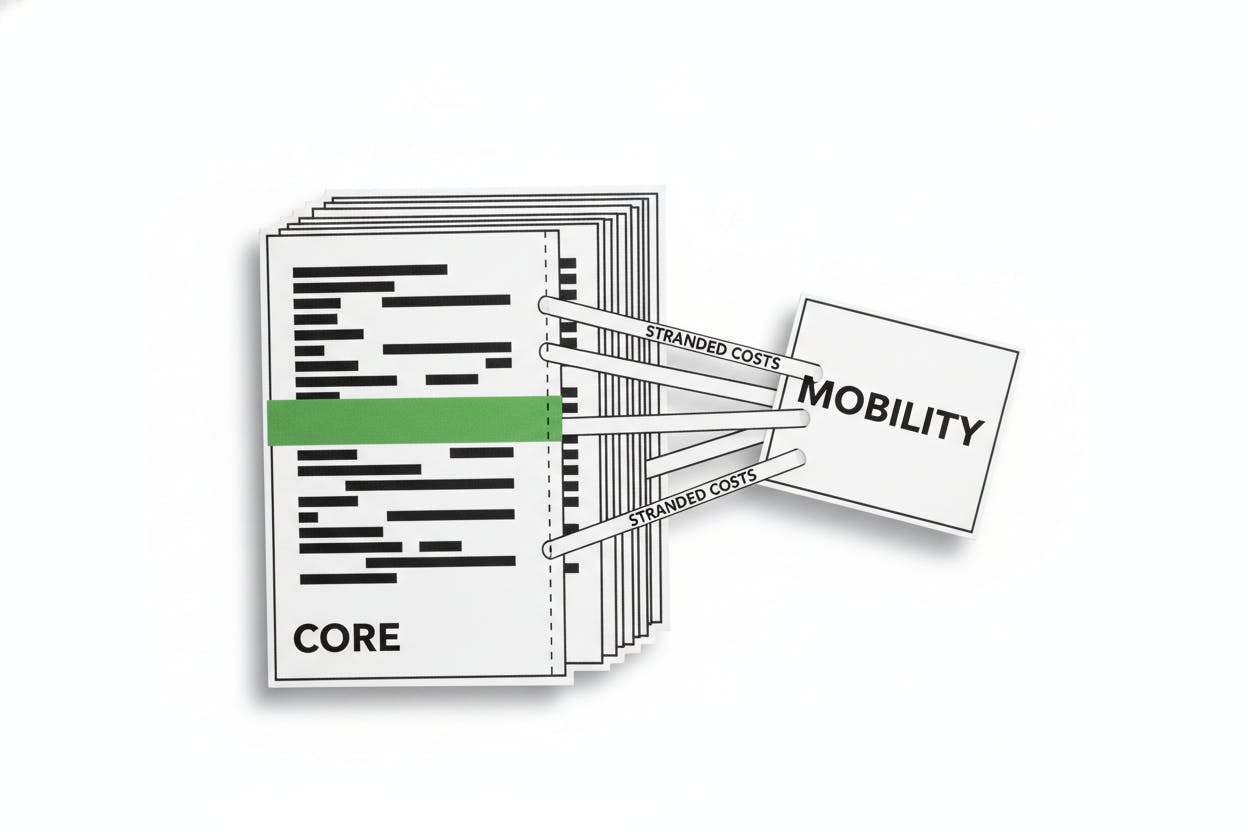
The reshuffling comes as S&P Global prepares to spin off its Mobility business, which provides data and analytics to the automotive industry. Spinoffs often involve complex accounting adjustments as companies separate assets, liabilities and cost structures. By reorganizing now, S&P Global may be aiming to present cleaner financials for the remaining businesses once Mobility is on its own.
RBC noted that transition-services income — fees the parent company will charge the spun-off entity for shared services during the separation — should help offset any one-time costs from the restructuring. That is why the bank expects only a limited impact on overall margins.
What It Means for Investors
For everyday investors, the key takeaway is that this is a housekeeping move, not a sign of trouble. S&P Global's core businesses — ratings, indices, and commodity insights — remain strong. The stock's 1% dip on Tuesday is modest and likely reflects normal market noise rather than a fundamental shift in the company's outlook.
Investors should watch for more details on the Mobility spinoff timeline and terms, as those will have a bigger impact on the stock than the reporting changes. Spinoffs can unlock value if the separated businesses perform better on their own, but they also come with execution risk.
In the broader market context, S&P Global's move comes amid a period of rising oil prices and mixed sentiment in global equities, but the company's diversified revenue streams and recurring subscription-based income make it relatively resilient to short-term market swings.
Background on S&P Global
S&P Global is one of the world's largest providers of financial data, credit ratings, and benchmark indices. Its Ratings division is a key player in the bond market, while its Commodity Insights unit covers energy, metals, and agriculture. The Mobility spinoff is part of a broader trend among large conglomerates to simplify their structures and focus on core businesses.
RBC's analysis suggests that the reporting changes are unlikely to materially affect S&P Global's earnings or cash flow. The bank's view aligns with the idea that these are technical adjustments rather than strategic shifts.
Looking Ahead
Investors will be watching for S&P Global's next earnings report, which should provide more clarity on the Mobility spinoff timeline and the financial impact of the restructuring. In the meantime, the stock's slight decline on Tuesday appears to be a minor blip in an otherwise steady performance.
For those holding S&P Global shares, the key question remains whether the spinoff will unlock value. History shows that well-executed spinoffs can boost shareholder returns, but they require careful planning. The current reshuffling suggests S&P Global is taking that planning seriously.