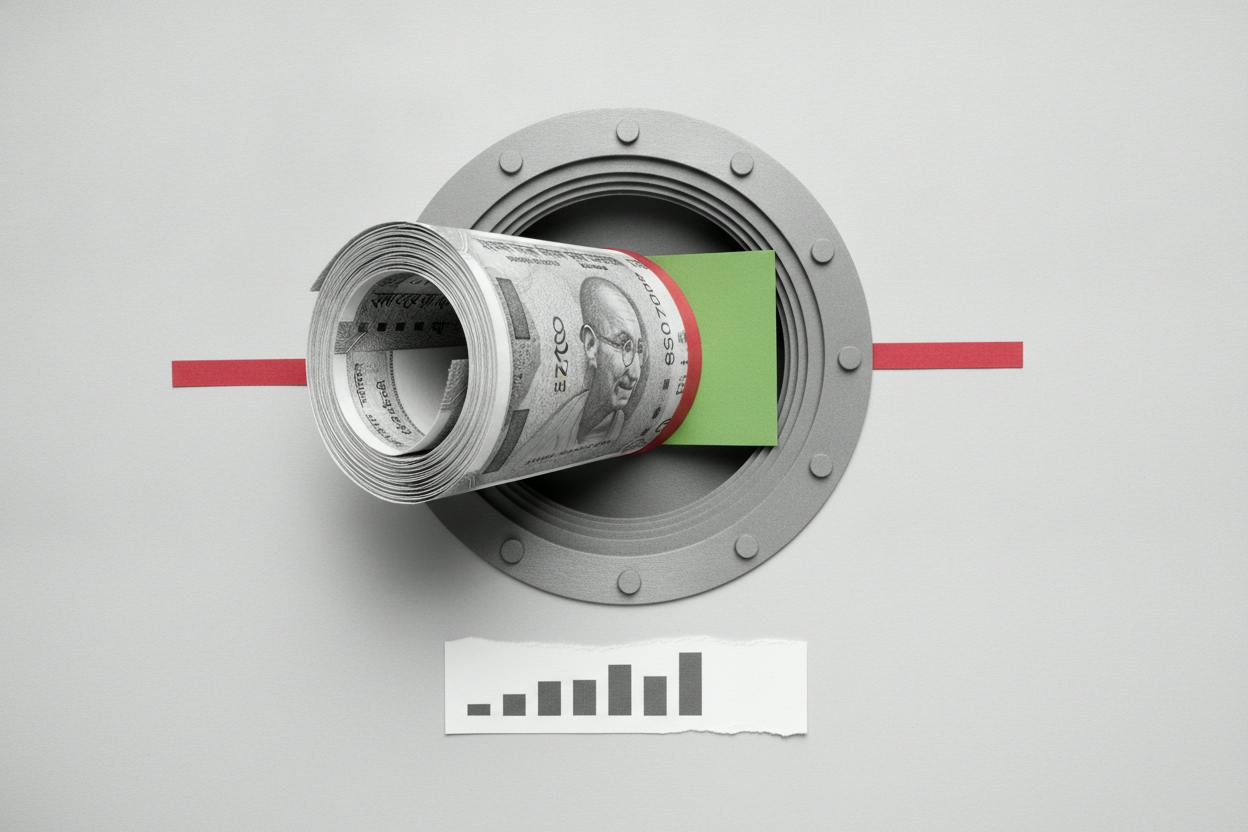
SBI Cards and Payment Services, the credit-card lending arm of India's largest state-run lender, State Bank of India, reported a 19.5% rise in quarterly profit as customers spent more and the company set aside less money for potential bad debts. The results signal improving consumer health in a key segment of India's financial sector.
Quarterly Results at a Glance
For the quarter ended June 30th, SBI Card said profit after tax climbed to 6.64 billion rupees (about $80 million), even as revenue from operations rose just 3.4% year-on-year to 50.41 billion rupees. The gap between profit growth and revenue growth comes down to credit quality: gross non-performing assets (GNPAs), or loans that are overdue, improved to 2.04% from 2.41% three months earlier. That let the lender cut provisions – cash it parks to cover future defaults – to 9.48 billion rupees, down from higher levels in previous quarters.
Provisions are a key metric for credit-card lenders because they directly eat into profits. When provisions fall, it means fewer customers are defaulting, which boosts the bottom line. SBI Card's provision drop was the main driver of its profit increase, as revenue growth alone was modest.
Spending Surge Points to Consumer Confidence
The company also reported that card spending climbed 27% year-on-year, a strong sign that Indian consumers are using credit cards more frequently and for larger purchases. This trend aligns with broader economic data showing resilient consumer demand in India, even as global central banks grapple with inflation and higher interest rates.
Higher spending typically means more transaction fees and interest income for card issuers, but it also carries risk if borrowers stretch their finances. SBI Card's improving asset quality suggests that, so far, the spending boom is not leading to a spike in defaults.
What It Means for Investors
For everyday investors, SBI Card's results offer a window into the health of Indian consumer credit. A falling GNPA ratio and lower provisions are positive signals, indicating that the lender's loan book is becoming safer. This can support the stock's valuation, as investors often reward companies that show improving credit metrics.
However, the modest revenue growth of just 3.4% is worth noting. It suggests that while spending is up, the company may be facing pressure on interest margins or fee income from competition. Investors should watch whether revenue growth accelerates in coming quarters, as higher spending alone may not sustain profit growth if margins shrink.
The broader context also matters. SBI Card operates in a competitive market where players like HDFC Bank, ICICI Bank, and Axis Bank also vie for card users. Any shift in regulatory rules on credit card fees or interest rates could impact the entire sector. Additionally, if the Indian economy slows, consumer spending could dip, and defaults might rise again.
Industry and Economic Backdrop
India's credit card market has been growing rapidly, driven by digital payments adoption and rising incomes. SBI Card, as a joint venture between State Bank of India and The Carlyle Group, benefits from the parent bank's vast customer base. The company has been expanding its reach into smaller cities and towns, which could fuel future spending growth.
On the macroeconomic front, India's central bank has kept interest rates steady after a series of hikes, which helps borrowers manage debt. However, inflation remains a concern, and any unexpected rate moves could affect consumer behavior. For now, SBI Card's results suggest that the credit cycle is turning favorable, but investors should remain cautious about potential headwinds.
In other earnings news, Sabadell's TSB Sale Boosts Q2 Profit to €624M, Buyback Planned, showing how asset sales can lift profits in the banking sector. Meanwhile, Commercial Bank of Dubai Gets Rating Trim Despite Profit Rise highlights that even strong earnings don't always shield lenders from rating actions.
Looking Ahead
Investors will now focus on SBI Card's next quarterly report to see if the trends hold. Key metrics to watch include spending growth, GNPA levels, and provision coverage. If the company can maintain its asset quality while boosting revenue, it could be well-positioned for further gains.
For now, the message from SBI Card is clear: credit losses are easing, and consumers are spending. That's a positive sign for the Indian economy and for investors in financial stocks.