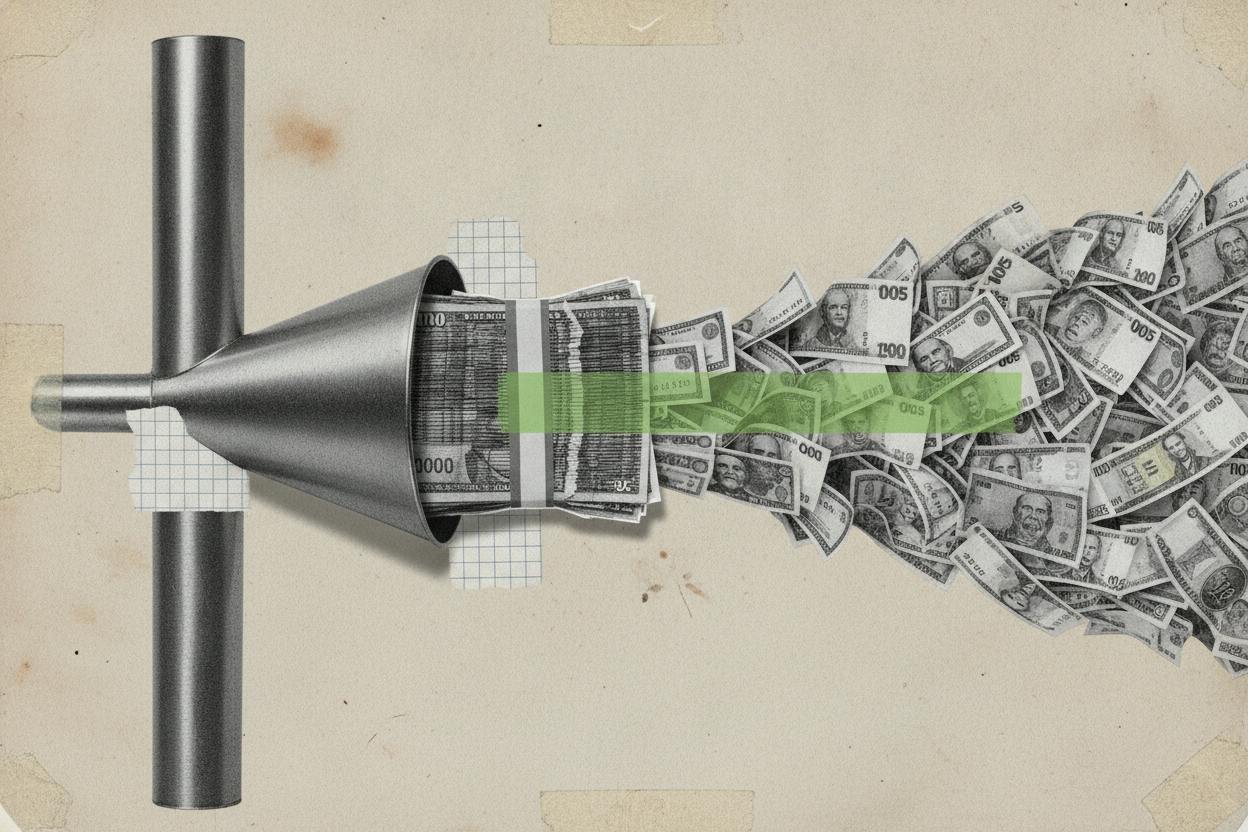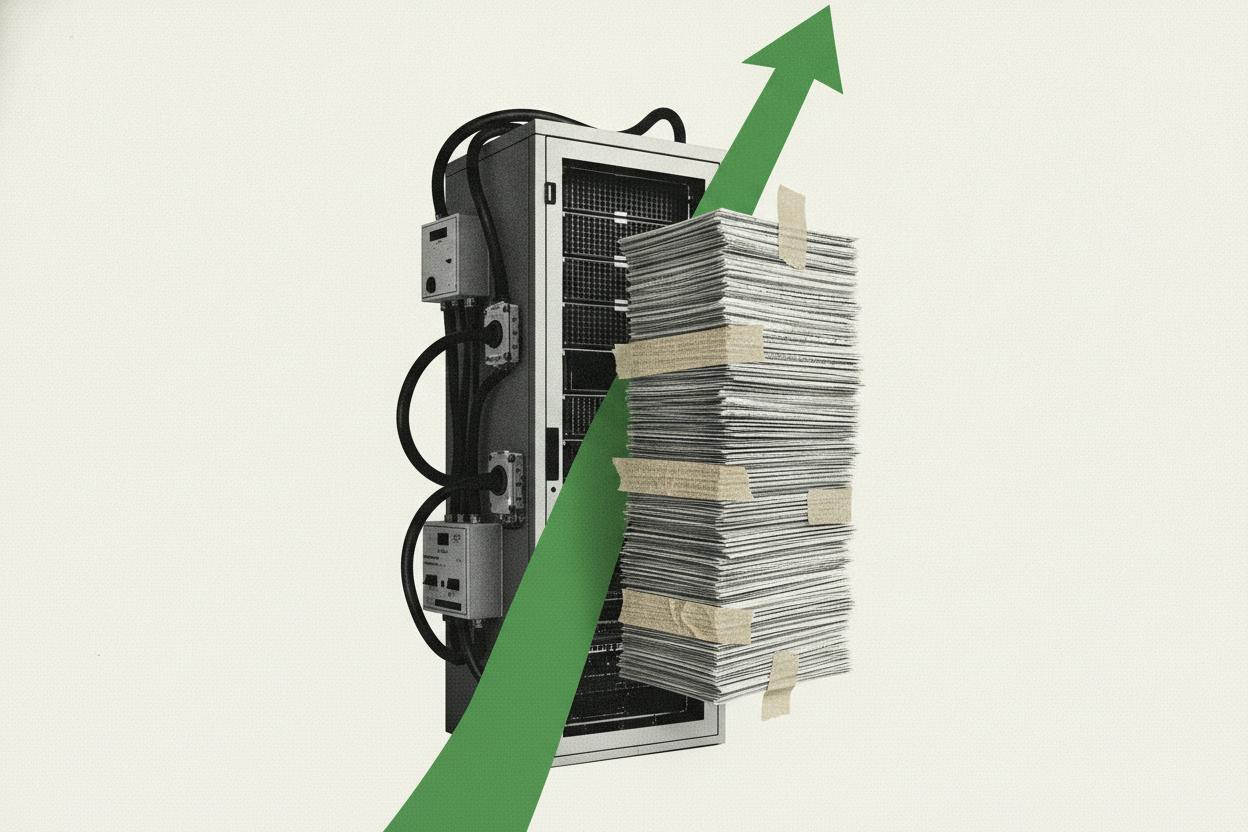
Schneider Electric has raised its medium-term profit ambitions for the second time, telling investors that the artificial intelligence boom is doing more than lifting sales — it is starting to flow through to the bottom line.
The French energy-management and automation group reported record third-quarter revenue of €11.46 billion, according to Reuters, ahead of the €11.13 billion analyst consensus the news agency cited. Management also said it closed the quarter with another record order backlog and lifted its 2026 organic adjusted EBITDA growth target to a range of 18% to 21%, up from 14% to 19% previously.
Why an industrial company is an AI play
Schneider is not a chipmaker or a cloud provider, so it rarely sits at the centre of AI headlines. But it has quietly become one of the buildout's key suppliers. Data centres need far more than servers: they need electrical switchgear to distribute power, cooling systems to stop racks from overheating, and the physical enclosures and racks that hold the hardware. Schneider sells all of it.
That positioning explains the language in the results. The company pointed to "triple-digit demand growth" from data centres, a striking figure that reflects how quickly hyperscalers — the giant cloud operators that build and run these facilities — are expanding capacity. When a company of Schneider's size reports that kind of growth in a single end market, it usually signals a multi-year capital spending cycle rather than a one-off spike.
The backlog matters just as much as the quarterly revenue. A record order book means customers have already committed to purchases that will be delivered and invoiced in future periods. For investors, that provides a degree of visibility that a strong quarter alone cannot. It is the difference between a company that had a good three months and one that has locked in work for the years ahead.
From revenue beat to profit runway
The headline number is the revenue record, but the more consequential change is the profit target. Adjusted EBITDA — earnings before interest, taxes, depreciation and amortisation, adjusted for one-off items — is a common proxy for cash-generating operating profit. Raising the 2026 growth range signals that management expects a larger share of each additional euro of data centre revenue to drop through to profit.
That concept is called operating leverage. In simple terms, once a company's factories, service networks and engineering teams are in place, extra sales can be handled without a proportional rise in costs. If capacity is available and pricing holds up, margins expand. Schneider's upgrade implies management believes both conditions will persist.
The company's framing also shifts the conversation away from a single quarter. A quarterly beat can be driven by timing — orders that slipped from one period into another, or favourable currency moves. A higher medium-term profit target is a statement about the structural economics of the business. Analysts typically respond to that kind of guidance by revising their forward earnings estimates, and those revisions often matter more for a stock's valuation than the quarter that prompted them.
What it means for investors
For everyday investors, the Schneider update is a useful reminder that the AI trade extends well beyond the most obvious names. The companies supplying power, cooling and infrastructure to data centres are exposed to the same demand cycle as the chip designers and cloud platforms, but through a different part of the value chain. That can mean different risk profiles and different valuations.
It also highlights where the risk sits. Schneider's upgraded outlook rests on the assumption that hyperscaler spending stays sustained. If those large cloud operators slow their construction plans — whether because of tighter budgets, power constraints or a reassessment of AI returns — the order backlog would still provide a cushion for a time, but the earnings revisions supporting the stock's valuation could reverse quickly. Investors in AI-adjacent industrial names are, in effect, taking a view on the durability of data centre capital expenditure.
There is a broader read-across too. Demand for data centre infrastructure has been showing up in trade and industrial data around the world, from Singapore's export surge to corporate growth targets tied to AI capacity, such as BayCurrent's AI-driven plans. At the same time, sentiment around the sector is not uniformly positive — chip stocks have slid on doubts about data centre economics and rising costs, a reminder that the AI supply chain does not move in one direction.
What to watch next: Schneider's order intake and backlog conversion in coming quarters, any commentary on pricing and capacity, and the capital spending plans of the major US cloud operators. Those three data points will determine whether the raised 2026 target proves conservative or optimistic. For now, the company has told the market that it sees a profit runway stretching beyond the current quarter — and investors will hold it to that.