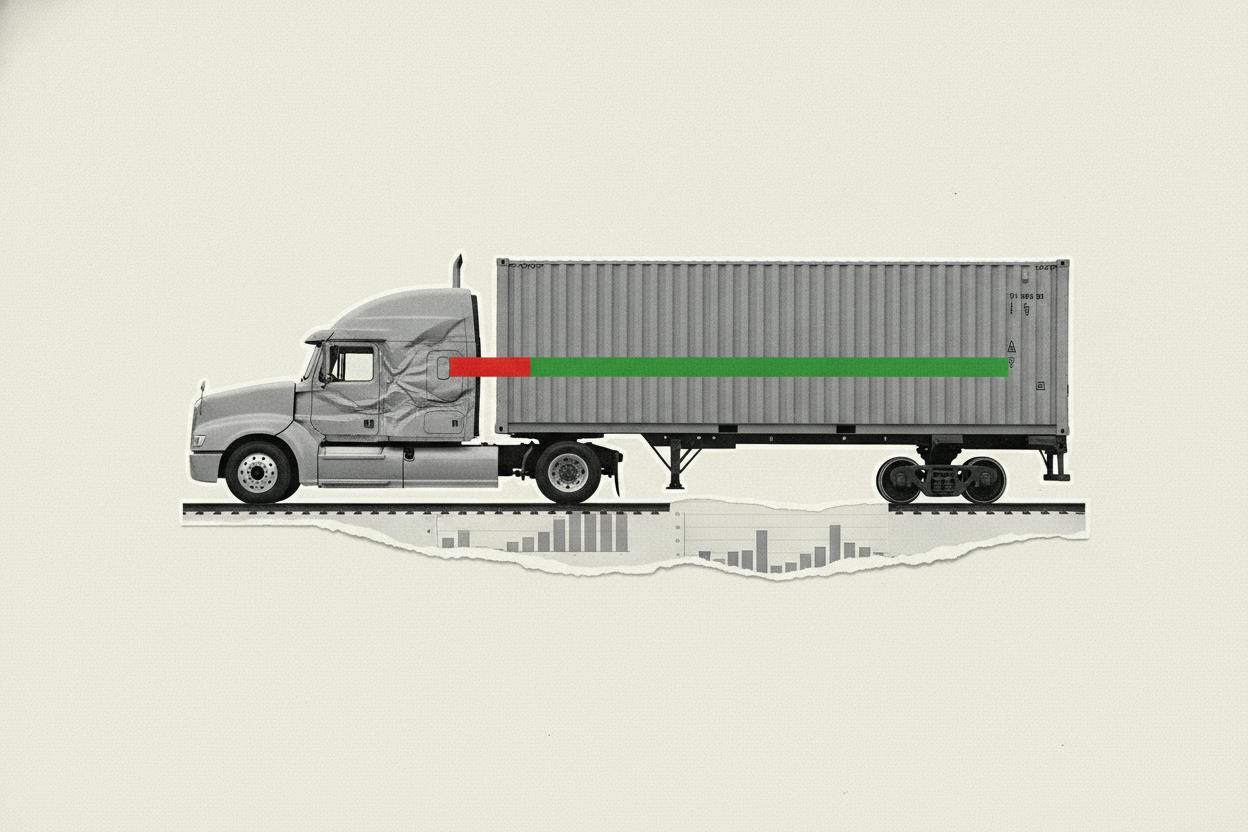
Schneider National's latest quarterly report painted a picture of two very different businesses under one roof. The Green Bay, Wisconsin-based trucking and logistics company posted earnings of $0.29 per share, just shy of the $0.30 analysts had expected. But the real story wasn't the headline number—it was the stark contrast between its operating segments.
Intermodal, the unit that moves freight using a combination of trucks and rail, delivered better-than-expected pricing and higher operating profit. Meanwhile, the company's truckload and logistics divisions struggled, with profitability in truckload and rising costs in logistics weighing on overall results.
Intermodal: The bright spot
Intermodal is a key part of Schneider's business. It involves shipping containers on rail for the long haul, with trucks handling the first and last miles. This model can be more cost-efficient than over-the-road trucking, especially on longer routes, and it tends to be less exposed to driver shortages and fuel price swings.
In the third quarter, intermodal pricing—what Schneider charges customers for each shipment—came in better than UBS analysts had modeled. That stronger pricing translated into higher earnings before interest and taxes (EBIT) for the segment, a measure of operating profitability. For investors, this is a sign that Schneider can still command decent rates in a freight market that has been soft for much of the past year.
Truckload and logistics: The drag
The truckload segment, which is Schneider's traditional over-the-road business, didn't fare as well. Profitability in that unit was weak, likely reflecting continued pressure on freight rates and higher operating costs. Truckload is a highly competitive, asset-heavy business, and when demand softens, margins can compress quickly.
Logistics, which includes brokerage and other supply-chain services, also weighed on results. Costs in that segment were higher than expected, eating into what would otherwise have been a cleaner quarter. For a company that prides itself on offering a full suite of transportation services, having two of its three main units underperform is a reminder of how cyclical this industry can be.
UBS cuts price target, keeps neutral rating
Following the earnings release, UBS, an investment bank, maintained its neutral rating on Schneider National but lowered its price target to $30. That's a signal that the bank sees limited upside in the stock in the near term, even if it doesn't see a reason to sell.
A neutral rating means UBS thinks the stock will perform roughly in line with the broader market. The price target cut suggests the bank is trimming its expectations for earnings growth, likely because of the ongoing weakness in truckload and logistics.
What it means for everyday investors
For investors, Schneider's quarter is a useful case study in why it's important to look beyond a company's headline earnings per share. A single number can mask big differences in how each part of the business is performing.
If you own Schneider stock, the key question is whether the intermodal strength can offset the truckload and logistics weakness. That's not a given. The freight market has been in a downturn for over a year, with rates under pressure across the industry. While intermodal has held up better, truckload and logistics are more exposed to the spot market, where prices have been especially weak.
Another thing to watch is cost control. Schneider has been investing in technology and efficiency, but logistics costs rose in the quarter. If those costs stay elevated, they could continue to drag on earnings even if pricing improves.
For those considering buying the stock, the neutral rating and price target cut are a caution flag. It's not a sell signal, but it does suggest that the near-term outlook is uncertain. As always, it's worth remembering that trucking and logistics are cyclical businesses—they tend to follow the broader economy. When the economy slows, freight volumes and rates often fall, and companies like Schneider feel the pinch.
Looking ahead, investors will be watching for signs that the freight market is bottoming out. Any improvement in truckload pricing or a stabilization in logistics costs could be a positive catalyst. Until then, Schneider's story remains one of two businesses pulling in different directions.