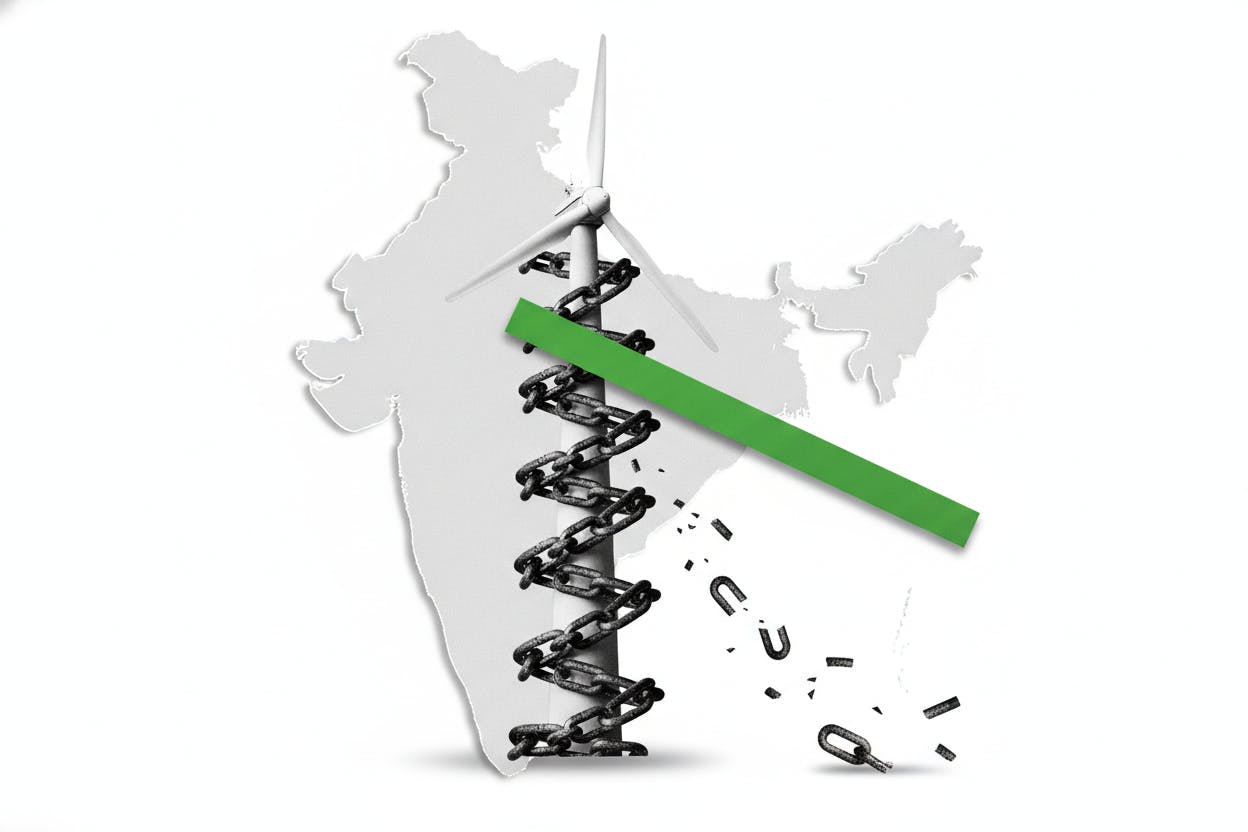
Sembcorp Green Infra, the Indian renewable energy subsidiary of Singapore's Sembcorp Industries, has taken another step toward listing on Indian stock exchanges. The company filed draft papers with Mumbai's market regulator to raise up to 37.5 billion rupees (roughly $450 million) through an initial public offering (IPO), with the bulk of the proceeds earmarked to reduce its debt.
This is not the first time Sembcorp has tried to take its Indian renewables business public. The company first filed for an IPO in 2018, but withdrew the application in 2019 and instead brought in new private investors, according to Reuters. This time around, the deal is structured as a pure primary offering, meaning the company will issue fresh shares and the parent company will not be selling any of its existing stake.
Why the debt reduction matters
Of the total funds raised, about 30 billion rupees are set aside to repay part of Green Infra's outstanding debt, which stood at 125.23 billion rupees. That is a significant liability, and trimming it could lower the company's interest costs and improve its financial flexibility.
For a capital-intensive business like renewable energy, debt is common because building solar and wind farms requires large upfront investment. But high leverage can weigh on profitability and make it harder to fund future growth. By using IPO proceeds to pay down borrowings, Sembcorp Green Infra aims to strengthen its balance sheet, which could make the company more attractive to investors.
The move also signals confidence in India's renewable energy sector, which has been a focus of government policy and corporate investment. India has set ambitious targets for clean energy capacity, and companies like Sembcorp Green Infra are positioning to benefit from that trend.
What this means for investors
For everyday investors, an IPO like this offers a chance to own a piece of a growing renewable energy business in one of the world's fastest-expanding energy markets. However, it also comes with risks. The company's debt load, though being reduced, remains substantial, and the renewable sector faces challenges such as policy changes, grid integration issues, and competition.
Investors should also note that this is a primary offering, so the money goes to the company, not to existing shareholders. That means the parent, Sembcorp Industries, will retain its stake, and its fortunes remain tied to the subsidiary's performance.
The IPO market in India has been active, with several companies listing recently. For context, Gaja's 20% debut marked India's first alternative asset manager IPO, showing investor appetite for new listings. However, market conditions can shift quickly, and the success of this offering will depend on broader sentiment and the company's ability to convince investors of its growth story.
It's also worth remembering that IPOs are not guaranteed to deliver immediate gains. While some listings pop on debut, others trade below their issue price. Investors should evaluate the company's fundamentals, its competitive position, and the valuation offered before deciding to participate.
Looking ahead
The filing is just the first step. Sembcorp Green Infra will need to receive regulatory approval, set a price band, and then conduct the offering. The timeline for the IPO is not yet clear, but if the market remains receptive, the listing could happen in the coming months.
For now, the move underscores the growing importance of renewable energy in India's economy and the willingness of companies to tap public markets to fund their expansion. As India's stock market continues to attract both domestic and foreign investors, Indian shares have seen volatility, but long-term interest in the country's growth story remains strong.
Investors should keep an eye on how the IPO progresses and whether the company can execute its plans to reduce debt and expand its renewable portfolio. As with any investment, doing your own research and understanding the risks is essential.