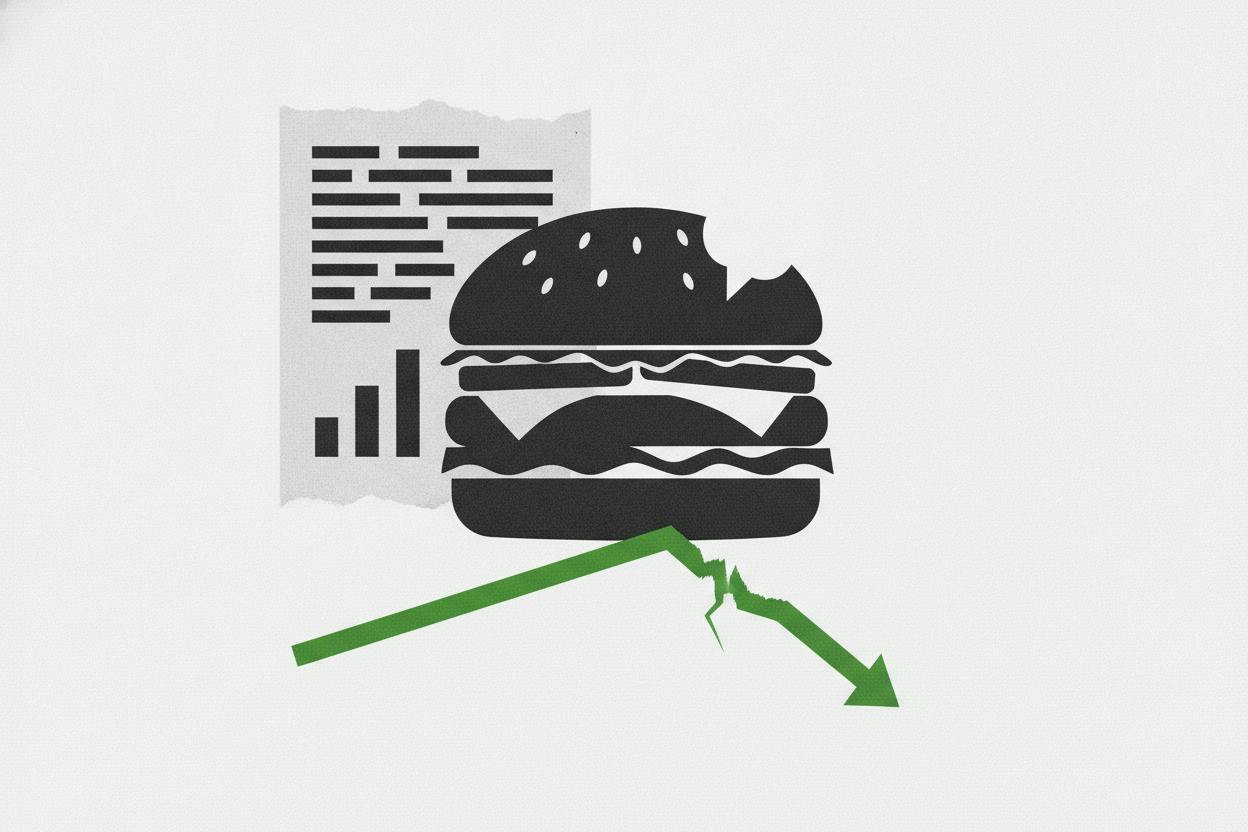
Shake Shack delivered a mixed bag for investors in its latest quarterly report: the burger chain beat Wall Street's profit and same-store sales forecasts, but revenue fell just short of expectations. The company pointed to ongoing financial strain on lower-income diners as a key reason for the revenue miss.
What the numbers show
In the quarter, Shake Shack reported adjusted earnings of $0.40 per share, comfortably ahead of the $0.34 analysts had penciled in. Same-store sales—a closely watched metric that tracks sales at locations open at least a year—rose 2.5%, also beating forecasts. However, total revenue increased 15% to $423.3 million, missing the $426.4 million that Wall Street had expected.
The revenue shortfall, while modest, underscores a broader challenge for the fast-casual industry: consumers at the lower end of the income spectrum are pulling back on discretionary dining as they grapple with higher prices for everyday essentials. CEO Robert Lynch described the consumer backdrop as "challenging," noting that higher-income guests have held up better than their lower-income counterparts.
Why the income split matters
This divergence in spending behavior between income groups is not unique to Shake Shack. Many restaurant chains have noted that budget-conscious consumers are trading down, ordering fewer items, or visiting less frequently. For a brand like Shake Shack, which positions itself as a premium burger option, this can limit both traffic growth and the ability to raise prices without driving customers away.
When lower-income diners pull back, it can squeeze same-store sales growth and force companies to rely more on higher-income customers or new store openings to drive revenue. That dynamic is reflected in the company's results: while same-store sales grew, the overall revenue figure still came in light, suggesting that the mix of customers and spending patterns is shifting.
What it means for investors
For everyday investors, the key takeaway is that Shake Shack is navigating a tough consumer environment, but it's doing so with better-than-expected profitability. Beating profit forecasts while missing revenue can signal that the company is managing costs effectively, even if top-line growth is under pressure.
However, the persistent weakness among lower-income diners is a cautionary sign. If that trend continues, it could weigh on future revenue growth and limit the company's ability to meet or exceed sales expectations. Investors will likely watch upcoming quarters for signs of whether this pressure is easing or intensifying.
Shake Shack's experience is part of a broader pattern seen across the restaurant industry. Other companies, from fast-food giants to casual dining chains, have reported similar challenges. For context, Toyota's profit jump shows how some companies are benefiting from strong demand, but the consumer landscape remains uneven across sectors.
Looking ahead
The company's ability to balance pricing, traffic, and cost control will be critical in the coming quarters. With the consumer backdrop still "challenging," Shake Shack may need to rely on innovation, marketing, and operational efficiency to keep momentum. Investors should also keep an eye on how the company manages its store expansion and whether it can attract more higher-income customers to offset the softness elsewhere.
In the meantime, the mixed results serve as a reminder that even well-known brands can face headwinds when consumer spending diverges by income level. For those holding Shake Shack stock, the profit beat is encouraging, but the revenue miss is a signal that the road ahead may not be entirely smooth.
As always, it's worth comparing Shake Shack's performance to peers. For instance, BD's recent earnings also showed a beat on estimates but a cautious outlook, highlighting that many companies are navigating similar crosscurrents.
Ultimately, Shake Shack's quarter reflects a broader economic reality: while some consumers are thriving, others are feeling the pinch. How companies adapt to this split will determine their success in the months ahead.