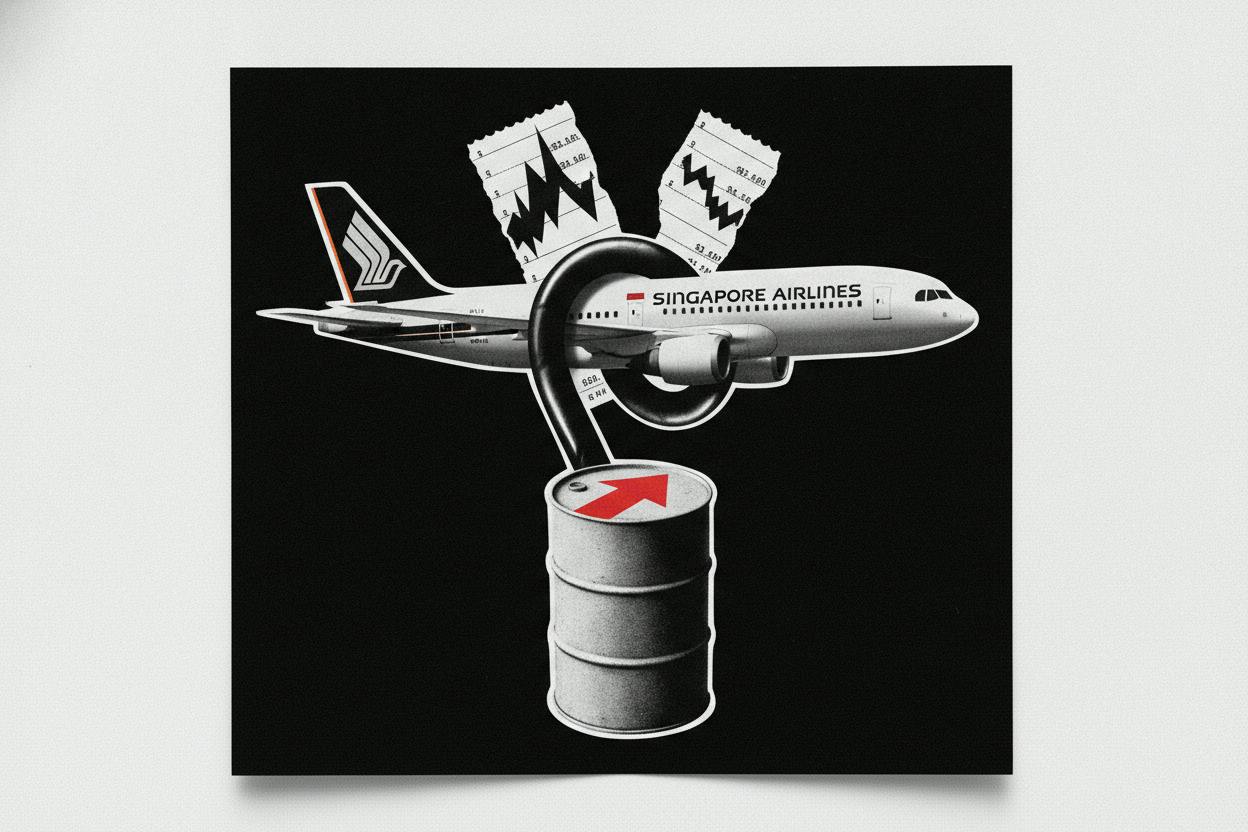
Singapore Airlines reported a 44% drop in half-year net profit to S$134 million, even as revenue climbed 16.8% to S$11.30 billion. The culprit: a sharp jump in jet fuel prices, which pushed the airline's fuel bill before hedging up more than 90%.
The airline said average jet fuel over the past six months was US$171 a barrel, up 86.7% from a year earlier. Fuel is typically an airline's largest single expense, so a spike of that magnitude can quickly erode profits even when demand is strong.
Why fuel hurts airlines so much
Airlines are uniquely exposed to fuel prices because they consume jet fuel continuously. Unlike a manufacturer that can stockpile raw materials, an airline buys fuel every time a plane refuels. When prices jump, the cost hits almost immediately.
Ticket prices, by contrast, move more slowly. Airlines sell seats through a mix of channels—corporate contracts, early-bird fares, and last-minute bookings—and competition limits how quickly they can raise prices. That lag means a fuel spike can squeeze margins for months before fares adjust.
Hedging can soften the blow. Airlines often lock in fuel prices in advance to reduce volatility. But hedging rarely eliminates the pain when prices spike sharply, and it can also backfire if prices fall.
Singapore Airlines' total spending rose more than 20% to S$10.73 billion, outpacing revenue growth. That gap between revenue and cost growth is the core reason profit fell from S$239 million a year ago.
What's behind the fuel price jump
The brief points to the Middle East conflict as a factor behind higher fuel prices. Geopolitical tensions can push up crude oil prices, and jet fuel tends to follow. When supply concerns emerge, fuel prices can rise quickly, catching airlines off guard.
This isn't unique to Singapore Airlines. Other carriers are also grappling with fuel costs, and the broader industry is watching how long prices stay elevated.
What it means for travelers and investors
For everyday travelers, higher jet fuel costs can eventually show up in airfares. But the timing is unpredictable. Some fares are set weeks or months in advance, and corporate travelers on negotiated rates may not see immediate changes. If fuel prices stay high, airlines typically try to rebuild margins through higher base fares or fuel surcharges—so the cost of the same route can vary more from one season to the next.
For investors, the key takeaway is the timing mismatch. Singapore Airlines grew revenue by nearly 17%, yet profit fell sharply because costs rose faster. That's a reminder that revenue growth doesn't always translate into profit growth when input costs are volatile.
The airline's ability to pass on higher costs will be crucial. If demand remains strong and competitors also raise fares, margins could recover. But if fuel prices stay high and competition keeps a lid on ticket prices, the squeeze could persist.
Investors will also watch how the airline manages its fuel hedging strategy. A well-timed hedge can cushion the blow, but it's not a cure-all. The broader lesson: airlines are leveraged to fuel prices, and that exposure can make earnings swing sharply from one period to the next.
Singapore Airlines' result is a case study in how external costs can disrupt even a well-run airline. For now, the company is betting that strong demand will help it ride out the fuel storm—but the next few quarters will show whether that bet pays off.



