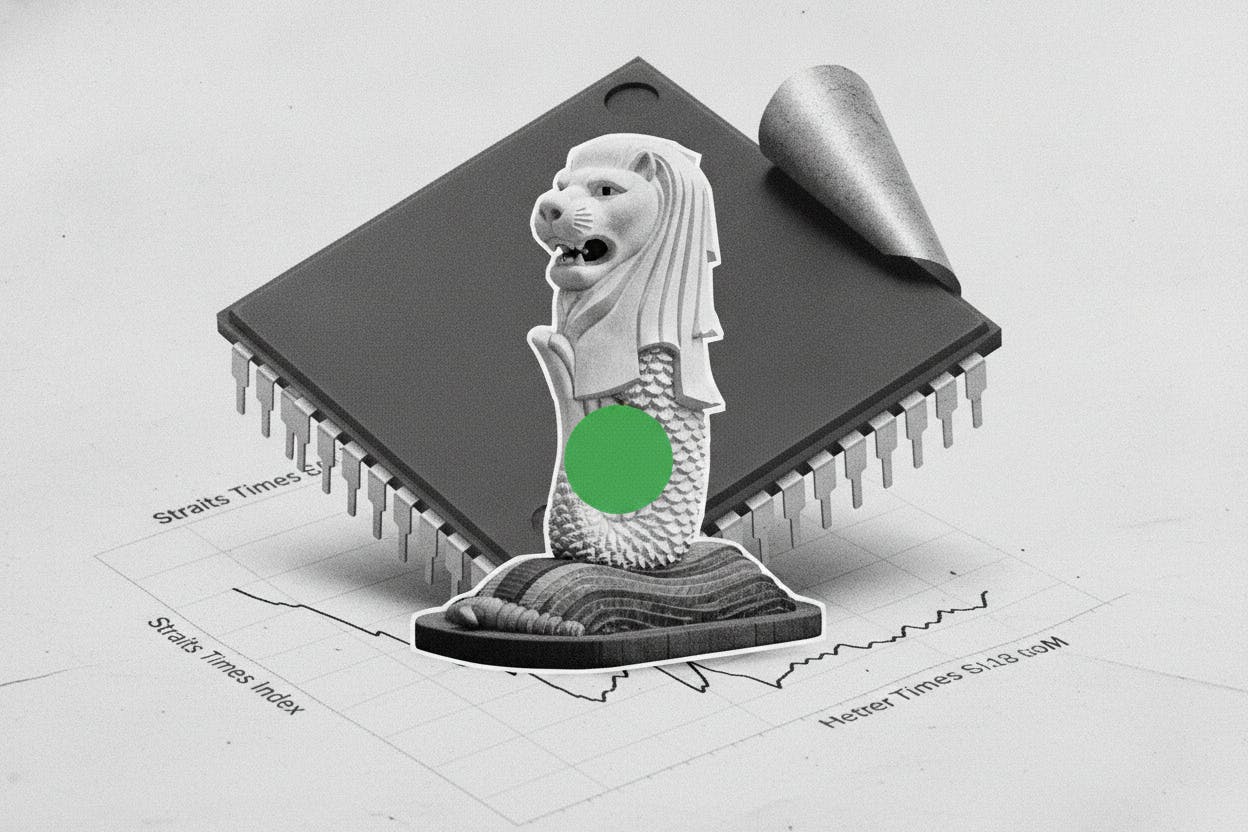
Singapore stocks edged lower on Tuesday as a familiar worry rippled through Asian markets: how long can the artificial intelligence spending boom last, especially with Chinese competitors gaining ground?
The Straits Times Index (STI), the city-state's benchmark, dipped 0.1% in a session marked by caution. The move mirrored a broader regional trend, as investors across Asia weighed the sustainability of the massive capital outlays that have fueled the AI rally over the past year.
AI spending under the microscope
The question of whether Big Tech's AI investments will deliver returns has become a central theme in markets. Recent earnings reports from major US technology firms have done little to settle nerves, with some analysts pointing to rising costs and uncertain payoffs. That uncertainty has spilled into Asia, where chip and AI-related stocks have been under pressure.
This is not the first time the region has felt the heat. Earlier this month, AI chip stocks slipped after Big Tech earnings raised doubts about the payoff from their spending sprees. More recently, Chinese chip and AI stocks slid as investors began to rethink the entire AI trade, while Asian chip stocks slid under the weight of funding doubts and intensifying competition from Chinese players.
The pattern is clear: markets are growing jittery about the sheer scale of AI spending, and any sign that returns may be delayed or smaller than expected can trigger a sell-off. For everyday investors, this means the AI trade, which has been a major driver of stock gains, is entering a more volatile phase.
Keppel bucks the trend
Against the broader market weakness, Keppel Corp stood out. The conglomerate's shares jumped nearly 3% after the company announced it had surpassed its end-2026 target for funds under management (FUM) well ahead of schedule.
Keppel, which has been transforming itself into an asset manager and operator, had set a goal of reaching S$200 billion in FUM by the end of 2026. Hitting that milestone early signals strong execution and investor confidence in its strategy. For a company that has historically been associated with offshore rig building and property development, the shift toward managing third-party capital has been a key focus for management and a driver of investor interest.
The jump in Keppel's stock price shows that company-specific news can still overcome broader market headwinds. It also highlights the importance of looking beyond index-level moves when assessing opportunities.
What it means for investors
For everyday investors, the STI's small decline is not alarming on its own. But the underlying driver — AI spending doubts — is worth watching closely. The technology sector has been a major engine of market gains globally, and any sustained pullback could have ripple effects across portfolios.
Here are a few things to keep in mind:
- Diversification matters. If AI-related stocks are a big part of your portfolio, consider whether you are overexposed to a single theme. The current uncertainty is a reminder that even powerful trends can hit speed bumps.
- Company fundamentals still count. Keppel's outperformance shows that individual companies can thrive even when the market is cautious. Earnings, strategic progress, and management credibility remain important drivers of stock performance.
- Watch the broader backdrop. AI spending is not the only factor moving markets. Interest rate expectations, inflation data, and economic growth all play a role. For instance, New Zealand's cooling job market and Malaysia's rising producer prices are reminders that regional economic conditions vary and can influence investor sentiment.
The AI spending debate is unlikely to be resolved quickly. As more companies report earnings and provide guidance, the market will continue to reassess the outlook. For now, the cautious tone in Singapore and across Asia suggests investors are waiting for clearer signals before committing more capital to the AI theme.
In the meantime, stocks like Keppel that deliver on their own promises can still find buyers, even when the broader market is hesitant.