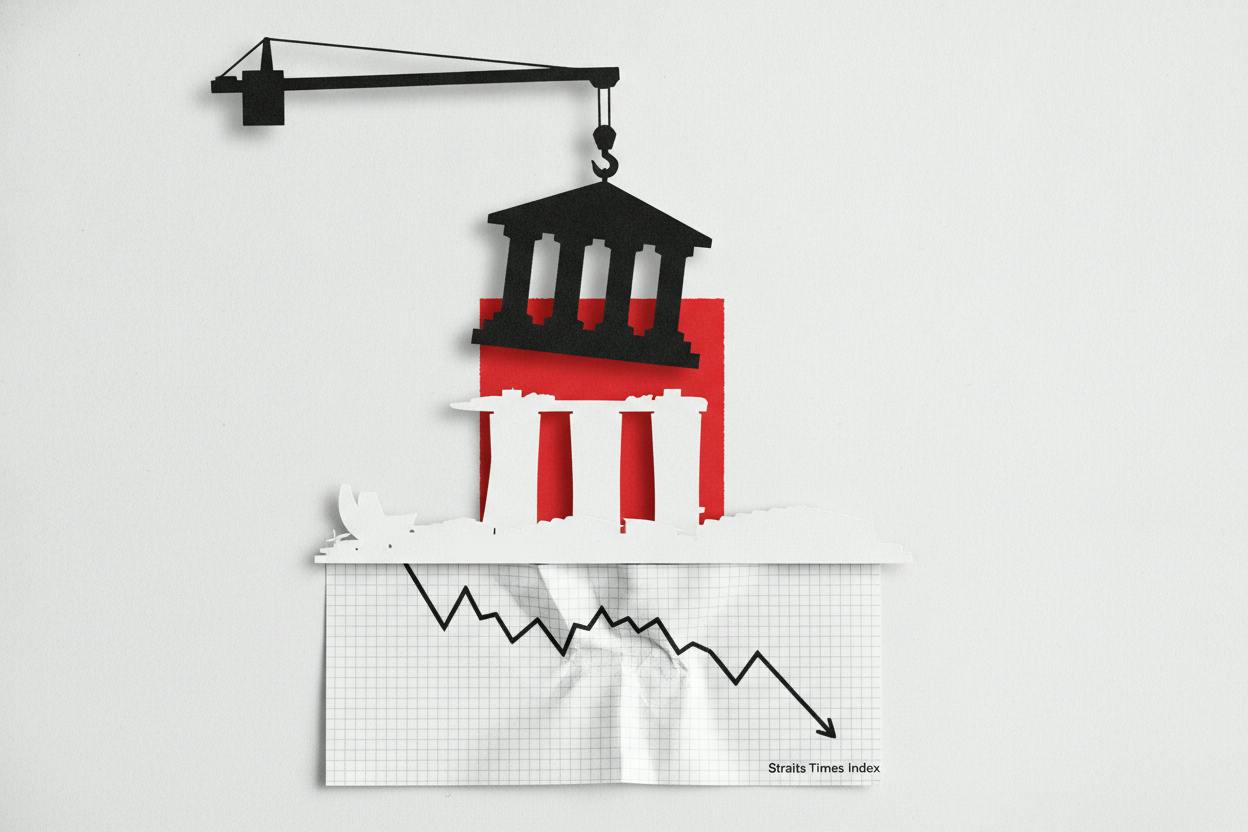
Singapore's stock market took a sharp hit on Monday, with the benchmark Straits Times Index (STI) falling as much as 2% to its lowest level since early July. The decline came as investors braced for earnings reports from two of the city-state's biggest banks, DBS and OCBC, which are seen as a key test for the market's recent run-up.
The pullback was broad-based, but banking stocks were the main drag, according to Reuters. The STI is now nearly 10% below its record high set in early September, a sign that the market's earlier optimism has faded.
Why are banks in focus?
DBS and OCBC are among the largest companies on the Singapore exchange, and their earnings carry significant weight for the overall index. When these banks report, investors look not just at their profits but also at their outlook for loan growth, interest margins, and asset quality—all of which can signal the health of the broader economy.
In recent months, Singapore banks have enjoyed a period of strong earnings, helped by higher interest rates and a recovering regional economy. That has pushed their share prices up, and with them, the STI. But that also means expectations are high, and any disappointment could trigger a sell-off.
Gary Tan, a portfolio manager at Allspring Global Investments, told Reuters that “elevated valuations leave the sector more sensitive to any disappointment in the earnings outlook.” In other words, because investors have already priced in good news, there is less room for error.
A valuation reality check, not a change in fundamentals
Monday's slide appears to be more about valuations than a sudden deterioration in Singapore's economic conditions. The country's economy has been relatively stable, and its banks are considered well-capitalized and profitable. But when a market has risen as much as the STI did earlier this year, it becomes vulnerable to profit-taking and nervousness ahead of major corporate announcements.
Tan also noted that Singapore still plays a “defensive safe haven within Asia,” meaning that in times of global uncertainty, investors often turn to Singapore stocks for their stability and dividends. That long-term appeal remains intact, even if short-term sentiment has soured.
What it means for investors
For everyday investors, the key takeaway is that market pullbacks like this are normal, especially after a strong run. The STI's decline is a reminder that stocks don't go up in a straight line, and that valuations matter. When prices get ahead of fundamentals, even good news can be met with a shrug—or a sell-off.
If you hold Singapore bank stocks or an index fund that tracks the STI, you might see some volatility in the coming days as earnings are released. It's important to focus on the underlying business performance rather than short-term price swings. Banks that beat expectations and raise their outlooks could recover quickly, while those that disappoint could see further declines.
Investors should also keep an eye on the broader regional picture. Singapore is often seen as a bellwether for Southeast Asian markets, and its banks have significant exposure to the region. If regional economies remain strong, that bodes well for the banks' earnings and, ultimately, for the STI.
For those looking to add to their positions, a pullback can sometimes offer a better entry point. But it's always wise to do your own research and consider your own risk tolerance before making any investment decisions.
As the earnings season unfolds, all eyes will be on DBS and OCBC. Their results will not only shape the direction of the STI but also provide clues about the health of Singapore's financial sector and the wider economy.