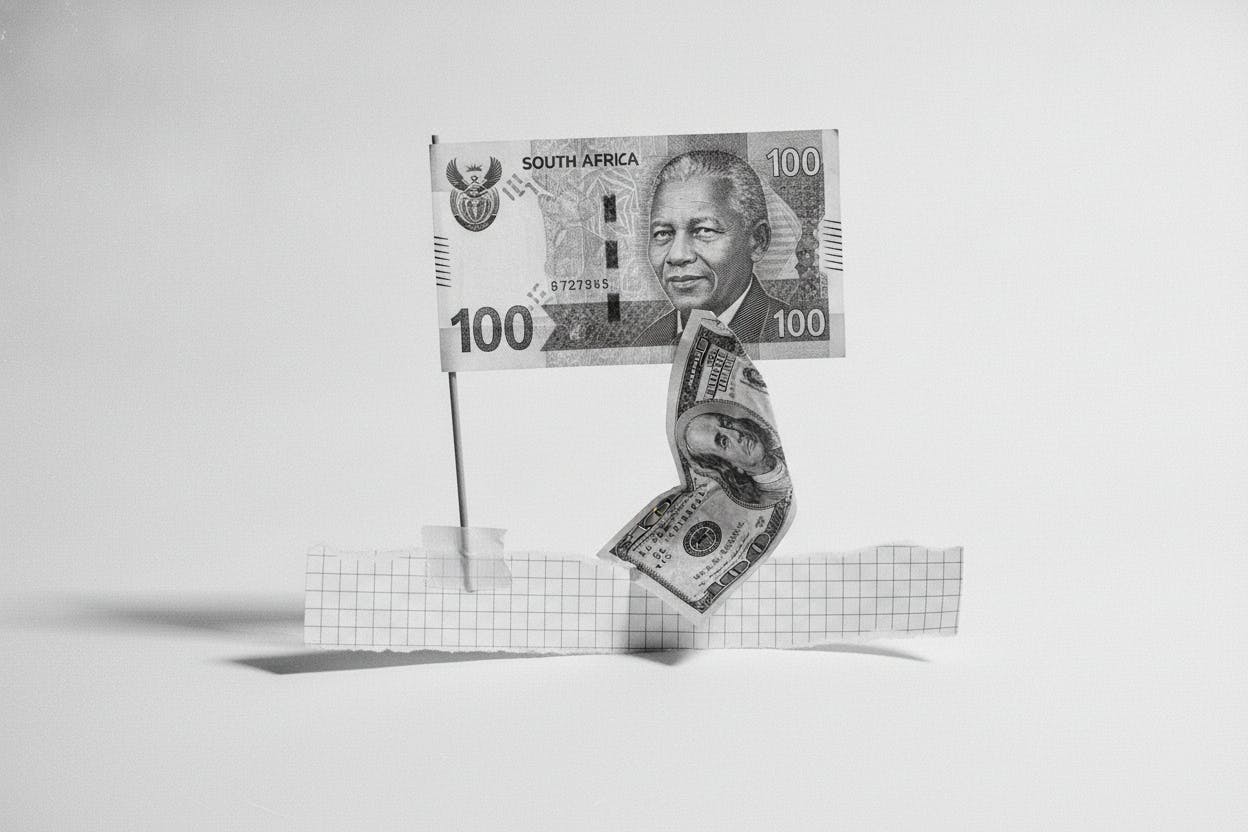
The South African rand strengthened against the dollar on Tuesday, and the JSE Top-40 index rose 1.1%, as a weaker-than-expected US jobs report sent the greenback lower. The move highlights how closely emerging-market currencies and stocks are tied to shifts in US economic data and Federal Reserve policy expectations.
What Drove the Move?
The catalyst was a US jobs report that came in below forecasts. When American employment data disappoints, it often reduces the likelihood that the Federal Reserve will raise interest rates in the near term. That can weaken the dollar, because lower rate expectations make US assets less attractive to global investors.
A softer dollar is generally good news for emerging-market currencies like the rand. It makes it cheaper for international investors to borrow in dollars and invest in higher-yielding assets elsewhere. South African bonds, which offer relatively attractive yields compared to developed-market peers, often benefit from such shifts.
The JSE Top-40 index, which tracks the 40 largest companies listed on the Johannesburg Stock Exchange, climbed 1.1% on the day. That gain reflects both the weaker dollar and renewed appetite for riskier assets among global investors.
Why US Jobs Data Matters for South Africa
US economic data can move markets far beyond America's borders because it shapes expectations for what the Federal Reserve does next. The Fed's interest rate decisions influence borrowing costs worldwide, affect capital flows into emerging markets, and drive currency movements.
When US jobs data is weak, it can signal that the world's largest economy is slowing. That might sound negative, but for emerging markets, the immediate effect can be positive if it reduces the chance of aggressive Fed rate hikes. Lower US rates make emerging-market bonds and equities more appealing on a relative basis.
South Africa is particularly sensitive to these dynamics. The rand is one of the most traded emerging-market currencies, and foreign investors hold a significant portion of South African government bonds. Any shift in global risk appetite can quickly show up in the currency and local asset prices.
What Investors Are Watching Now
With the rand strengthening and the JSE rallying, attention is turning to whether foreign inflows into South African bonds and equities will pick up. Sustained foreign buying would be a strong signal that international investors see value in local assets.
Foreign flows have been a key theme across emerging markets recently. In India, for example, foreign inflows have helped keep bond yields in check ahead of a key index decision, as we covered in India's Rupee and Bonds Await Foreign Inflows and Bloomberg Index Decision. Similarly, Latin American markets also rose on the softer US jobs data, as noted in Latin American Markets Rise as Softer US Jobs Data Eases Fed Rate Hike Fears.
For South Africa, the next few days will be crucial. If the rand holds its gains and the JSE continues to climb, it could encourage more foreign money to flow into local bonds and equities. That would provide a further tailwind for both the currency and the stock market.
What It Means for Everyday Investors
For South African investors, a stronger rand is a double-edged sword. It can help reduce the cost of imported goods, which may ease inflation pressures. But it can also hurt the earnings of JSE-listed companies that generate most of their revenue overseas, because their profits are worth less when converted back into rands.
The JSE Top-40's 1.1% gain suggests that, for now, the positive sentiment from the weaker dollar is outweighing any currency-related concerns. Investors should keep an eye on upcoming US economic data releases and Fed commentary, as these will continue to drive short-term moves in the rand and local equities.
Broader emerging-market sentiment also matters. As we saw with the UAE markets rallying on the same US jobs data, covered in UAE Markets Rally as US Jobs Data Eases Rate Hike Fears, the trend is not limited to South Africa. A weaker dollar tends to lift all boats in emerging markets, at least temporarily.
The Bottom Line
The rand's strength and the JSE's rise are a direct response to softer US jobs data and a weaker dollar. For now, the outlook for South African assets is tied to global factors, particularly Fed policy expectations. Local investors will be watching foreign flows closely to see if the rally has legs.