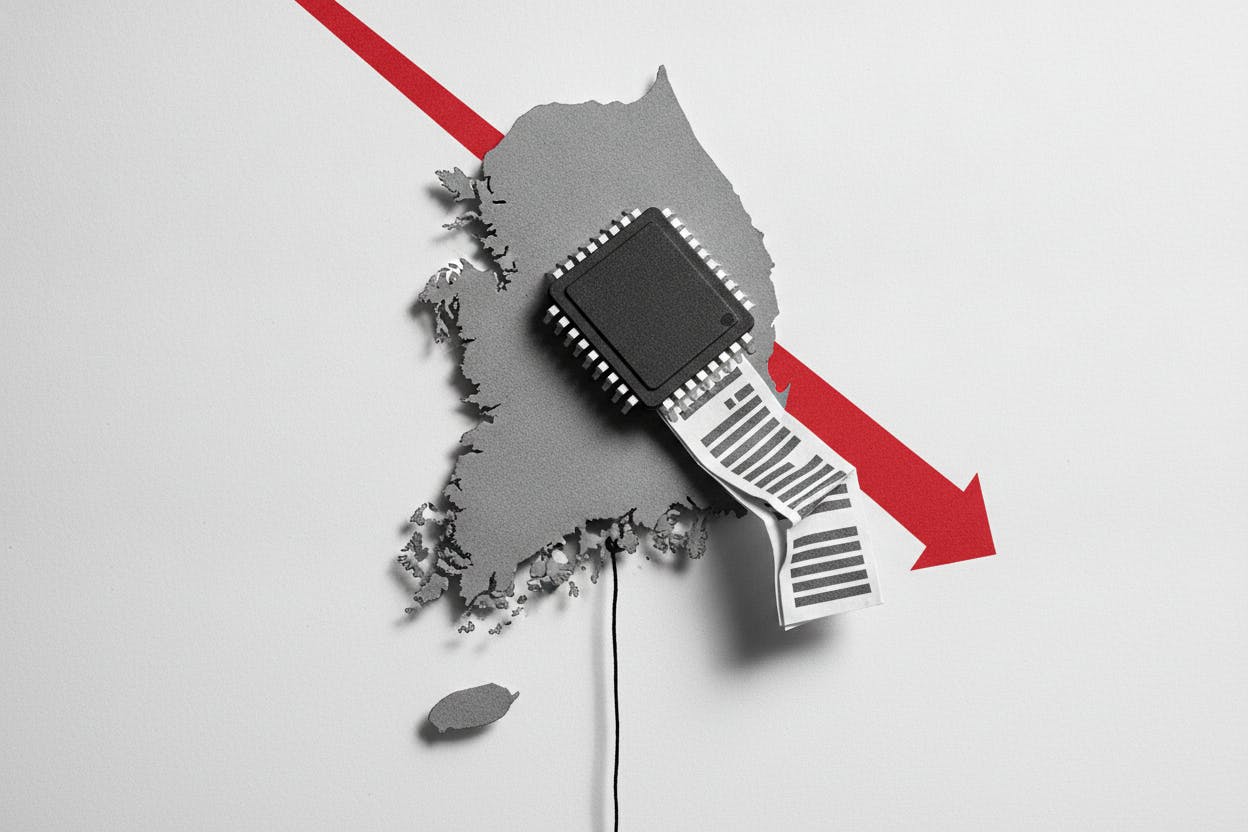
South Korea's benchmark KOSPI index suffered a dramatic intraday collapse on [date], falling as much as 12.6% and briefly triggering a 20-minute trading halt. The sudden drop, which drew immediate attention from Seoul's finance minister, was driven by a so-called "leveraged unwind" in the country's heavyweight AI chip stocks.
The sell-off followed another sharp decline in the prior session, compounding losses for investors. Trading volumes were relatively light, which likely amplified the move as leveraged exchange-traded funds (ETFs) — funds that use borrowed money or derivatives to amplify returns — were forced to sell positions to meet margin calls or rebalance their portfolios.
Why chip stocks led the decline
The KOSPI's heavy concentration in just two companies made it especially vulnerable. Samsung Electronics and SK Hynix together account for more than half of the index's total market capitalization. When those two names slide, the entire benchmark tends to move with them.
Both companies are key players in the global AI chip supply chain, producing high-bandwidth memory (HBM) chips used in Nvidia's AI accelerators. Recent volatility in AI-related stocks worldwide — including a wobble in Japan's Nikkei and a slide in Chinese AI stocks — has kept traders on edge, as investors reassess the pace of AI spending and demand.
Leveraged ETFs, which are popular among retail traders seeking outsized daily returns, can exacerbate market moves. When the underlying stocks fall sharply, these funds must sell holdings to maintain their leverage ratios, creating a feedback loop that pushes prices lower. The KOSPI's 12.6% plunge was a textbook example of such a forced unwind.
What it means for investors
For everyday investors, the episode is a reminder of the risks that come with leveraged products, especially in concentrated markets. The KOSPI's reliance on just two mega-cap stocks means that any shock to the AI chip sector can have an outsized impact on the entire index.
South Korea's finance minister has publicly scrutinized the role of leveraged ETFs in the sell-off, signaling potential regulatory attention. That could lead to tighter rules on these products, which have grown in popularity as retail investors seek higher returns in a low-yield environment.
Despite the sharp drop, the KOSPI has shown resilience in the past. After a 10% slide earlier this year, dip buyers stepped in, lured by strong chip earnings. Investors will now watch for any recovery in Samsung and SK Hynix shares, as well as broader market sentiment toward AI stocks globally.
The broader context is also important. Global markets have been grappling with uncertainty around interest rates, with traders bracing for higher US rates and monitoring signals from the Federal Reserve and the Bank of Japan. Higher rates can weigh on growth-sensitive sectors like tech and chips, adding to the pressure on AI-related names.
Key takeaways for everyday investors
- Leveraged ETFs amplify both gains and losses. They are designed for short-term trading, not long-term holding, and can trigger forced selling during sharp downturns.
- Concentration risk matters. The KOSPI's heavy weighting in Samsung and SK Hynix means that any sector-specific shock can move the entire index dramatically.
- Regulatory scrutiny could increase. The finance minister's attention on leveraged ETFs may lead to new rules that affect how these products operate in South Korea.
- Watch for dip-buying opportunities. Historically, sharp sell-offs in South Korean stocks have attracted bargain hunters, especially when chip earnings remain strong.
As always, investors should focus on their own risk tolerance and time horizon. Events like this underscore the importance of diversification and understanding the instruments in your portfolio.