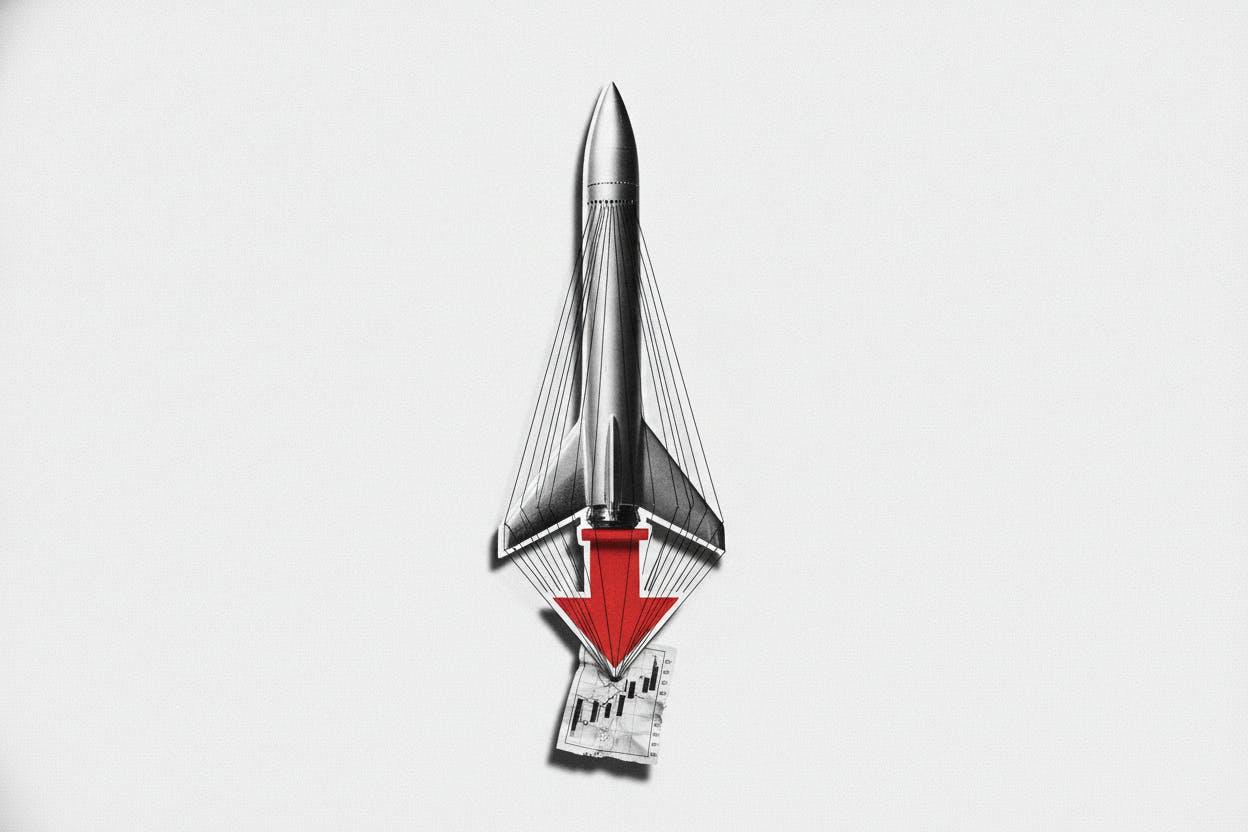
Short sellers are piling into newly public SpaceX after the stock slid roughly 30% from its post-debut high, pushing short interest to 13% from 8%, according to Ortex data cited by Reuters. The move marks a sharp shift in sentiment for a company that initially soared after its June 12 listing.
What Happened
SpaceX shares peaked at $225.64 just days after the debut, then reversed as a broader market sell-off took hold. That decline has attracted traders betting the drop continues. Short selling involves borrowing shares, selling them, and hoping to buy them back later at a lower price. Ortex co-founder Peter Hillerberg told Reuters the short interest is “building remarkably fast” for such a new listing.
The cost to borrow shares has fallen sharply, making it cheaper to maintain bearish positions. Ortex estimates the borrow fee has cooled to about 1% after hitting roughly 14% at the open. Utilization—the share of lendable stock already on loan—stands at around 39%, suggesting supply is not tight. That combination can allow short interest to keep building without triggering immediate pressure.
Why It Matters for Investors
Short interest doesn’t just signal skepticism; it changes how a stock can trade day to day. With borrow costs near 1%, shorts can stay in the position relatively cheaply, which can let bearish bets build and keep pressure on any rally. Still, the risk isn’t one-sided. Because the float is limited, any upside catalyst can force short sellers to buy back shares quickly, adding extra demand right when the price is already rising.
Reuters cited around 83 million shares sold short versus roughly 270 million shares of average daily volume. That mix can turn a routine bounce into a short squeeze, where buy-to-cover orders pile on top of normal demand. A limited tradable float can make rebounds more violent if shorts are forced to cover.
Compared with mega-caps that are “hardly shorted”—Ortex puts the Magnificent Seven around 1%-3% short interest, with borrow costs closer to 0.25%-0.33%—SpaceX looks more prone to sudden, mechanically fueled moves in either direction. For everyday investors, this means the stock could see sharp swings that aren’t tied to company fundamentals but to the mechanics of short covering.
Broader Market Context
The sell-off in SpaceX comes amid a broader market pullback that has also weighed on other high-growth names. The Hong Kong Stocks Slide as AI Valuations Face Rate Pressure and Alibaba Probe highlights how rate concerns are pressuring valuations globally. Meanwhile, Copper Bounces 1.1% as Weaker Dollar Lures Bargain Hunters After Two-Day Slide shows how currency moves can shift commodity demand, but for SpaceX, the key driver remains its own trading dynamics.
The cheap borrowing environment for shorts is partly a function of increased supply of lendable shares as more institutional holders enter the stock. That could change quickly if demand to borrow spikes or if the float shrinks due to insider lock-ups or concentrated ownership.
What to Watch Next
Investors should monitor short interest data and borrow costs for signs of tightening. If utilization rises above 60% or borrow fees start climbing, it could signal that shorts are becoming crowded, raising the odds of a squeeze. Any positive news—such as a major launch contract or earnings beat—could trigger a rapid reversal.
For now, SpaceX sits in a zone where both bulls and bears have reasons to be cautious. The 13% short interest is high for a newly public company, but the cheap cost to borrow means shorts can wait out a rally. The limited float means any forced covering could be explosive. As Prime Day Spending Tops Forecasts, Retail Stocks Rise; Hertz Slides on Used-Car Woes shows, market sentiment can shift quickly, and SpaceX is now in a position where trading mechanics could amplify those shifts.