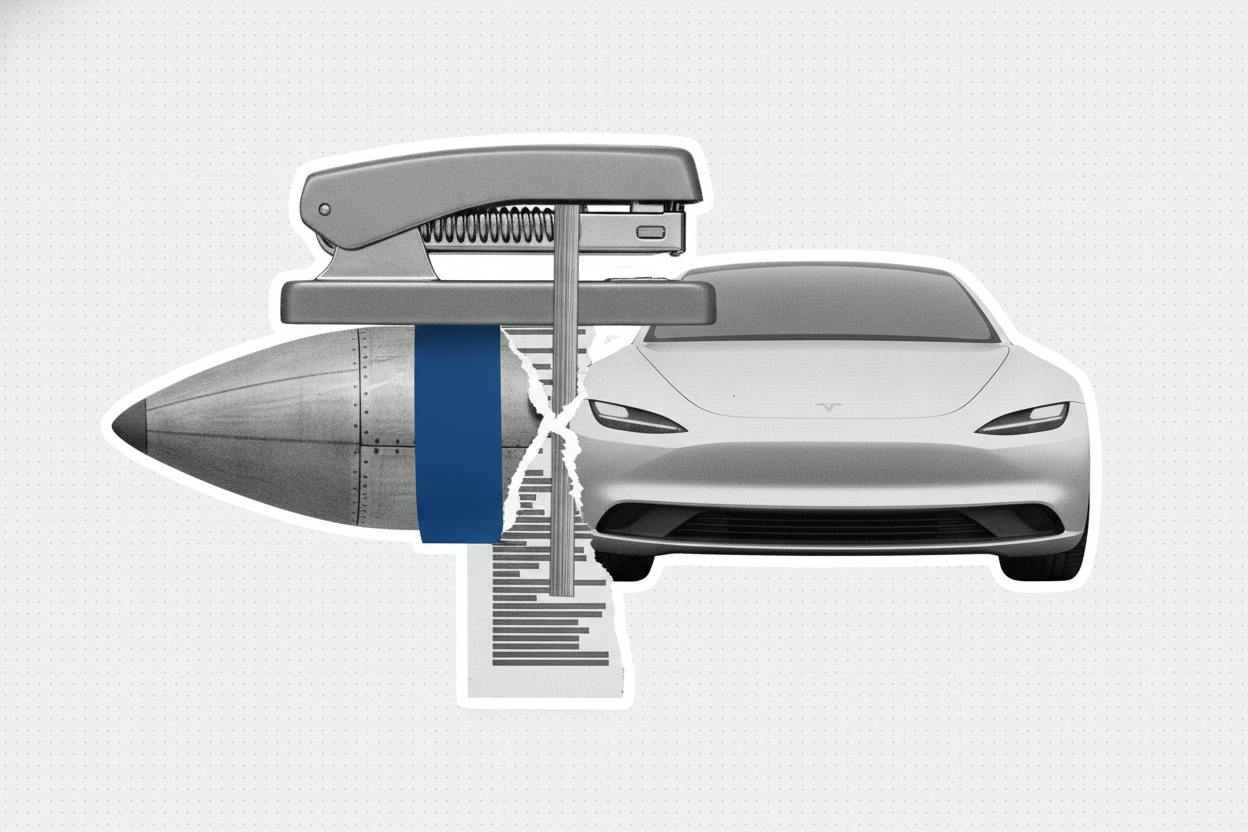
Corporate dealmaking is showing signs of life again. Bloomberg reported that SpaceX and Tesla have held talks about a potential merger, with an announcement possible as early as December. While such a deal would be unprecedented—combining two of the most valuable companies in the world—it highlights a broader trend: after a slow stretch, companies are increasingly turning to mergers and acquisitions to reshape their businesses.
The SpaceX-Tesla talks are the flashiest example, but they are far from the only deal in the works. This week alone, regional bank Hancock Whitney agreed to acquire Trustmark in a roughly $3.2 billion all-stock merger, and Spain's Banco Santander raised the exchange ratio in its share-swap offer for the remaining ~10% of Santander Brasil it doesn't already own. Not every deal is getting done, though: private equity firms Clayton, Dubilier & Rice (CD&R) and GTCR walked away from their pursuit of payments company Global Payments.
Why dealmaking is picking up
After a period when high interest rates made borrowing expensive and valuations uncertain, merger activity had slowed. But now, with rates stabilizing and companies adjusting to a new normal, executives are finding ways to do deals without relying heavily on cash. The pattern is clear: when firms can't or won't spend cash, they reach for stock, asset sales, and smaller "bolt-on" acquisitions to change their footprint without leaning as hard on borrowing costs.
All-stock mergers, like the Hancock Whitney-Trustmark deal, are a prime example. Instead of wiring cash, the buyer issues shares—essentially paying with company "IOUs." This helps preserve liquidity and, for banks, regulatory capital. But it also shifts risk: the target's payout is no longer a fixed dollar amount; it floats with the acquirer's stock price. That can widen or shrink the merger-arbitrage spread—the gap between the deal's implied value and where the target trades—based on moves in the buyer's shares and any investor worries about dilution.
For investors, this means that in deals like Hancock Whitney-Trustmark, day-to-day moves in the buyer's stock can matter as much as the target's near-term results when it comes to timing and the odds of closing. Similarly, Santander's improved terms for Santander Brasil—a 5% increase in the exchange ratio—show how share-swap offers can be adjusted to win over shareholders.
What it means for investors
For everyday investors, the resurgence of dealmaking is a double-edged sword. On one hand, M&A activity can signal confidence in the economy and create opportunities for shareholders of target companies to receive a premium. On the other hand, all-stock deals introduce new risks, particularly around dilution and the volatility of the acquirer's shares.
Take the Hancock Whitney-Trustmark merger. If you own Trustmark shares, your eventual payout depends on Hancock Whitney's stock price at closing. If Hancock Whitney's shares fall, the value of your deal shrinks. This is why merger arbitrage—a strategy that bets on deals closing—is so sensitive to the buyer's stock movements.
For those watching the SpaceX-Tesla talks, the implications are even broader. A merger between the two would reshape entire industries, from electric vehicles to space exploration. But such a deal is far from certain, and even if announced, it would face intense regulatory scrutiny. Investors should treat it as a speculative headline rather than a near-term reality.
Meanwhile, the CD&R and GTCR pause of the Global Payments buyout is a reminder that not all deals reach the finish line. When buyers walk away, target companies can see their shares drop, and investors who bet on a deal can lose out.
Looking ahead
As we head into December, all eyes will be on whether the SpaceX-Tesla talks materialize into a formal announcement. But even if they don't, the broader trend is clear: companies are finding creative ways to do deals, using stock and asset sales to navigate a world where cash is precious and borrowing costs remain elevated.
For investors, the key takeaway is to understand the mechanics of each deal. All-stock mergers, share swaps, and bolt-on acquisitions each carry their own risks and rewards. By staying informed, you can better assess how these deals might affect your portfolio—whether you own shares in the acquirer, the target, or simply watch from the sidelines.
As always, this is not financial advice. It's about understanding the landscape so you can make your own informed decisions.