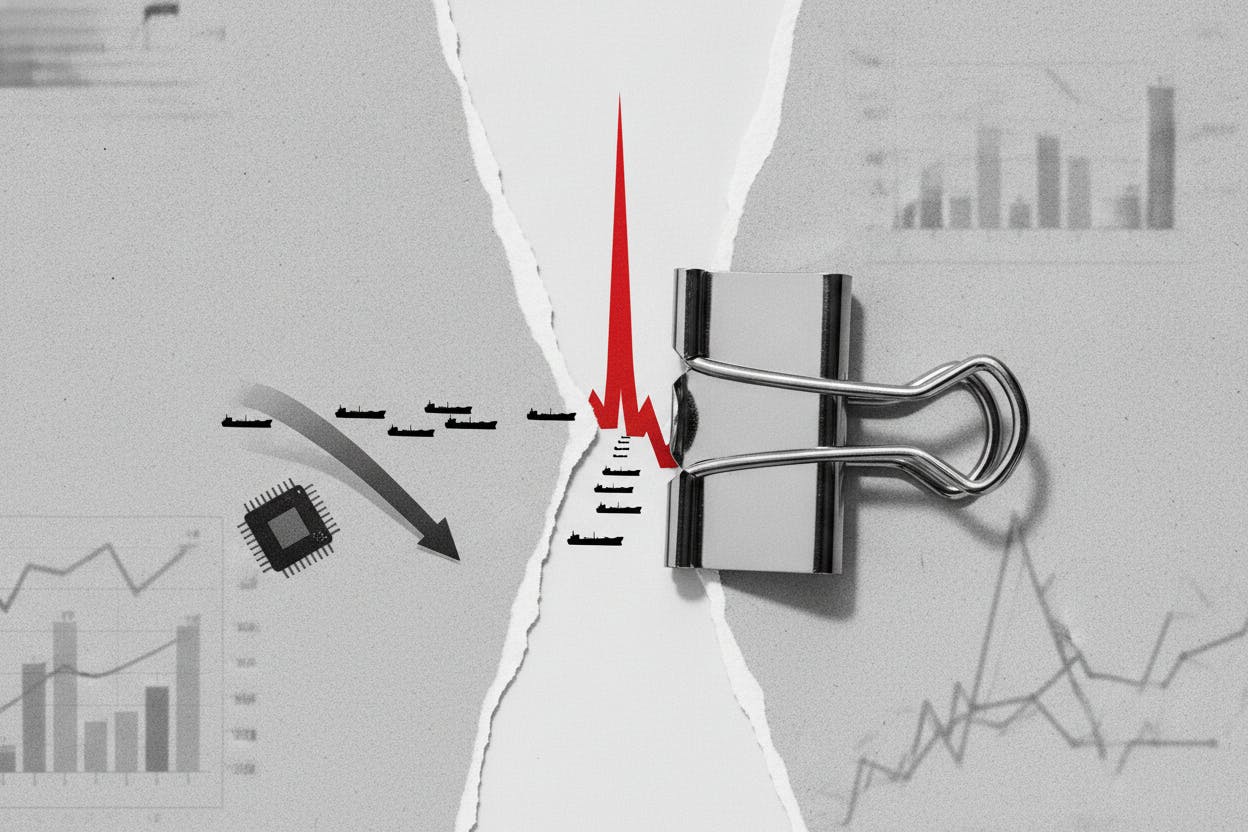
US stocks took a split path on Tuesday after Iran said it had closed the Strait of Hormuz, a critical chokepoint for global oil shipments. The tech-heavy Nasdaq slid, while the Dow Jones Industrial Average held up better, as crude prices jumped more than 3% and investors reassessed the risks to inflation and interest rates.
The move comes just ahead of two major market events: the release of the Consumer Price Index (CPI) and the start of big-bank earnings season. Both will give investors fresh clues on whether the Federal Reserve can begin cutting rates later this year.
What the Strait of Hormuz Closure Means
The Strait of Hormuz is a narrow waterway between Iran and Oman through which about a fifth of the world's seaborne oil passes. Any disruption there can quickly push up global energy prices, as traders price in potential supply shortages. Iran's announcement that it had closed the strait sent benchmark crude prices more than 3% higher on Tuesday.
Higher oil prices are rarely good news for stock markets. They raise costs for businesses that rely on fuel and transport, and they feed into headline inflation. That makes it harder for the Federal Reserve to cut interest rates, which many investors have been hoping for. Rate-sensitive sectors like technology tend to suffer most in that scenario, because their future profits are discounted more heavily when borrowing costs stay high.
That dynamic helps explain why the Nasdaq slid while the Dow held up. The Dow is packed with mature, cash-generating companies in sectors like healthcare, industrials and consumer staples, which are less vulnerable to rising rates. The Nasdaq, by contrast, is heavy on growth-oriented tech stocks, including chipmakers, which led the losses.
Chipmakers Under Pressure
Semiconductor stocks were among the hardest hit on Tuesday. The sector has already been under scrutiny after a recent record $11 billion outflow from AI-focused funds raised doubts about spending on artificial intelligence infrastructure. The added uncertainty from the Strait of Hormuz closure only compounded those worries.
Chipmakers are particularly sensitive to interest rate expectations because their valuations depend heavily on future earnings growth. When rates stay higher for longer, those future earnings are worth less in today's dollars. The combination of oil-driven inflation fears and lingering AI spending questions created a tough environment for the sector.
Investors will be watching the CPI report closely for any signs that higher energy costs are feeding through to consumer prices. If inflation comes in hot, it could reinforce the case for the Fed to hold rates steady, which would likely keep pressure on tech stocks.
What It Means for Investors
For everyday investors, the key takeaway is that geopolitical events can quickly shift market dynamics, especially when they hit critical infrastructure like the Strait of Hormuz. The immediate reaction was a classic risk-off move: oil stocks and energy shares gained, while tech and other growth sectors sold off.
But the bigger story may be what this means for the inflation outlook. If oil prices stay elevated, they could push up headline CPI in the coming months, making it harder for the Fed to cut rates. That would be a headwind for stocks broadly, but especially for high-valuation sectors like technology.
On the other hand, if the Strait of Hormuz situation de-escalates quickly, oil prices could retreat just as fast, removing that inflation risk. Investors should keep an eye on both the geopolitical headlines and the upcoming economic data for clues on the next move.
The earnings season starting this week will also provide a reality check. Big banks report first, and their results will show how consumers and businesses are holding up under higher rates. If earnings are strong, that could offset some of the geopolitical jitters.
For now, the market is in a wait-and-see mode, with the Strait of Hormuz adding a fresh layer of uncertainty to an already complex picture.



