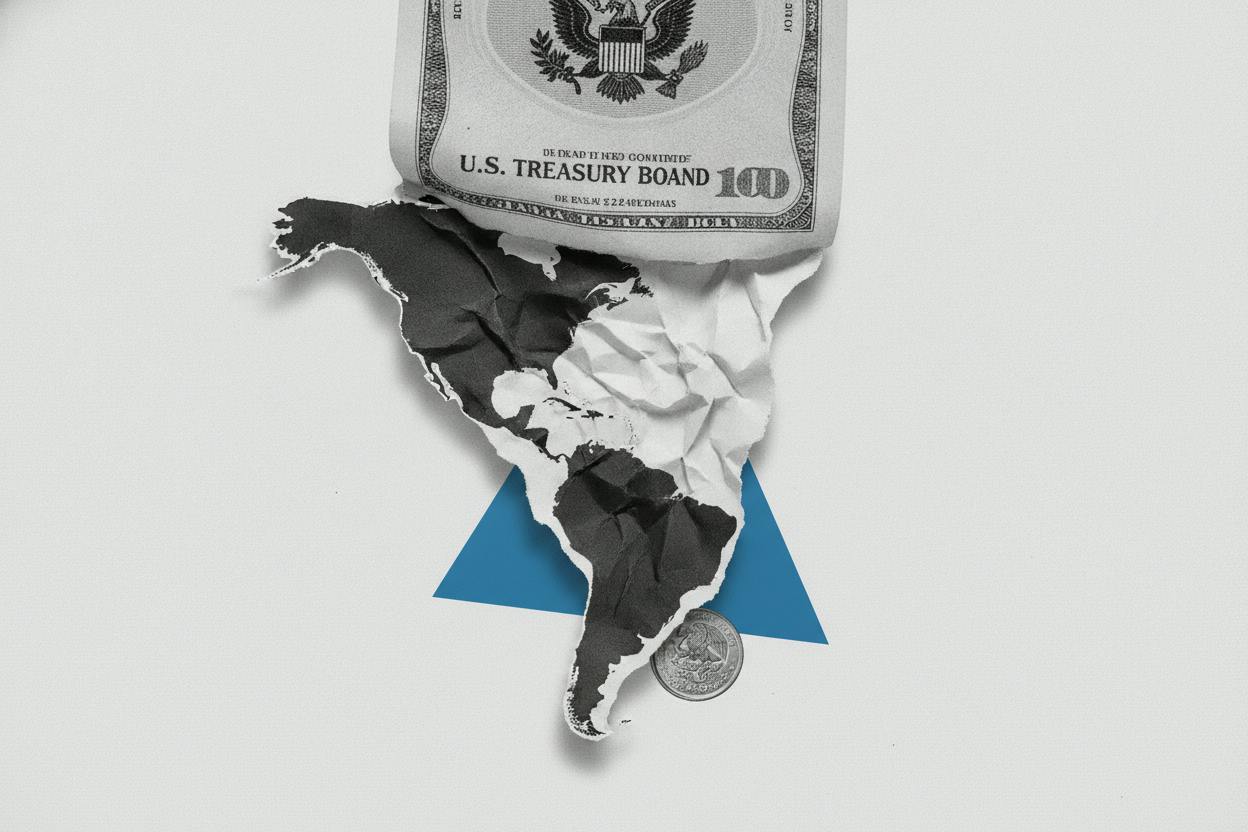
Latin American financial markets came under pressure Thursday, with the region's benchmark equity index sliding 1.7% as a stronger US dollar and climbing long-term Treasury yields pulled investor capital toward safer assets. The selloff came even as Mexico's central bank, known as Banxico, left its benchmark interest rate unchanged at 6.50%, a decision that failed to stem the peso's decline to its weakest level against the dollar since early April.
The moves reflect a familiar dynamic in global markets: when US borrowing costs rise and the dollar strengthens, investors can earn attractive returns at home without taking on the currency and political risks that come with emerging markets. Latin America, which typically sits near the top of the list when global fund managers trim risk, felt that shift acutely.
Why a stronger dollar hits Latin America so hard
The US dollar index touched a fresh two-month high, extending a rally that has been building as Treasury yields climb. The 30-year US Treasury yield reached its highest level since 2004, a milestone that underscores just how much compensation investors are demanding to hold long-dated US government debt.
Several forces are behind that move. Higher oil prices have added to inflation concerns after US–Iran talks stalled and new sanctions tightened, pushing energy costs upward. When oil rises, it feeds into inflation expectations, which in turn push bond yields higher. For emerging markets, the combination is a double-edged sword: some countries benefit from higher commodity prices, but the stronger dollar that often accompanies rising US rates makes their dollar-denominated debt more expensive to service and their exports less competitive.
Currencies are the first place this stress shows up. A weaker peso, for example, means Mexican assets are worth less in dollar terms to foreign investors, compounding any losses from falling share prices. That can trigger a feedback loop, as fund managers sell to avoid further currency losses, which pushes the peso down even more.
Banxico's hold and what it signals
Banxico's decision to keep rates at 6.50% was widely expected, but the accompanying peso weakness suggests markets were looking for something more. Central banks in emerging economies face a difficult balancing act: higher rates can support the currency by offering better returns, but they also slow domestic growth. Holding steady signals that policymakers are not yet ready to prioritise currency defence over economic stability.
Mexico is particularly sensitive to US conditions because of its deep trade ties and the large volume of remittances sent home from workers in the United States. When the dollar strengthens, those remittances are worth more in pesos, which can cushion households, but the broader investment climate tends to sour as foreign capital retreats.
The pressure is not limited to Mexico. The dollar's rise against other commodity currencies shows this is a global dollar story, not just a Latin American one. Similarly, copper's pullback from record highs highlights how a firm greenback weighs on metals prices, which matters enormously for exporters like Chile and Peru.
What it means for investors
For everyday investors, the takeaway is about understanding why your international holdings might be lagging even when the underlying businesses are doing fine. A large part of the recent weakness in Latin American stocks and bonds is currency-driven, not a reflection of deteriorating company fundamentals. When the dollar eventually peaks and US yields stabilise, that headwind can reverse quickly.
That said, the current environment favours caution. Rising US yields mean bonds offer more competition for stocks, and the dollar's strength makes unhedged foreign investments less appealing on a total-return basis. Investors with exposure to emerging markets may want to check whether their funds hedge currency risk, as that can make a big difference in periods like this.
Looking ahead, the key triggers to watch are US inflation data and any shift in Federal Reserve policy expectations, since those drive the direction of Treasury yields and the dollar. Oil prices will also matter, both for inflation and for the fiscal health of major Latin American producers. And any change in Banxico's tone could sway the peso, which in turn affects the appeal of Mexican assets.
For now, the region remains on the defensive. As long as US rates stay elevated and the dollar firm, Latin America will struggle to attract the foreign capital it needs to fuel a sustained rally. The story is less about what Latin American policymakers do and more about what happens in Washington and on the global energy market.