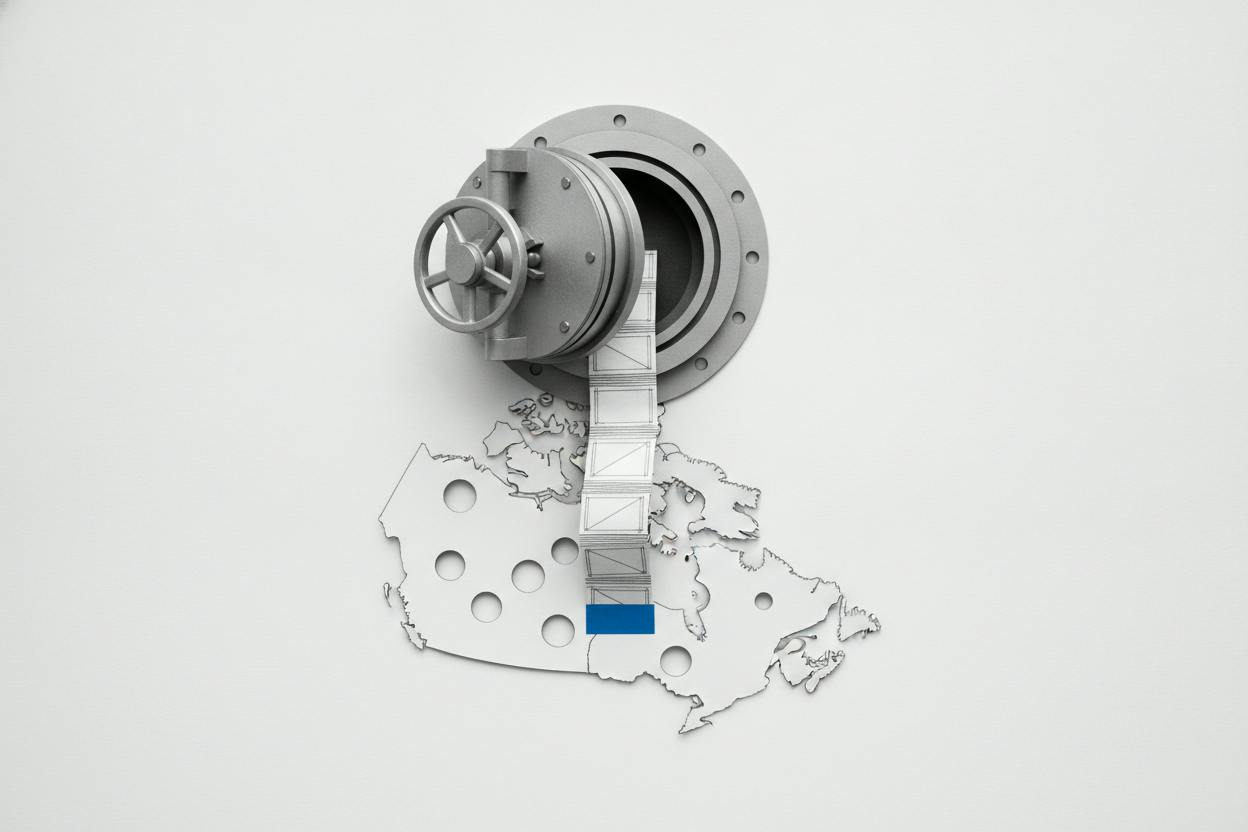
TD Bank, one of Canada's largest lenders, has announced a five-year commitment to channel CA$150 billion into financing the country's next wave of major projects. The pledge covers energy, critical minerals, defense, artificial intelligence and infrastructure — sectors that Ottawa is betting on to drive long-term growth.
The commitment comes as the federal government courts CA$1 trillion in new investment across the economy. TD's announcement is a significant vote of confidence in that ambition, and it signals that Canada's biggest banks are ready to play a central role in funding the transition.
What the commitment includes
TD says the CA$150 billion will be deployed through a mix of traditional lending and capital markets activity. That includes underwriting and advisory work — the behind-the-scenes services that help companies raise money by issuing bonds or stocks, or structure complex deals like mergers and acquisitions.
CEO Raymond Chun framed the pledge as a way to connect investors with opportunities in sectors the country wants to scale. Defense and aerospace were specifically called out, alongside energy and minerals. The inclusion of defense is notable, as Canada has been under pressure to boost its military spending and domestic industrial capacity.
The bank's focus on critical minerals is also timely. These materials — used in batteries, electronics and renewable energy systems — are increasingly seen as strategic assets. Countries around the world are competing to secure supply chains, and Canada has significant mineral reserves.
Why this matters for the economy
Canada's growth story has been shifting in recent years. Exports are becoming more diversified beyond the United States, and the government is pushing to attract investment in areas that can create jobs and reduce reliance on traditional industries. TD's pledge aligns with that broader trend.
Infrastructure spending is another key piece. Roads, ports, power grids and digital networks are the backbone of economic activity, and many are aging. Private capital, channeled through banks, can help fill the gap left by public budgets.
The CA$1 trillion target Ottawa has set is ambitious. It would require sustained investment from both domestic and foreign sources. Banks like TD are natural intermediaries — they have the balance sheets to lend directly and the expertise to help companies tap capital markets.
What it means for investors
For everyday investors, this announcement is a signal about where capital is likely to flow over the next several years. Sectors like energy, critical minerals, AI and infrastructure could see increased financing activity, which may translate into more projects, more jobs and potentially more investment opportunities.
It's also a reminder that banks are not just passive lenders. Their underwriting and advisory businesses generate fees and can boost profitability. A large commitment like this could support TD's earnings over the medium term, though it's not a guarantee of returns.
Investors should note that this is a pledge, not a contract. The actual deployment of funds will depend on economic conditions, project viability and regulatory approvals. Companies in these sectors often face hurdles like permitting delays, commodity price swings and technological risks.
Still, the announcement adds to a growing picture of Canada positioning itself as a destination for large-scale investment. For those with exposure to Canadian banks or the sectors mentioned, it's worth watching how the commitment translates into real lending and deal activity.
Context and next steps
TD's move comes amid a broader global push toward infrastructure and energy transition spending. Other countries and companies have made similar pledges, and the competition for capital is intense.
In Canada, inflation has been a concern, with prices expected to hold at around 3% in August as energy costs persist. That backdrop could influence how quickly projects get off the ground, as higher borrowing costs make financing more expensive.
Investors will likely watch for more details from TD on how it plans to allocate the CA$150 billion across sectors and regions. They'll also be looking at whether other major Canadian banks follow suit with similar commitments.
For now, the pledge is a clear statement of intent. It underscores the role that large financial institutions can play in shaping a country's economic direction — and it gives investors a lens into where the next decade of Canadian growth may come from.