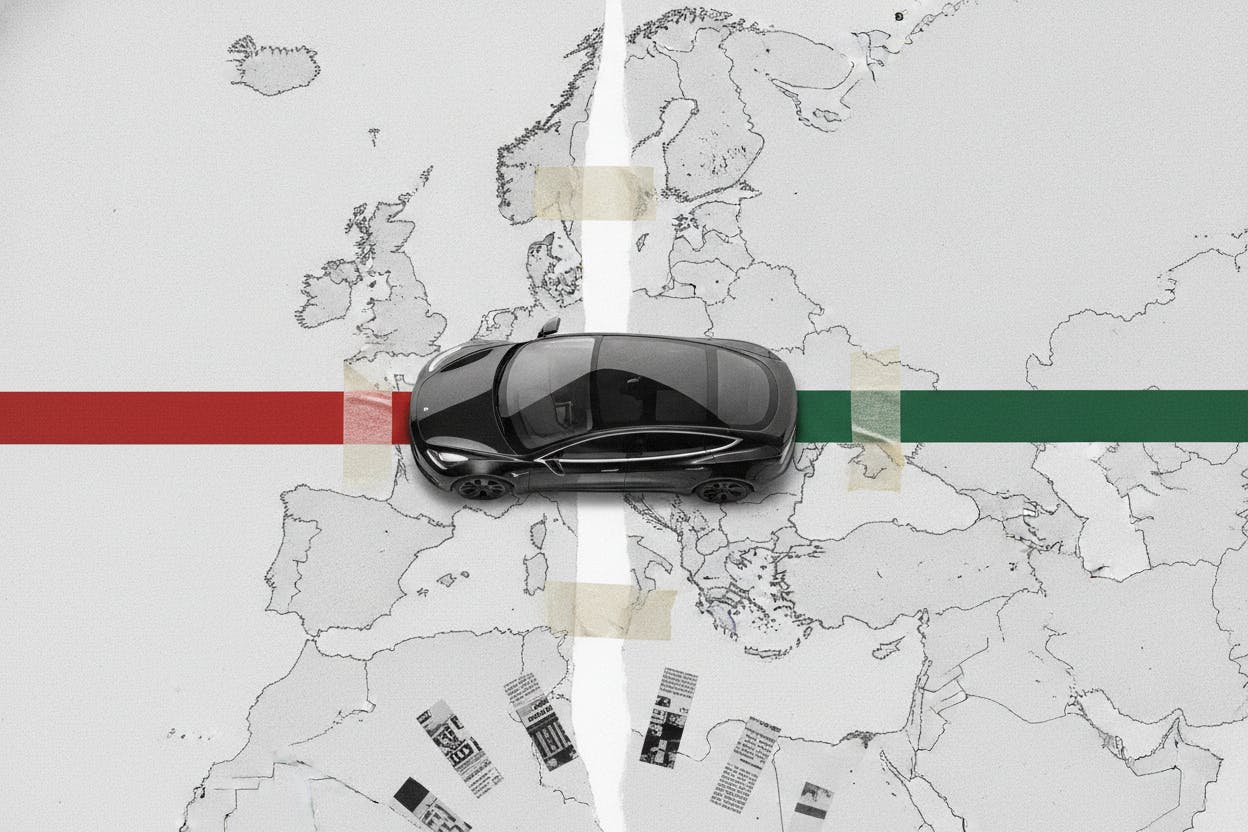
Tesla's sales picture in Europe took a sharp turn in July, with registrations surging in some of the region's biggest markets while collapsing in others. According to local industry groups cited by Reuters, new-car registrations for the U.S. electric-vehicle maker jumped 86% in France and 52% in Denmark last month. But in Norway, registrations plunged 97%, and they fell 60% in Sweden and 81% in Spain.
Registrations — the official sign-ups of new cars, which are commonly used as a proxy for sales — give a snapshot of how many vehicles actually hit the road in a given month. The wide divergence across countries is a reminder that Tesla's performance in Europe is far from uniform, even as its year-to-date momentum in the region appears genuine.
Why the split?
The contrast likely reflects a mix of local market conditions, government incentives, and timing. ING, a Dutch bank, noted that the broader European electric-vehicle market looked solid in July, helped by incentive programs in France and continued growth for battery-electric cars in Denmark. Those tailwinds help explain why Tesla saw strong registration gains in those two countries.
In Norway, a market where EVs already dominate new-car sales, the near-total drop in Tesla registrations is striking. Norway has long been a bellwether for EV adoption, with generous tax breaks and a mature charging network. A 97% fall suggests something more than just seasonal variation — possibly a pause in deliveries, a shift in model mix, or a comparison against an unusually strong July last year. Sweden and Spain also saw steep declines, pointing to softer demand or supply constraints in those markets.
It's worth noting that monthly registration data can be volatile. Automakers often batch deliveries to certain regions or quarters, and a single month can swing sharply without indicating a lasting trend. Still, the breadth of the declines in Northern Europe and Spain is notable.
What it means for investors
For everyday investors, the key takeaway is that Tesla's European sales are not moving in one direction. While the company has been cutting prices and rolling out incentives to boost demand, the response varies widely by country. That makes it harder to read the company's overall health from any single market's monthly numbers.
The broader European EV market's resilience — supported by government subsidies and a growing appetite for battery-electric cars — is a positive backdrop for Tesla and its rivals. But Tesla faces intensifying competition from Chinese EV makers, who have been expanding aggressively in Europe. As Chinese EV makers posted strong July sales, the pressure on Tesla to hold its market share is mounting.
Investors should also keep an eye on how Tesla's price cuts affect its profit margins. The company has repeatedly slashed prices over the past year to defend its position, a strategy that can boost volumes but squeeze profitability. If European demand remains patchy, Tesla may need to lean even harder on incentives, which could weigh on its bottom line.
For those watching the broader auto sector, the mixed Tesla data fits with a wider picture of uneven EV adoption across Europe. While France and Denmark are seeing growth, other markets are cooling. That divergence is something investors in auto stocks and EV-related funds should track closely.
Looking ahead
The next few months will be telling. Tesla typically sees a surge in deliveries at the end of each quarter, so August and September data could look different. Investors will also be watching for any updates from Tesla on its production plans and whether it adjusts its pricing strategy in Europe.
For now, the July numbers are a reminder that Tesla's European story is not a single narrative. The company's year-to-date pickup in the region is real, but it's uneven — and that unevenness is exactly what investors should be watching.