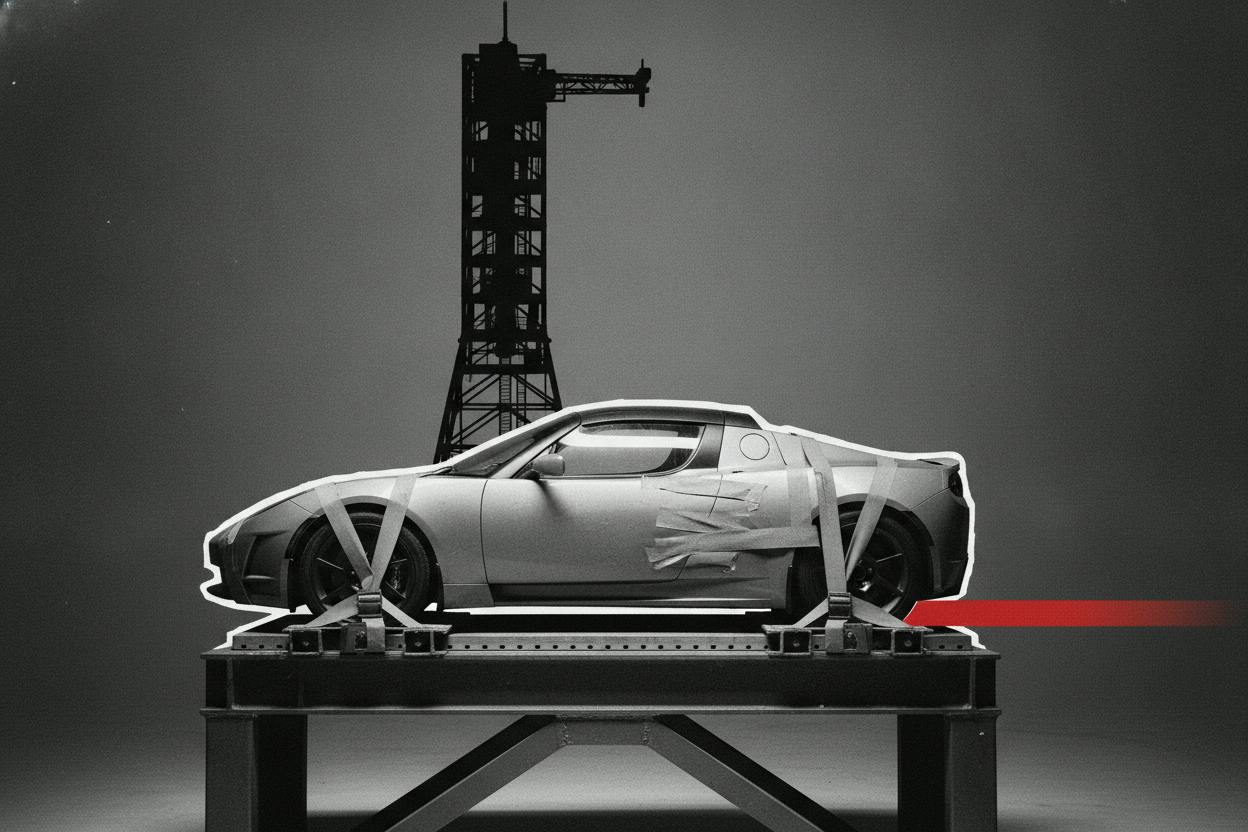
Tesla is set to unveil a redesigned Roadster on Thursday at a SpaceX test site in McGregor, Texas, according to Reuters. The reveal comes years after the company first promised deliveries in 2020, and it marks a return to the model that helped put Tesla on the map.
But investors shouldn't expect this car to move the financial needle. CEO Elon Musk has described the Roadster as a “small potato situation” that won't “move the needle in a major way financially.” Morningstar analyst Seth Goldstein estimates Tesla might sell about 2,000 Roadsters a year—a fraction of the 1.6 million vehicles the company delivered last year.
What is a halo car?
In the auto industry, a “halo car” is a high-end, low-volume model designed to showcase a brand's capabilities rather than generate big profits. Think of it as a rolling advertisement for what the company can do. For Tesla, the Roadster serves that purpose: it's a flagship that can demonstrate cutting-edge battery tech, performance, and design—hopefully casting a glow over the rest of the lineup.
Tesla first teased the next-generation Roadster in 2017 with bold claims, including up to 620 miles of range. Musk has since said the car could go from 0 to 60 miles per hour in under a second, thanks to a collaboration with SpaceX. If Tesla can credibly demo specs like that, it can refresh the story that the company still has an edge in batteries and performance—even as it increasingly talks about AI-driven self-driving and robotics.
Why the delay matters
The long delay is significant. Tesla has a history of making big promises that take years to materialize, and the Roadster is a prime example. Investors have heard these kinds of claims before, so Thursday's reveal is as much a test of execution and focus as it is of engineering. Can Tesla deliver on its most ambitious promises, or will this be another case of overpromising and underdelivering?
The timing also matters. Tesla is navigating a period of slowing EV demand and intensifying competition, especially from Chinese automakers. The company has been cutting prices to defend market share, which has pressured margins. A convincing halo launch could help reassure investors that Tesla can still command premium prices and maintain its brand cachet.
What it means for investors
From a pure numbers perspective, the Roadster's impact on Tesla's revenue and profits should be negligible. At 2,000 units a year, even at a high price point, the car would contribute only a tiny fraction of Tesla's overall sales. That's why any share-price reaction is likely to be driven by expectations rather than earnings.
But Tesla's valuation is heavily tied to long-term growth and profitability assumptions. If the Roadster launch is convincing, it could strengthen the belief that Tesla still has a technological edge—and that it can defend its margins across its mass-market lineup. That narrative could matter more than the car itself.
For context, Tesla's stock has been volatile as investors weigh its EV business against its ambitions in AI and robotics. The company's future is increasingly tied to software and autonomy, not just cars. A successful Roadster reveal could be a reminder that Tesla's hardware expertise remains a foundation for those efforts.
Investors should watch for a few things on Thursday: whether Tesla actually shows a working prototype, what performance specs it claims, and how Musk frames the Roadster's role in the company's broader strategy. If the demo falls short or feels like more hype, it could feed skepticism about Tesla's ability to execute on its bigger promises.
In the end, the Roadster is a symbol. It's about proving that Tesla can still innovate and excite—even as it pivots toward a future where cars are just one part of a larger technology story. For investors, the real question is whether that story holds up.