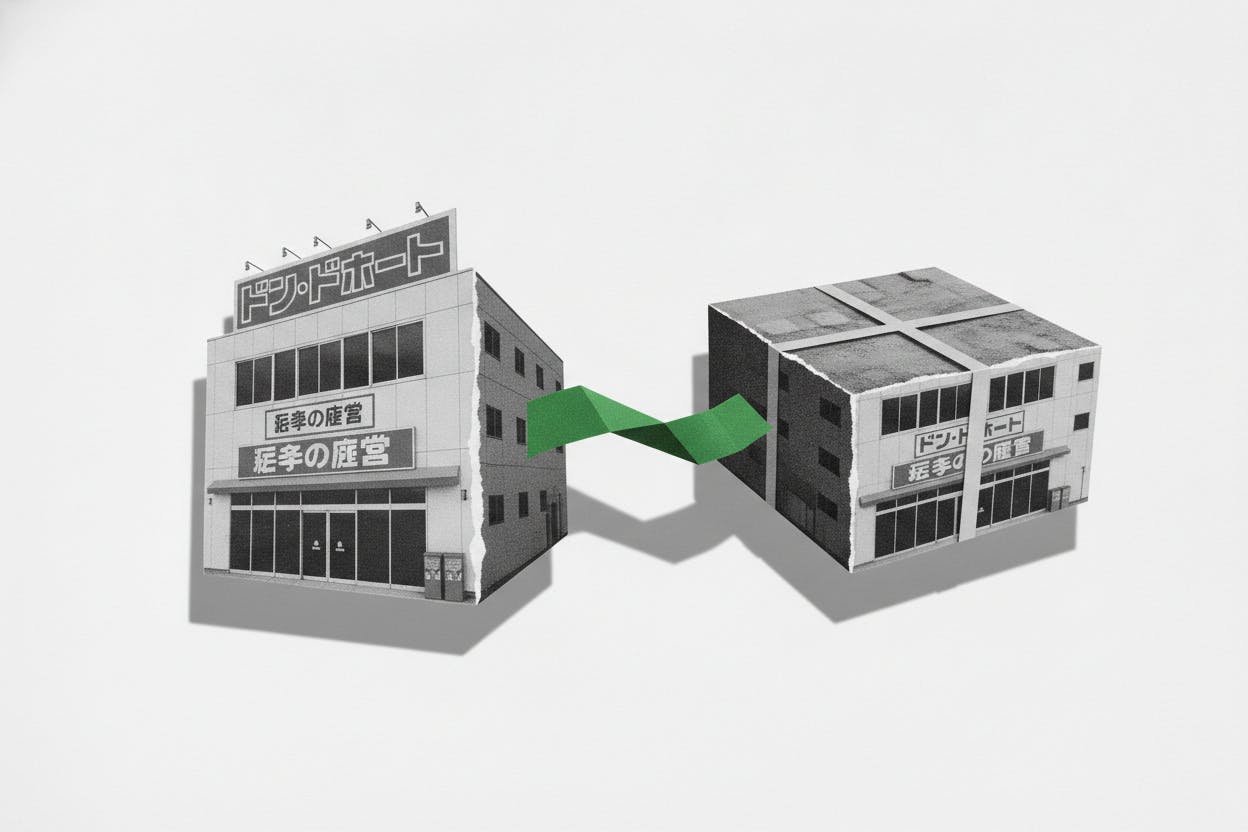
Japanese discount retailer Trial Holdings has announced a plan to restructure its supermarket chain Seiyu, separating the store operations from its real estate holdings in a bid to raise cash and reduce a ballooning debt load. The company said in a filing to the Tokyo Stock Exchange on Friday that it approved an absorption-type company split, with the separation set to take effect on November 1st.
The core idea is straightforward: by ring-fencing Seiyu's buildings and land into a separate entity, Trial can more easily sell those properties or use them as collateral for loans. The company expects to raise about 17 billion yen (roughly $115 million) through this monetization, which it plans to use to pay down debt or fund future expansion.
Why the debt has climbed
Trial's debt load has risen sharply to 394.6 billion yen, a figure that has raised eyebrows among investors. The company has been on an aggressive growth path, acquiring Seiyu from Walmart in a deal completed in 2022, and has since been investing heavily in store renovations, supply chain upgrades, and its discount format. That spending has been financed largely through borrowing, leaving the balance sheet stretched.
For a retailer, high debt can be particularly risky because margins are thin and cash flows can be volatile. If interest rates rise or sales soften, servicing that debt becomes more expensive, eating into profits. By unlocking the value of Seiyu's real estate, Trial is trying to shore up its financial position without having to sell off core operations or issue new shares, which would dilute existing shareholders.
How the split works
An absorption-type company split is a common corporate restructuring tool in Japan. It involves transferring part of a company's business to a new or existing subsidiary, with the parent company typically receiving shares in the subsidiary in return. In this case, Trial will separate Seiyu's retail operations from its property assets, creating a cleaner structure where the real estate can be managed or sold independently.
This approach is often used by companies that own significant property but are primarily in the business of operating stores. By separating the two, the property can be sold to investors or used as collateral for cheaper financing, while the operating business continues to run the stores under lease agreements. It's a way to turn illiquid assets into cash without disrupting day-to-day operations.
Trial's move is not unique. Other Japanese retailers have used similar structures to raise capital, and the strategy has become more common as companies look to optimize their balance sheets in a low-growth environment. The key is whether the cash raised will be enough to meaningfully reduce the debt burden.
What it means for investors
For everyday investors, this news is a reminder that a company's debt level matters just as much as its growth prospects. Trial's debt-to-equity ratio has been climbing, and while the company is not in immediate danger, a high debt load can limit its ability to invest in new stores or respond to competitive pressures.
The 17 billion yen raise is a relatively small amount compared to the total debt of 394.6 billion yen, so it won't solve the problem on its own. But it signals that management is taking steps to address the balance sheet, which could be seen as a positive. Investors will likely watch whether Trial can continue to generate strong cash flow from its discount operations, and whether it will need to take further steps, such as selling more assets or cutting costs.
It's also worth noting that the split could make Seiyu's real estate more transparent to investors, potentially attracting interest from property-focused funds. However, the success of the plan will depend on the real estate market and the terms of any sale or financing deal.
For now, the market's reaction has been muted, with shares trading relatively flat after the announcement. The real test will come in the coming months as Trial executes the split and provides more details on how it plans to use the proceeds.
As with any corporate restructuring, there are risks. The split could be complex and time-consuming, and there's no guarantee that the real estate will fetch the expected price. But for a company that has grown rapidly through acquisitions, taking steps to strengthen its financial foundation is a prudent move.
Investors should keep an eye on Trial's next earnings report, which will show whether the debt load is stabilizing and whether the company can maintain its growth trajectory while paying down what it owes.