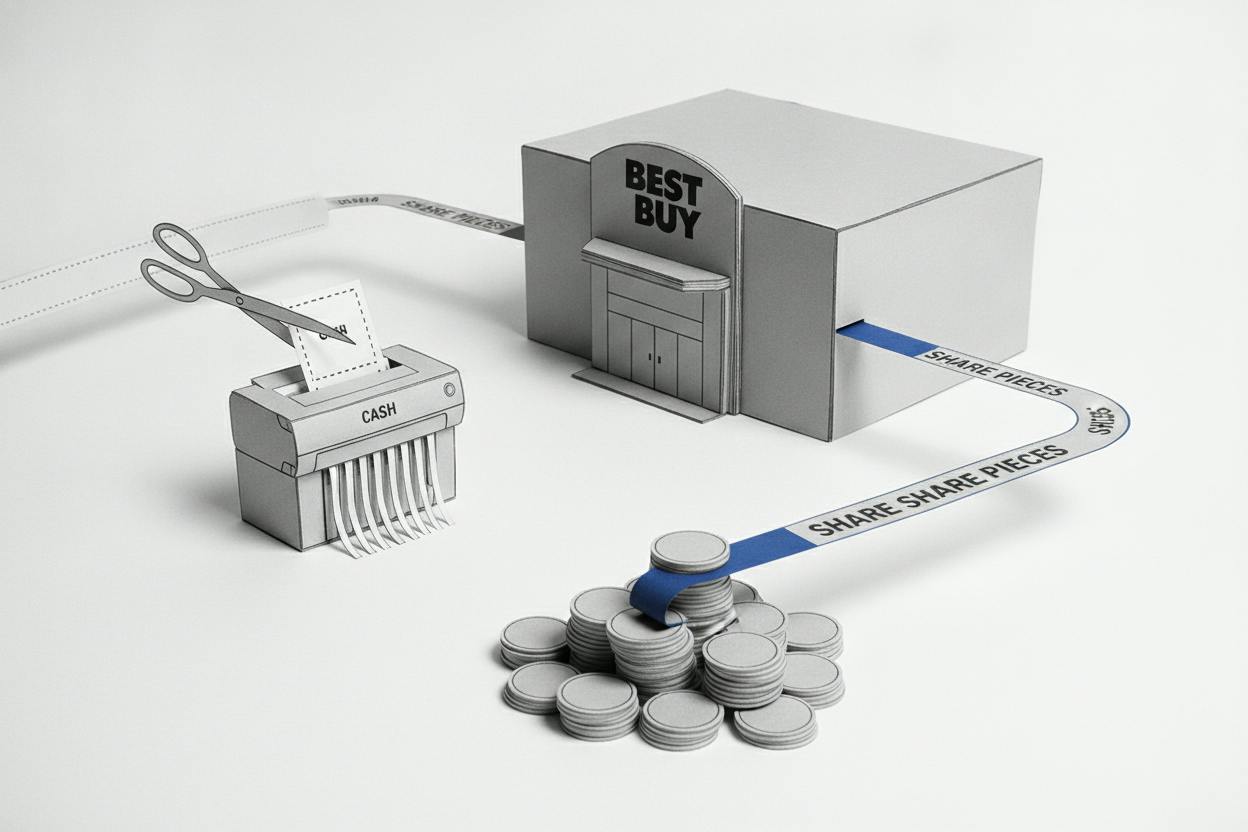
Best Buy is facing pressure from Wall Street to change how it returns cash to shareholders. Truist Securities, an investment bank, has suggested the electronics retailer should reconsider its identity as a "premium dividend payer" and instead consider cutting its dividend to fund more share buybacks, according to a research note. The firm argues that Best Buy's stock looks cheap, making buybacks an attractive use of capital.
The recommendation is notable because it challenges a long-held view of Best Buy as a reliable income stock. For years, the company has been known for returning cash to shareholders through dividends, which are regular payments made to investors out of profits. But Truist's analysts believe that in the current environment, buying back shares—which reduces the number of shares outstanding and can boost earnings per share—might deliver better value.
Why the dividend debate matters
Dividends and buybacks are two main ways companies return cash to shareholders. A dividend is a direct cash payment, often quarterly, and is popular with income-focused investors like retirees. A buyback, on the other hand, involves the company purchasing its own shares on the open market. This can lift the stock price by increasing demand and by making each remaining share represent a larger slice of the company. Buybacks are also more flexible: companies can scale them up or down without the stigma of cutting a dividend, which many investors view as a sign of weakness.
Truist's argument hinges on valuation. When a stock trades below what analysts consider its intrinsic value, buybacks can be a bargain—essentially buying low. Best Buy's shares have faced pressure from slowing consumer electronics demand after a pandemic-era boom. As a result, the stock may be trading at a discount to its historical averages, making buybacks more appealing than a dividend that might be seen as unsustainable if earnings decline.
However, cutting a dividend is a major decision. It can upset income investors and signal that management is worried about future cash flows. Many companies go to great lengths to maintain or raise dividends, even during tough times, because a cut can trigger a sell-off. That's why Truist's suggestion is controversial: it implies that Best Buy's dividend may be too generous relative to its growth prospects.
What it means for investors
For everyday investors, this news raises several points to consider. First, if Best Buy were to cut its dividend, income-focused investors would see lower cash payouts. That could make the stock less attractive to those relying on dividends for retirement income. On the other hand, a shift to buybacks could support the share price, benefiting all shareholders through potential capital appreciation.
Second, the debate highlights the importance of evaluating a company's capital allocation strategy. Investors should ask: Is the dividend sustainable? Does the company have better uses for its cash, such as reinvesting in the business, paying down debt, or buying back shares? In Best Buy's case, Truist believes buybacks are the better option, but that's an opinion, not a guarantee.
Third, this is a reminder that Wall Street analysts often push for changes that can boost short-term stock performance. Their recommendations are not always aligned with long-term investor goals. For instance, a dividend cut might lift the stock temporarily if buybacks follow, but it could also harm the company's reputation as a stable income play.
Investors should also watch for any official response from Best Buy's management. Companies don't have to follow analyst suggestions, and Best Buy may choose to maintain its dividend to keep its income investor base happy. The retailer's next earnings report and any commentary on capital allocation will be key.
The bigger picture
Best Buy operates in a competitive retail landscape, facing pressure from online giants and changing consumer habits. The company has navigated these challenges before, but the current environment of high interest rates and cautious consumer spending adds uncertainty. In such times, investors often favor companies with strong balance sheets and consistent cash returns. If Best Buy signals a shift away from dividends, it could alter how the market values the stock.
For now, Truist's note is just a recommendation. But it sparks a valuable conversation about how companies should balance returning cash to shareholders with investing in future growth. As always, investors should do their own research and consider their personal financial goals before making any decisions.