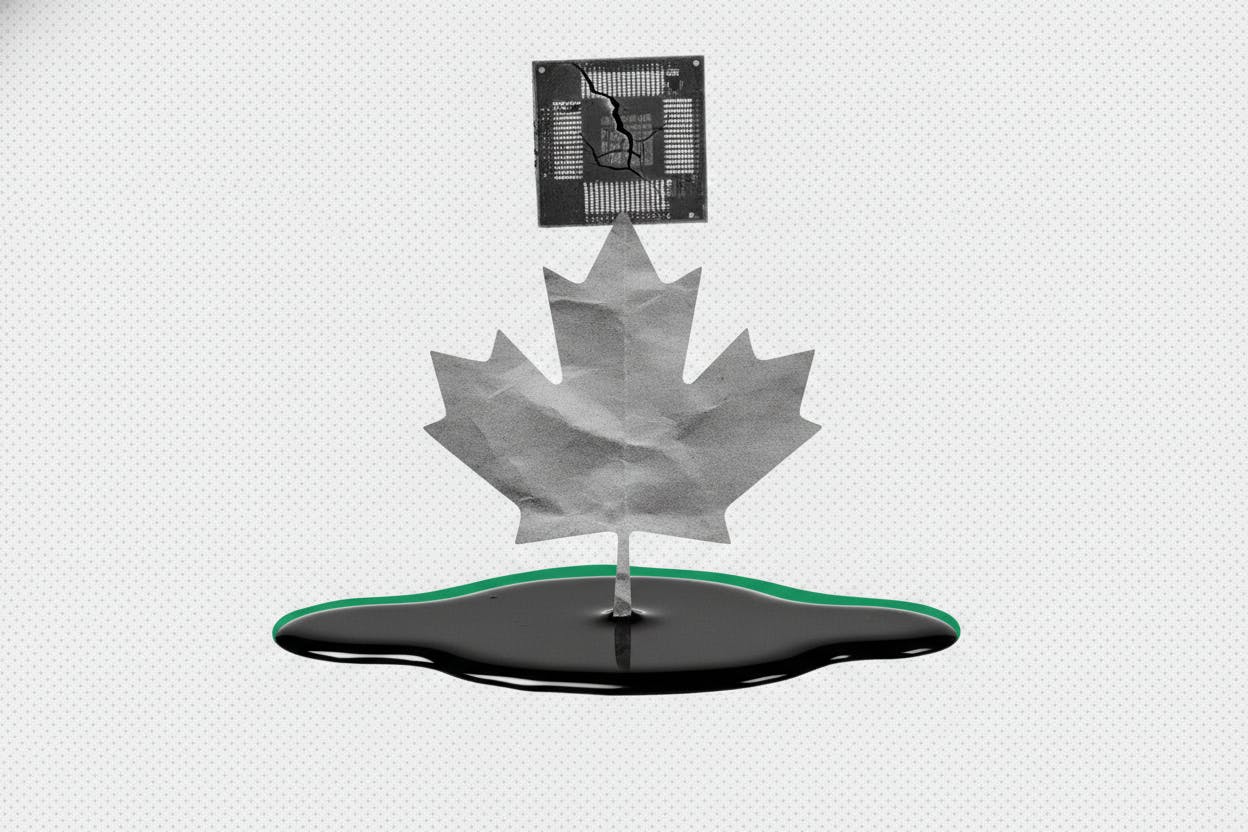
Canada's main stock index looked set to open lower early Friday as a global chip selloff dulled risk appetite, even as oil prices stayed high on fresh tension between the US and Iran.
September S&P/TSX futures were down 0.3% at 6:15 a.m. ET, echoing a broader pullback in global equity futures led by semiconductors, as investors reassessed how much AI-related spending can keep supporting chip profits. At the same time, escalating US-Iran strikes around the Gulf kept traders focused on potential supply disruptions through the Strait of Hormuz, helping lift Brent crude more than 1% and West Texas Intermediate 1.96%.
Why Chip Stocks Are Under Pressure
The selloff in semiconductor stocks reflects growing uncertainty about the sustainability of the artificial intelligence boom. After a massive rally in chipmakers like Nvidia and AMD, some investors are questioning whether the huge capital expenditures by tech giants on AI infrastructure will translate into sustained earnings growth. This has led to a rotation away from pure-play chip stocks toward other sectors, as seen in recent market moves. For a deeper look at this trend, see our article on Wall Street Rotates from AI Chips to Hyperscalers as Capex Growth Cools.
The pullback is not limited to Canada. Global equity futures, including those in the US and Asia, have also declined, with the Nasdaq futures dropping significantly. This broader selloff highlights how interconnected markets are, especially when it comes to tech stocks that have driven much of the recent gains. For more on the global impact, check out AI Stocks Slide as Chipmakers Lead Global Selloff; Oil Jumps on Middle East Strikes.
Oil Prices Rise on Geopolitical Tensions
Meanwhile, oil prices are climbing as US-Iran strikes in the Gulf region raise fears of supply disruptions. The Strait of Hormuz, a critical chokepoint for global oil shipments, is a key concern. Any disruption there could significantly impact oil flows, pushing prices higher. Brent crude, the international benchmark, rose more than 1%, while West Texas Intermediate, the US benchmark, gained nearly 2%.
Higher energy prices can be a double-edged sword for Canada. On one hand, they boost the revenues of Canadian energy companies, which are a major component of the TSX. On the other hand, they can increase costs for consumers and businesses, potentially slowing economic growth. For investors, this means keeping an eye on how energy stocks perform relative to the broader market. The situation in the Gulf is also affecting other markets, as seen in UAE Stocks Mixed as US-Iran Strikes Keep Oil Risk Premium Elevated.
What It Means for Investors
For everyday investors, the combination of a chip selloff and rising oil prices creates a mixed picture. The TSX's heavy weighting in energy stocks could provide some buffer against the tech-led decline, but the overall market is likely to remain volatile. Investors should be prepared for swings in both directions as geopolitical events and earnings expectations evolve.
It's also worth noting that the AI trade, which has been a major driver of stock market gains, is showing signs of fatigue. This doesn't mean the AI boom is over, but it suggests that investors are becoming more selective. Companies that can demonstrate clear returns on their AI investments may fare better than those riding the hype. For more on this shift, see Chip Stocks Slide Again as AI Trade Falters; Nasdaq Futures Drop 2%.
In the near term, watch for further developments in the Middle East and any earnings reports from major chip companies. These will likely set the tone for markets in the coming days. As always, diversification remains a key strategy for managing risk in uncertain times.



