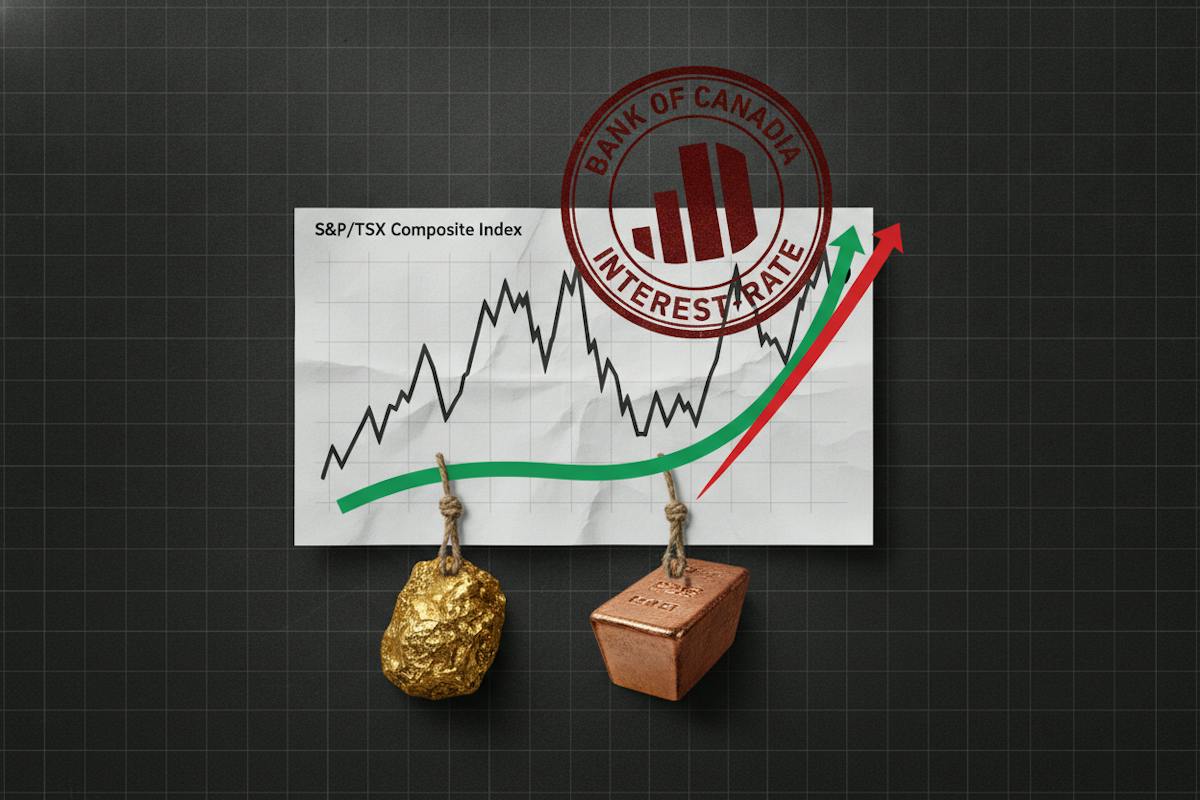
Canada's main stock index, the S&P/TSX Composite, closed Friday with a gain of 0.71%, helped by a rebound in gold and copper prices. The advance, however, did little to ease investors' focus on the bigger question: where Canadian interest rates are headed next.
The materials sector led the charge. Gold bounced off a recent one-year low, while copper posted its biggest single-day rise in months. That combination tends to lift Canada's large mining companies, which are heavily weighted in the index. Energy stocks, by contrast, were a drag as Brent crude oil fell. Technology shares added some support, and financials posted a modest gain.
But beneath the surface, traders are treating the TSX less like a pure commodities play and more like a bet on the path of Canadian interest rates. That's because financials—banks and insurers—make up a huge slice of the index, and their fortunes are closely tied to borrowing costs and the health of the economy.
Why the rate jitters?
The Bank of Canada has been on a tightening path, and markets are now pricing in a possible rate hike at the central bank's December meeting. The next piece of evidence arrives Monday, when Statistics Canada releases its latest economic growth data. A stronger-than-expected reading could give the Bank of Canada more room to raise rates again, while a weak number might cool those expectations.
Higher interest rates are a double-edged sword for stocks. On one hand, they can signal a strong economy, which is good for corporate profits. On the other, they raise borrowing costs for companies and consumers, and they make bonds more attractive relative to stocks. For banks, higher rates can boost lending margins, but they can also slow down borrowing and increase the risk of loan defaults.
The recent moves in commodities add another layer. Copper, often seen as a bellwether for global economic health, has been volatile. A strong rally in copper suggests demand is holding up, but it can also feed inflation worries. Gold, meanwhile, is a classic safe-haven asset, and its rebound from a one-year low may reflect some investor caution about the broader outlook.
What it means for investors
For everyday investors, the key takeaway is that the TSX's performance is not just about commodity prices. It's increasingly tied to the interest-rate outlook. That means the Monday growth report could move markets more than any single commodity price.
If you hold a diversified portfolio that includes Canadian stocks, you're already exposed to these dynamics. The materials sector can be volatile, and rate-sensitive sectors like financials and real estate can swing with every hint from the central bank. Keeping an eye on the Bank of Canada's next move is essential, because it affects everything from mortgage rates to the value of your investments.
It's also worth noting that the TSX's commodity lift comes against a backdrop of global uncertainty. Copper's recent strength has been linked to supply concerns, as seen in UK stocks opening higher on oil and copper supply fears. And while gold's rebound is notable, it's still well below its highs from earlier this year.
Investors should also watch the broader market context. The U.S. dollar has been strong, which can pressure commodity prices, but gold and copper have shown resilience. Meanwhile, the dollar holding near a 22-month high reflects a flight to safety that could continue if economic data disappoints.
For those looking at individual stocks, the mining sector offers opportunities but also risks. Copper miners, for instance, have seen mixed analyst views, with some upgrades on copper growth prospects even as others remain cautious. The key is to focus on the long-term fundamentals rather than short-term price swings.
Ultimately, Friday's gain is a reminder that the TSX is a diverse index, and its moves are driven by a mix of global commodity prices and domestic monetary policy. As the Bank of Canada's December meeting approaches, expect more volatility. The Monday growth data will be the first test of whether the recent commodity rally can hold, or whether rate worries will once again take center stage.
For now, investors should stay informed and avoid making hasty decisions based on a single day's move. The market is likely to remain choppy as it digests new data and central bank signals.