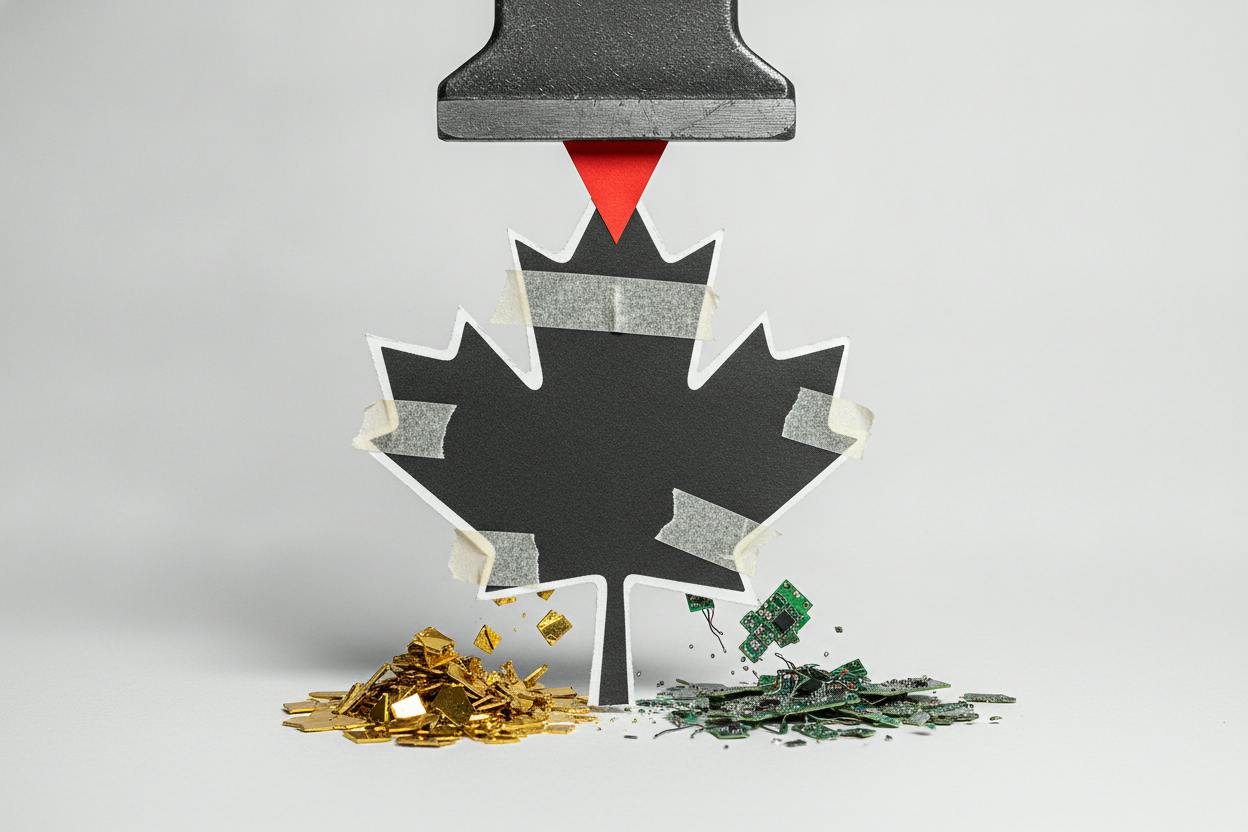
Canada's main stock index took a hit on Wednesday, dragged down by a sharp drop in precious metals and a selloff in AI-linked technology stocks that spilled over from Wall Street. The slide was unusually concentrated in two sectors that carry heavy weight in the TSX, making the day's losses feel broader than they might otherwise have been.
What happened
Spot gold fell more than 3.3% to its lowest level in over a year, while silver dropped 6.2%. That pulled the TSX materials sector down about 4%. The trigger was a hotter-than-expected US inflation reading, which led traders to price a 96% chance that the Federal Reserve will raise interest rates in December, according to the CME FedWatch Tool.
Higher expected policy rates tend to lift "real yields" — bond yields after accounting for inflation. That makes non-interest-paying assets like gold less attractive, because investors can earn a better return from holding cash or bonds instead. The same logic applies to silver, which also pays no income.
At the same time, investors backed away from high-growth AI-linked stocks. The Nasdaq composite sank more than 4% on worries that the current wave of AI spending, much of it funded by debt, may not generate strong enough returns. Canadian tech stocks followed suit, with the sector down about 4.9% as names like Celestica and BlackBerry fell sharply.
Why gold's drop hits Canada harder
Gold's slide can hit the TSX harder than it hits US indexes. That's because materials companies — miners and other commodity producers — make up a much larger share of Canada's benchmark than they do of the S&P 500. When the sector drops 4%, it mechanically drags the whole index lower, even if other parts of the economy look steadier.
There's also a compounding effect for mining stocks. The metal price sets revenue, but many operating costs don't fall quickly. So when gold drops sharply, profits can get squeezed faster than the underlying commodity. That's why mining shares often fall more than the metal itself on days like this.
In other words, Canada's market can look more "rate-sensitive" on days when precious metals gap down. Investors who hold broad Canadian index funds may feel the pain even if they don't own any mining stocks directly.
AI stocks under pressure
The tech selloff was a separate but equally important force. Investors have been pouring money into AI-related companies for months, betting that the technology will transform industries and boost profits. But that enthusiasm has started to cool as questions grow about whether the massive spending on data centers and computing power will actually pay off.
Much of that spending is being funded with debt, which becomes more expensive when interest rates rise. Higher rates also make future profits less valuable today, which hits high-growth stocks hardest. That combination — expensive borrowing and a longer wait for returns — is a tough environment for AI names.
Canadian tech is smaller than its US counterpart, but it still moves with the same sentiment. When the Nasdaq drops 4%, Canadian tech stocks often follow, as they did on Wednesday. Celestica, a contract electronics manufacturer with AI exposure, and BlackBerry, a software company, were among the notable decliners.
What it means for investors
For everyday investors, the key takeaway is that rate expectations are driving markets right now. When inflation data comes in hot, traders quickly adjust their bets on what the Fed will do next. That ripples through everything from gold to tech stocks to the broader TSX.
If you hold a diversified portfolio, days like this are a reminder that different assets react differently to the same news. Gold and tech both fell on Wednesday, but for different reasons — one tied to real yields, the other to growth expectations. That's why diversification matters, even when it feels like everything is dropping at once.
Investors will likely be watching the next inflation reports and any Fed commentary for clues about whether a December hike is truly on the table. If rate expectations keep rising, gold and other non-yielding assets could stay under pressure, and high-valuation tech stocks may continue to wobble.
For those with a longer time horizon, sharp single-day moves are often noise. But understanding why the market is moving — and how different sectors are affected — can help you make sense of your portfolio's performance and avoid reacting emotionally to short-term swings.