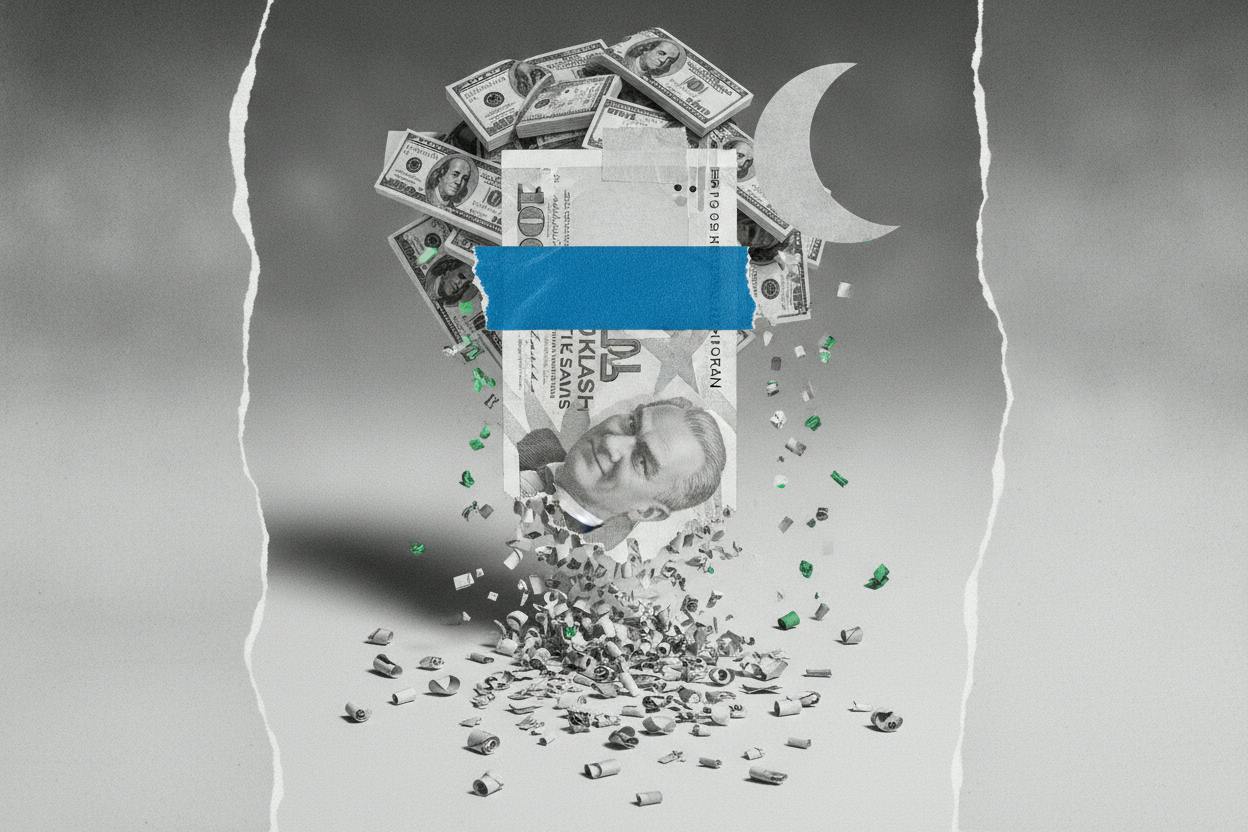
Turkey's central bank appears to have dug deep into its foreign-currency reserves last week, selling an estimated $12 billion to keep the lira from sliding further. The currency held near 50.62 per dollar on Monday, but the cost of that defense is showing up in other corners of the market.
Three bankers' estimates, cited on Monday, suggest policymakers actively intervened in the foreign-exchange market to smooth day-to-day moves. The lira was trading in a tight band around 50.6150–50.6275 per dollar, a sign that the central bank was willing to spend heavily to prevent a sharper depreciation.
For everyday investors, the headline number matters less than what it signals. A stable exchange rate can mask rising stress. When a central bank has to sell dollars to hold the line, it reduces the buffer of cash and foreign currency that investors watch as proof it can keep supporting the currency. That cushion is a key gauge of confidence, and when it thins, markets start to price in more risk.
Why reserves matter
Central banks hold reserves for many reasons, but one of the most important is to defend the currency during periods of volatility. By selling dollars and buying lira, the central bank can temporarily prop up the exchange rate. But this strategy has limits: reserves are finite, and each intervention reduces the stock available for future shocks.
Investors pay close attention to reserve levels because they signal a country's ability to meet external obligations and maintain currency stability. When reserves fall sharply, the market often shifts its focus from the spot exchange rate to the price of protection. It can become more expensive to hedge against lira weakness, and lenders may demand higher yields to lend Turkey dollars.
That dynamic is playing out now. Even though the lira looks stable on the surface, the cost of insuring against further depreciation is likely rising. This can feed into broader borrowing costs for Turkey in international markets, making external financing more expensive.
What it means for investors
For those with exposure to Turkish assets, the reserve draw is a reminder that stability can be costly. A $12 billion intervention is a significant sum, and it may not be a one-off. If the central bank continues to sell reserves to defend the lira, the risk premium on Turkish assets could keep climbing.
That risk premium shows up in several ways. Borrowing costs for Turkey in hard currency may widen, making it more expensive for the government and companies to raise money abroad. Hedging costs for the lira could rise, eating into returns for foreign investors. And higher external funding costs can spill over into domestic interest rates and profit expectations for local companies.
It also helps explain why Istanbul's BIST 100 index slipped 0.24% on Monday even while the lira barely moved. Investors are looking beyond the stable exchange rate and focusing on the underlying strain.
The broader backdrop adds to the pressure. A firmer US dollar and higher US bond yields tend to make emerging-market currencies more vulnerable, and Turkey is no exception. When global conditions tighten, countries with thinner reserve buffers often feel the pinch first.
For now, the lira's stability may offer some short-term comfort, but the real test is whether the central bank can maintain that stability without depleting its reserves further. Markets will be watching reserve data closely in the coming weeks, and any sign of continued heavy intervention could keep the risk premium elevated.
In the meantime, investors should keep an eye on how Turkish assets price in the cost of defense. A steady currency can be reassuring, but the bill for that stability eventually comes due.