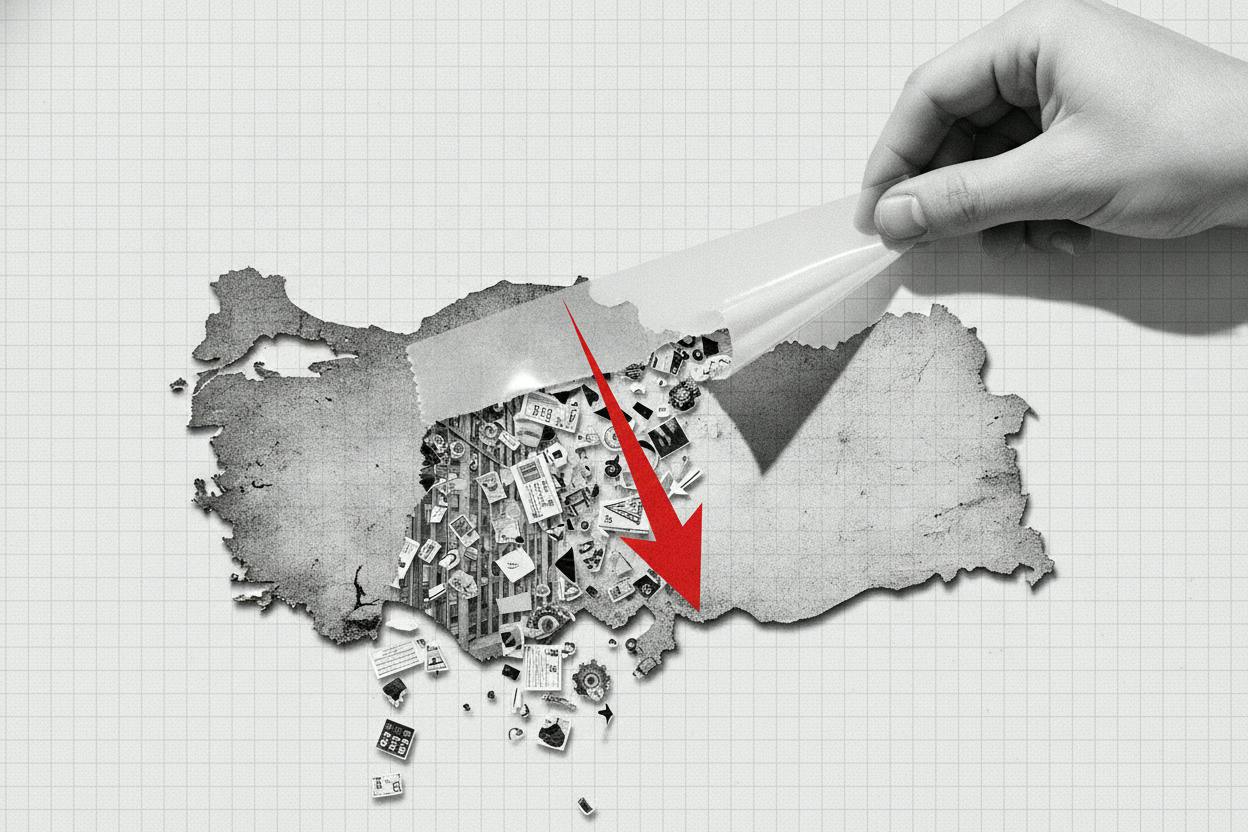
Turkey's stock market tumbled into a bear market in September, as a wave of investor withdrawals and forced selling dragged the main share index down 16.65% for the month, according to Reuters. The decline marks a sharp reversal for a market that had been one of the more volatile in emerging markets, and it has left many everyday investors wondering what went wrong and what comes next.
What happened
The selloff accelerated as concerns grew about investment funds that held large positions in thinly traded stocks. When investors asked for their money back, some fund managers reportedly sold their easiest-to-sell holdings first to raise cash quickly. That "liquidity-first" approach pushed prices down further, which in turn encouraged more withdrawals, creating a downward spiral.
Regulators stepped in as the turmoil spread. Turkey's Capital Markets Board (SPK), the market watchdog, ordered the liquidation of 131 funds that together managed more than $20 billion for 455,758 retail investors, Reuters reported. The regulator also widened its probe into alleged market manipulation, adding another layer of uncertainty for traders and fund managers.
Smaller stocks hit hardest
The pain was not shared equally across the market. According to LSEG data cited by Reuters, the index of companies outside the top 100 fell roughly 35% in September, while the blue-chip top 30 dropped 9.8%. Even within the top 100, 15 stocks in the "remaining 70" lost between 50% and 90% of their value.
This pattern is typical of a liquidity crunch. When funds need to raise cash quickly, they tend to sell the most liquid assets first—usually the biggest, most actively traded stocks. Smaller companies, which trade less frequently, are harder to sell without moving the price sharply, so they often suffer larger percentage declines when selling pressure hits.
Why this matters for investors
For anyone holding Turkish stocks or funds, the key takeaway is that this is more than just a routine market dip. The liquidation of 131 funds turns a selloff into a liquidity test. Open-ended funds are required to meet redemptions quickly, and that often means selling whatever can be sold fastest, not necessarily what is most overvalued. That "liquidity-first" selling can pressure otherwise healthy holdings, especially in a market where trading is thin.
Once prices fall, a feedback loop can form: lower fund net asset values prompt more investors to redeem, forcing more sales. This dynamic helps explain why smaller, less-liquid Turkish shares took the hardest hit in September and why they can stay more volatile even if the biggest stocks stabilize.
For everyday investors, this is a reminder that fund redemptions can have outsized effects in emerging markets. When you invest in a fund that holds hard-to-trade assets, you are exposed not just to the underlying companies' performance but also to the behavior of other investors in the fund. If many people rush for the exit at once, the fund may be forced to sell at unfavorable prices, hurting everyone left behind.
What to watch next
Investors will be watching whether the SPK's intervention helps stabilize the market or triggers further selling as the liquidated funds unwind their positions. The widening manipulation probe could also lead to more volatility if it uncovers wrongdoing or prompts additional regulatory actions.
In the broader context, Turkey's market has been sensitive to global interest rate expectations and domestic economic policy. As seen in other markets, cooler inflation can ease rate-hike bets, but Turkey's situation is complicated by its own high inflation and currency pressures. The selloff in Turkish stocks also comes at a time when global factory activity is showing mixed signals, and other emerging markets are facing similar headwinds from a stronger dollar and rising yields.
For now, the focus remains on liquidity. The SPK's decision to liquidate 131 funds is a significant step, but it also means a large amount of assets will need to be sold or transferred. How that process unfolds will likely determine whether the bear market deepens or begins to bottom out.
The bottom line
Turkey's stock market is in bear market territory, and the September selloff was driven by a classic liquidity crunch. Smaller companies bore the brunt of the damage, and regulators are now stepping in to manage the fallout. For investors, the key lesson is that in markets with thin trading, the actions of other investors can be just as important as the fundamentals of the companies you own.