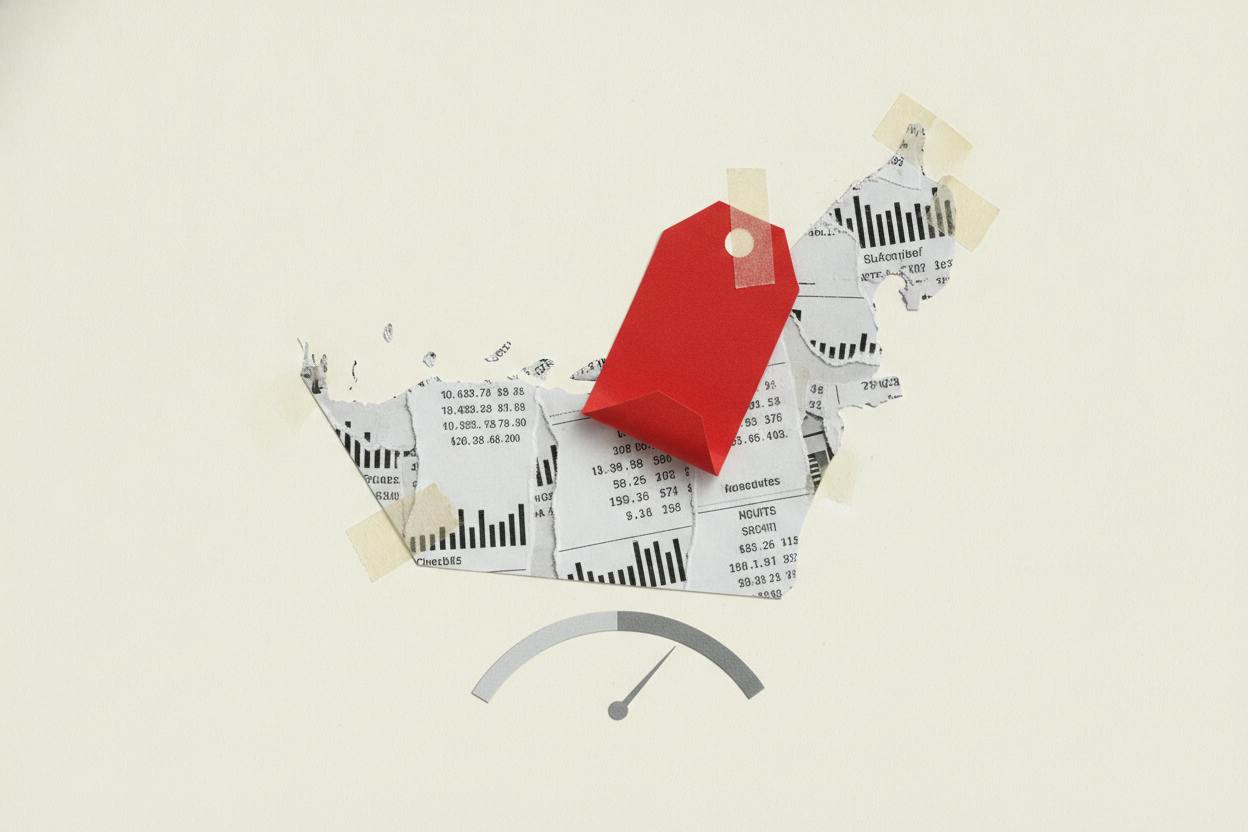
The UAE's non-oil private sector continued to expand in September, but the standout detail was pricing: companies raised their selling prices at the fastest rate since May 2011. That shift suggests businesses finally have the leverage to pass higher costs on to customers without losing demand.
S&P Global's purchasing managers' index (PMI) for the UAE held steady at 55.3 in September, comfortably above the 50 mark that separates growth from contraction. The reading points to a solid month for the sector, with output rising more quickly and demand described as stronger.
New export orders also grew for a third consecutive month, a sign that overseas demand is holding up. That combination—steady growth, firmer demand, and rising prices—is a notable change from recent months, when many firms absorbed cost increases to stay competitive.
What is the PMI and why does pricing power matter?
The PMI is a monthly survey of purchasing managers at private-sector companies. A reading above 50 means activity is expanding; below 50 means it's contracting. It's a closely watched gauge because it gives an early read on the health of the economy before official data is released.
Pricing power is the ability of a company to raise prices without losing customers. When businesses have it, they can protect profit margins even as their own costs rise. When they don't, they are forced to absorb higher input costs, which squeezes profitability.
September's data suggests UAE firms have regained that ability. The survey showed selling prices rose at their fastest clip in over a decade, even as input costs continued to climb. That's a positive signal for corporate earnings, because it means businesses can defend their bottom lines.
Why optimism remains muted
Despite the strong headline numbers, business optimism stayed near recent lows. That may seem contradictory, but it reflects a cautious outlook. Firms are seeing solid current conditions, yet they remain wary about the months ahead—possibly due to global economic uncertainty, geopolitical tensions, or concerns about how long demand can hold up.
This kind of gap between current strength and future expectations is not unusual. Companies often become more cautious after a period of strong activity, especially when they are unsure whether the momentum will last.
The UAE's non-oil sector has been a key driver of the country's economic diversification efforts, and its resilience has been notable. The latest PMI reading adds to a run of data showing the sector remains in expansion mode, even as other parts of the global economy show signs of cooling.
What it means for investors
For investors, the key takeaway is that UAE non-oil companies are in a healthier position than they were a year ago. The ability to raise prices without losing demand is a sign of pricing power, which typically supports profit margins and earnings growth.
That could be relevant for anyone holding shares in UAE-listed companies, particularly in sectors like retail, construction, or services, where pricing power has been hard to come by in recent years. It also suggests that the broader economy is holding up well, which is supportive for the country's growth outlook.
However, the muted optimism is a reminder that conditions can change quickly. If global demand weakens or input costs keep rising, the pricing power could evaporate. Investors should watch upcoming PMI readings and company earnings reports to see whether the trend continues.
For context, other economies are showing mixed signals. Japan's private sector growth cooled in September as services eased, and Australia's services growth also slowed as firms cut jobs and faced higher costs. Meanwhile, commodity prices ticked up slightly, which could feed into input costs for manufacturers worldwide.
The UAE's resilience stands out in that backdrop, but it's not immune to global trends. If major trading partners slow down, export orders could weaken, and the pricing power could fade.
The bottom line
September's PMI data shows a UAE non-oil sector that is growing steadily and, importantly, regaining pricing power. That's a positive sign for corporate profitability and the broader economy. But the subdued optimism suggests businesses are not popping champagne just yet—they're watching the horizon for potential headwinds.
For everyday investors, the message is simple: the UAE's non-oil economy is in decent shape, and companies are in a better position to protect their margins. But as always, keep an eye on the global picture, because what happens elsewhere can quickly ripple into the UAE's boardrooms.