UAE stocks finished the session in positive territory, with Abu Dhabi's ADX index climbing 0.617% and Dubai's DFM adding a more modest 0.032%. The gains came as investors parsed the latest US midterm results and what they might mean for the country's approach to Iran.
The market's read: a Democratic sweep in the November 2026 midterms, with the party expected to control Congress from January 2027, could push Washington toward diplomatic engagement rather than military escalation. That shift in expectations, even before any policy change, is enough to move prices.
Why politics moves Gulf markets
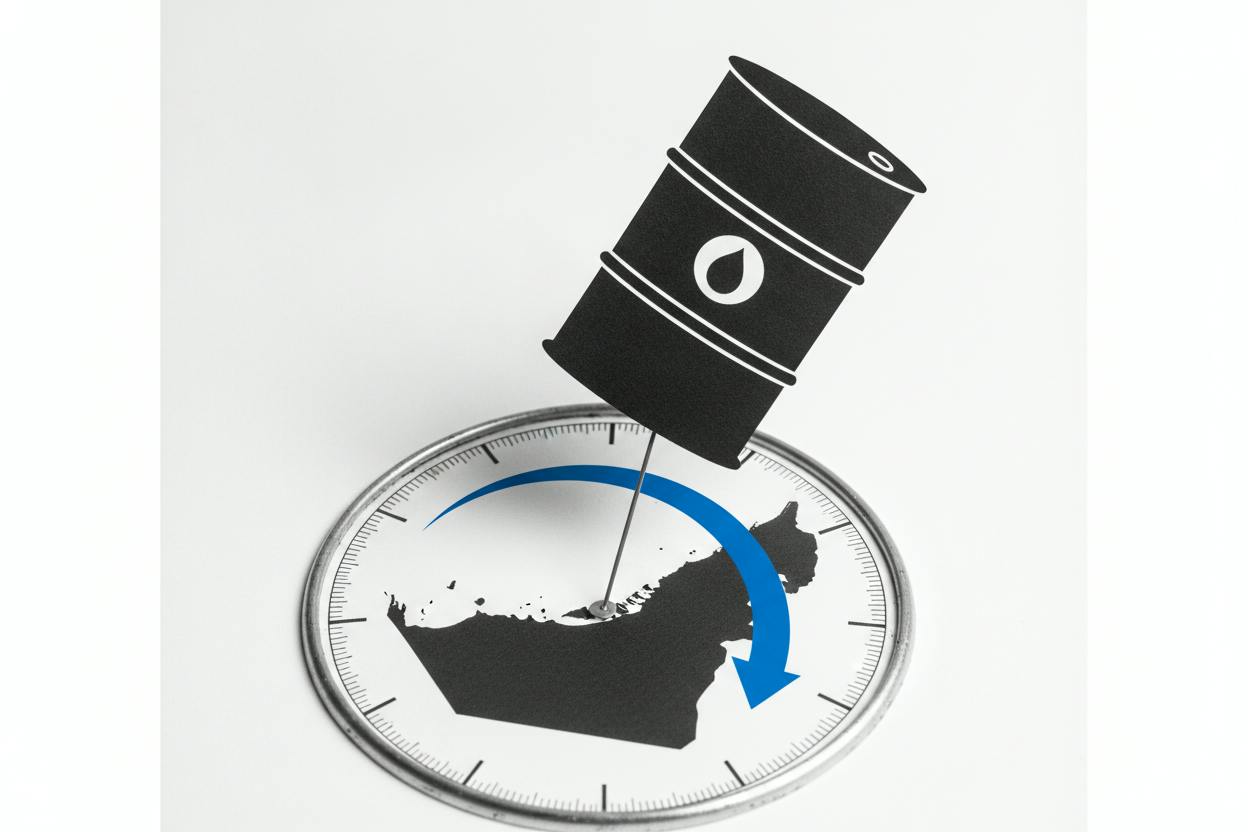
For Gulf stock markets, the connection between Washington's foreign policy and local equities runs largely through oil. Crude prices typically include what traders call a "geopolitical risk premium" — an extra cost that reflects the chance of supply disruptions. When the odds of conflict fall, that premium shrinks, and oil prices can drop even if global demand hasn't changed.
That dynamic appears to be at work now. The brief notes that a diplomatic turn could reduce the risk premium, and the recent oil sell-off reflects that expectation. But the outlook remains uncertain. ING, a European bank, said the sell-off "seems to be overdone" because the range of possible outcomes is wide — from renewed strikes to a negotiated deal, or continued pressure through an "ongoing maritime blockade."
For investors, that means the current calm could be fragile. If tensions around shipping lanes or a sustained blockade escalate, the risk premium would likely snap back into crude prices, and Gulf markets would feel it.
Strong earnings, but geopolitics rules
Even with solid local news, geopolitics can dominate. Take Empower, the district cooling firm, which reported a third-quarter profit of 292 million dirhams and saw its shares jump 3.63%. That's a healthy result, but on days when Iran headlines reset expectations, such fundamentals can take a back seat.
This is a pattern familiar to Gulf investors: oil-driven sentiment often outweighs slower-moving company performance. The ADX's 0.617% gain, for instance, is tied to how quickly the risk premium comes back. If investors believe diplomacy is gaining ground, the premium stays low; if disruption fears return, it can rise just as fast.
What it means for investors
For everyday investors, the takeaway is that UAE indexes may remain unusually sensitive to Iran-driven oil repricing in the near term. That means days with big geopolitical headlines could see outsized moves, regardless of earnings or other fundamentals.
It's also worth remembering that oil's risk premium is a sentiment gauge, not a fixed number. It can shrink or expand quickly based on news flow, and it often overshoots in both directions. ING's caution about the sell-off being overdone suggests that some of the recent drop may already reflect a more optimistic view than the facts support.
Investors should watch for signals that could shift the balance: any concrete steps toward talks, or any escalation in maritime tensions. Both would move oil, and by extension, Gulf equities.
For now, the market is betting on diplomacy. But as the range of outcomes suggests, that bet could be reversed at any moment.