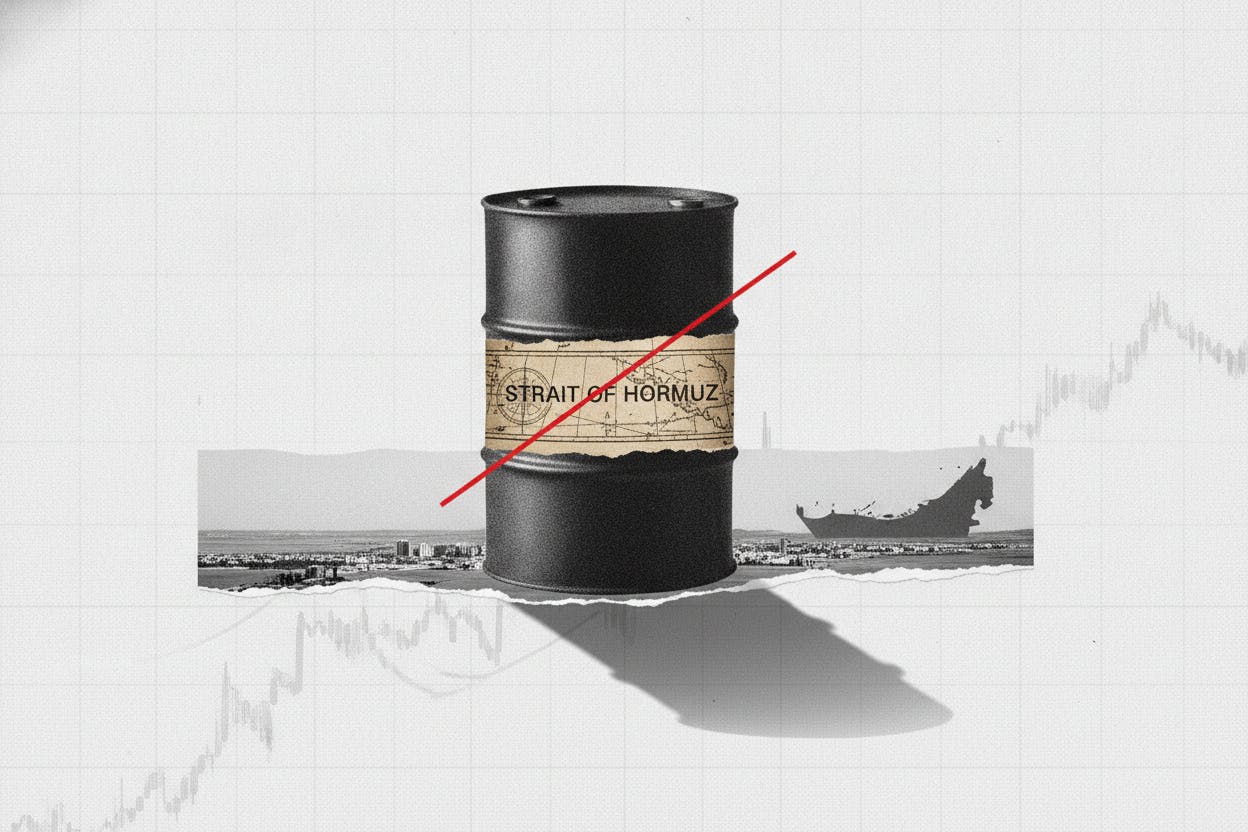
UAE stocks opened the week on a cautious note, with Abu Dhabi's benchmark slipping 0.1% and Dubai's index falling 0.73%. The declines came as investors weighed the latest developments around the Strait of Hormuz, a vital waterway for global oil shipments, and their potential impact on energy prices and regional trade.
Brent crude, the international benchmark, held near $84.80 a barrel, reflecting the market's continued focus on supply risks. The strait, located between Iran and Oman, is a passage for roughly a fifth of the world's oil consumption, making any disruption a major concern for energy markets.
Why Hormuz matters for investors
The Strait of Hormuz is one of the most strategically important chokepoints in the global oil supply chain. Tankers carrying crude and liquefied natural gas from major producers like Saudi Arabia, Iraq, and the UAE pass through its narrow waters daily. Any threat to shipping there—whether from geopolitical tensions, military activity, or accidents—can quickly translate into higher oil prices as traders price in the risk of supply shortages.
For UAE investors, the connection is direct. The country is a significant oil exporter, and its stock market often moves in tandem with energy prices. When crude rises, energy companies and related sectors tend to benefit. But the current situation is more complicated: the same uncertainty that pushes oil up can also raise costs for businesses that rely on imports or exports, as freight rates and insurance premiums climb.
This dual effect helps explain why the indexes slipped even as oil stayed firm. Investors are juggling two signals that usually move together but can clash. On one hand, higher oil prices can boost the earnings of energy firms. On the other, the supply-risk premium can delay cargoes, increase shipping costs, and make it harder for companies to forecast their finances, particularly those tied to regional trade.
What the numbers show
Abu Dhabi's main index, which includes heavyweight energy and banking stocks, dipped just 0.1%, a modest decline that suggests investors are not panicking. Dubai's index, which has a larger share of real estate, tourism, and logistics companies, fell more sharply at 0.73%, reflecting its greater sensitivity to trade and travel flows.
Despite the day's losses, the Abu Dhabi Securities Exchange (ADX) reported net inflows in the first half of 2026, a sign that foreign and institutional investors remain interested in the market over the longer term. That provides some counterbalance to the short-term jitters.
What it means for everyday investors
For ordinary investors, the key takeaway is that geopolitical events can create volatility in markets, even when the underlying economic fundamentals are stable. Oil prices are a major driver for the UAE economy, and any news about Hormuz can quickly affect stock prices, especially in energy and trade-related sectors.
It's also worth remembering that oil prices are influenced by many factors beyond geopolitics, including global demand, production decisions by major exporters, and broader economic conditions. For instance, recent weak US jobs data has fueled expectations that the Federal Reserve might cut interest rates, which could support economic growth and, in turn, oil demand. Similarly, traders are watching US inflation data for clues about the pace of rate cuts.
Investors should also be aware that shipping disruptions can have ripple effects beyond oil. Higher freight costs can squeeze profit margins for companies that import goods, and delays can disrupt supply chains. This is why the market reaction is not always straightforward: a rise in oil prices can be good for some stocks but bad for others.
Looking ahead
The immediate focus will remain on the Strait of Hormuz and any developments that could ease or escalate tensions. Traders will also be watching oil inventory data and comments from major producers about output levels. In the meantime, the UAE markets are likely to stay sensitive to headlines, with energy stocks and logistics companies particularly reactive.
For investors, the best approach is to stay informed and avoid making impulsive decisions based on short-term swings. Diversification across sectors and regions can help cushion the impact of geopolitical shocks. As always, it's wise to consider your own financial goals and risk tolerance before making any investment moves.
In summary, the dip in UAE stocks reflects the market's nervousness about Hormuz, but the underlying inflows into the ADX suggest that confidence in the region's long-term prospects remains intact. The coming days will likely bring more clarity on both the geopolitical situation and the direction of oil prices.