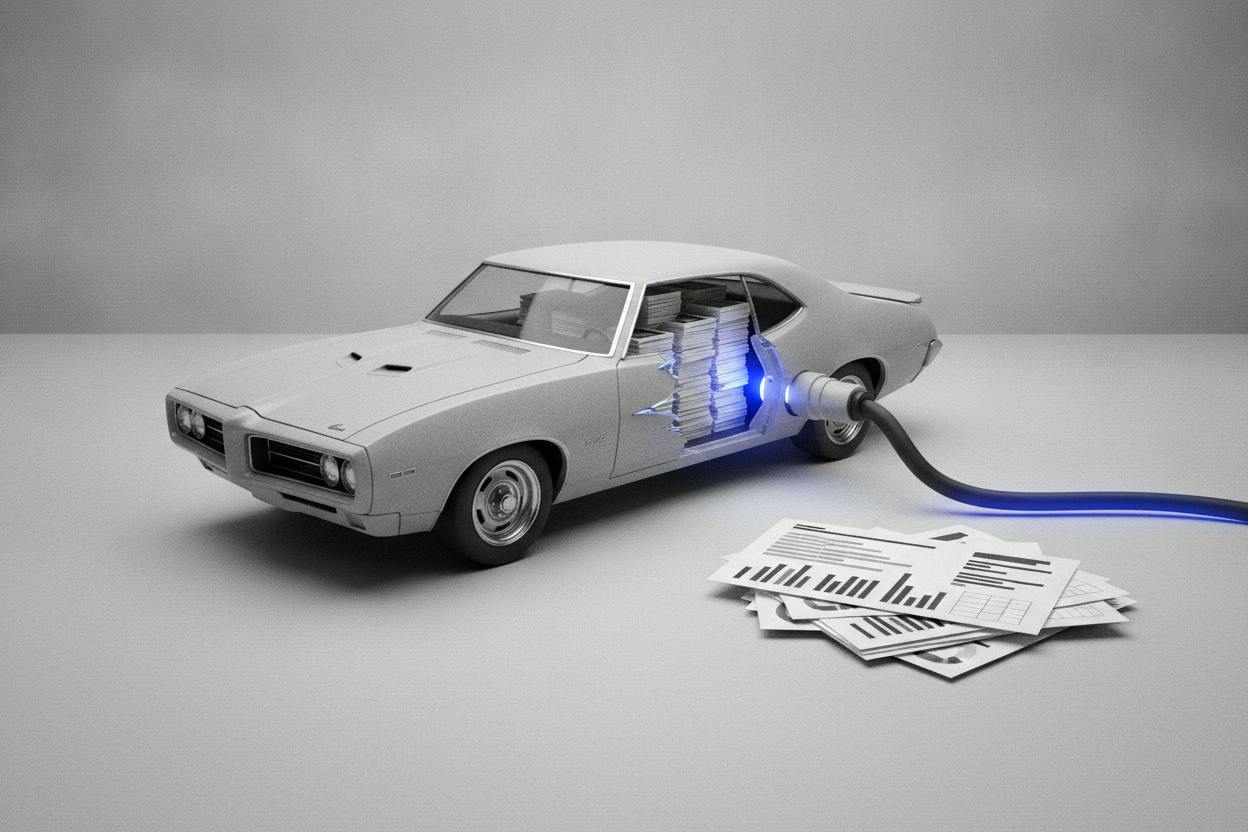
General Motors has long been judged by how many cars it sells each quarter. But according to a new analysis from UBS Securities, investors may be missing a quieter, potentially more valuable story: the money GM can make from those cars after they leave the showroom.
In a research note, UBS argues that as more GM vehicles stay connected to the internet, the company can sell software and services over the life of each vehicle—not just at the initial sale. These recurring fees, the bank says, tend to be steadier and carry higher margins than the volatile business of manufacturing and selling new cars.
What UBS is projecting
UBS expects GM's digital revenue to climb from $3.2 billion in 2026 to $9.6 billion by 2036. That's a threefold increase over a decade, driven by a growing fleet of connected vehicles that can receive over-the-air updates, subscription services, and other digital features.
The bank's outlook suggests that GM's digital arm could become a meaningful profit center, not just a side project. For context, GM's overall revenue is in the hundreds of billions, but digital services are expected to carry outsized profit margins because they don't require the same capital-intensive manufacturing infrastructure as building cars.
Why connected cars matter
Modern vehicles are increasingly equipped with cellular connections, allowing automakers to offer everything from navigation and entertainment to remote diagnostics and driver-assistance upgrades. These services can be sold as one-time purchases, monthly subscriptions, or bundled into the price of the car.
For GM, the shift represents a move toward a more recurring revenue model—something investors often value highly because it's more predictable than the cyclical swings of auto sales. When a customer buys a car, that's a one-time transaction. But if that same customer pays $30 a month for a connected service, the revenue stream continues for years.
UBS's projection implies that GM is betting heavily on this model, and that the company's future earnings will increasingly come from software and services rather than just metal and engines.
What it means for investors
For everyday investors, the key takeaway is that GM's value may not be fully captured by traditional metrics like vehicle sales or market share. If UBS is right, the digital business could provide a buffer against the ups and downs of the auto market, which is currently facing headwinds from higher interest rates, shifting consumer preferences, and increased competition.
However, it's important to note that these are projections, not guarantees. The digital revenue growth depends on GM successfully rolling out and monetizing services across its fleet, which requires consumer adoption and competitive pricing. Automakers have struggled in the past to turn connected-car features into consistent profits, and the space is getting more crowded as tech companies and other manufacturers push into similar territory.
Investors should also consider that the timeline is long—UBS's forecast runs to 2036—and a lot can change in a decade. Still, the analysis highlights a trend that's reshaping the auto industry: the car is becoming a platform for ongoing digital services, much like a smartphone.
Broader context
GM isn't alone in chasing this opportunity. Many automakers are investing heavily in software-defined vehicles, and the race to build a profitable digital ecosystem is a key theme across the sector. The success of such strategies could determine which companies thrive in the next era of transportation.
For now, UBS's note serves as a reminder that the auto industry's future may be as much about bits as it is about bolts. Whether GM can deliver on that promise will be a story worth watching.