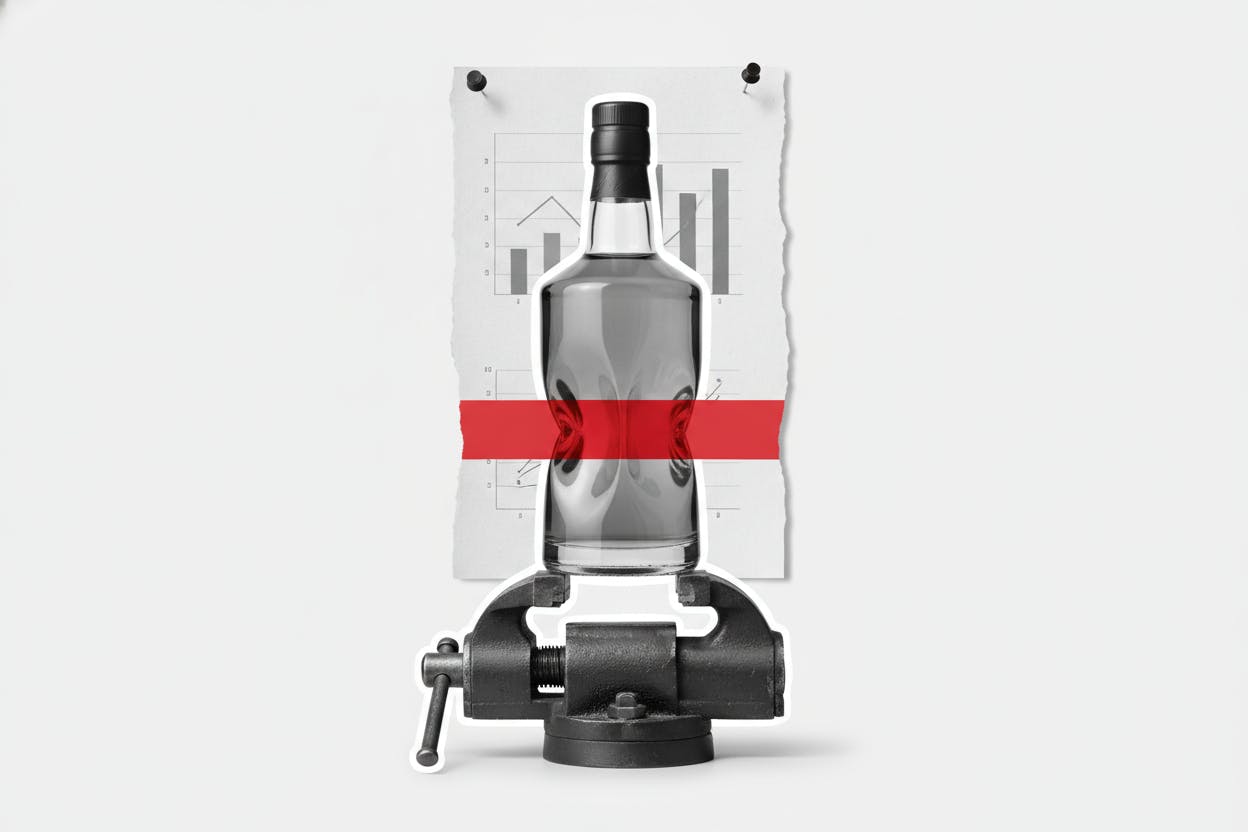
UBS is bracing for a soft finish to Diageo's fiscal year, calling for a 2.7% organic revenue decline in fiscal Q4 ahead of the spirits giant's results on Aug. 6. The bank also says a strategy update from new CEO Dave Lewis could reset expectations for US profits.
What's behind the expected decline?
Organic revenue growth strips out the effects of currency fluctuations and acquisitions, giving a clearer picture of underlying business performance. A decline of 2.7% would mark a notable slowdown for Diageo, which has historically delivered steady growth from its portfolio of premium spirits like Johnnie Walker, Guinness, and Smirnoff.
The expected drop likely reflects ongoing challenges in the US spirits market, where consumer demand has softened after a post-pandemic boom. Higher interest rates and inflation have squeezed household budgets, leading some drinkers to trade down or cut back on discretionary spending. Diageo's US business is a key profit driver, so any weakness there weighs heavily on overall results.
UBS's forecast comes ahead of Diageo's full-year earnings release on Aug. 6. Investors will be watching closely to see if the company confirms the bank's expectations or offers a different outlook.
New CEO Dave Lewis: A strategy reset in the works?
Dave Lewis took the helm at Diageo in July 2023, succeeding long-time CEO Ivan Menezes. Lewis is best known for his turnaround work at Tesco, where he led the UK supermarket chain through a major restructuring. His appointment raised expectations that he might bring a similar focus on cost efficiency and portfolio optimization to Diageo.
UBS suggests that Lewis could use the upcoming results to reset expectations for US profits. That might involve lowering guidance, announcing a restructuring plan, or shifting investment toward faster-growing markets. For investors, a reset can be a double-edged sword: it often signals near-term pain but can also clear the way for a more credible long-term strategy.
The spirits industry has faced headwinds from inventory destocking, as retailers and distributors work through excess stock built up during the pandemic. Diageo has already flagged some of these issues in previous quarters, but the scale of the impact remains uncertain.
What it means for investors
For everyday investors, the key takeaway is that Diageo's near-term performance may be weaker than many expected. A 2.7% organic revenue decline is not catastrophic, but it signals that the company is navigating a tougher environment. The strategy update from Lewis could provide clarity on how Diageo plans to adapt.
Investors should also consider the broader context. Diageo is a defensive stock with a strong portfolio of brands and a history of dividend growth. Even in a downturn, its products tend to hold up better than many consumer goods. However, the US market is critical, and any prolonged weakness there could pressure earnings and the share price.
UBS's note is just one analyst's view, but it highlights the uncertainty surrounding Diageo's near-term outlook. The Aug. 6 results will be the next major catalyst, and investors should watch for any changes to guidance or strategic priorities.
For comparison, other consumer staples companies have faced similar headwinds. For instance, HCLTech's recent revenue beat was masked by currency effects, showing how external factors can complicate earnings analysis. Similarly, Spotify's Q2 preview highlighted slowing premium growth, a pattern that echoes in many consumer-facing sectors.
Ultimately, Diageo's story is about balancing short-term challenges with long-term brand strength. The new CEO's strategy update could be the first step in repositioning the company for the next phase of growth.