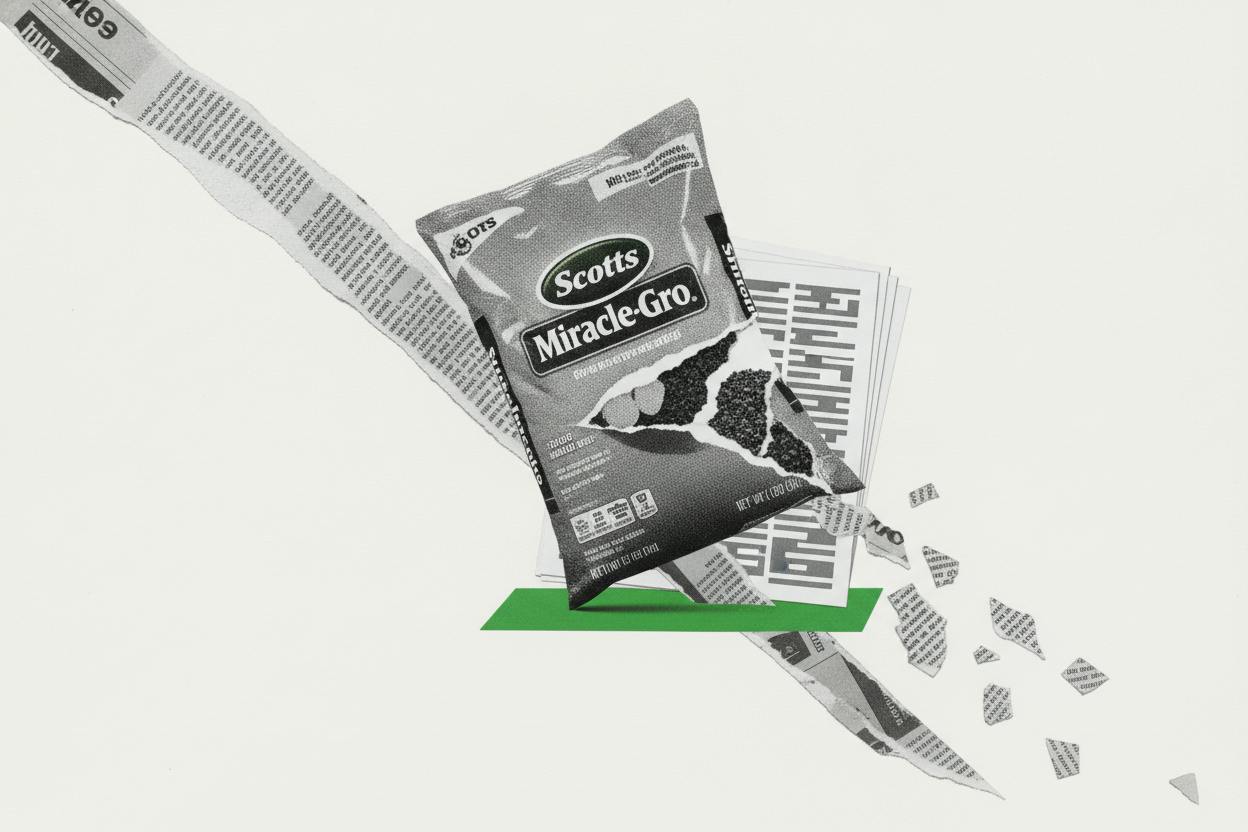
UBS Securities has upgraded Scotts Miracle-Gro (SMG) to a buy rating, even as it trimmed its price target to $70 from $78. The move comes after a sharp selloff in the lawn-and-garden supplier's shares, which the bank believes has left the stock pricing in slower growth than the company's own medium-term plan.
The combination of an upgrade and a lower price target might seem contradictory at first glance, but it's a common pattern on Wall Street. It signals that the call is less about suddenly brighter fundamentals and more about a valuation reset: the shares have fallen enough that the expectations baked into the price look too low relative to what the company can realistically deliver.
What's behind the selloff?
Scotts Miracle-Gro, known for brands like Miracle-Gro, Roundup, and Ortho, has been under pressure recently. The stock has declined sharply, reflecting investor concerns about slowing demand for lawn and garden products, higher input costs, and the broader consumer spending environment. The company has also been navigating a shift in consumer behavior as pandemic-era gardening booms fade.
UBS's upgrade suggests that the market may have overcorrected. The bank argues that the current share price implies a growth trajectory that is more pessimistic than what management has outlined in its medium-term plan. That plan, often referred to as the company's "algorithm," targets low- to mid-single-digit organic sales growth—meaning growth from existing businesses, excluding acquisitions or currency effects.
If Scotts can hit that target, the stock could be undervalued at current levels. But if the market's more cautious view proves correct, the downside may be limited given how far the shares have already fallen.
What it means for investors
For everyday investors, this kind of analyst action is a signal worth understanding, but not a directive. An upgrade to buy is a positive sign, but the cut in price target is a reminder that the near-term outlook is still uncertain. The $70 target implies upside from current levels, but it's also lower than the previous target, reflecting a more conservative view on the company's near-term performance.
Scotts Miracle-Gro is a consumer staples company, but it's also cyclical, tied to housing, weather, and discretionary spending. When the economy slows, people may cut back on lawn care and gardening. That makes the stock more sensitive to economic conditions than a typical staple like toothpaste or cereal.
Investors should also note that the company carries a significant debt load, largely from its acquisition of hydroponics and indoor gardening businesses during the pandemic boom. That debt has been a source of concern, and higher interest rates have made it more expensive to service. The company has been working to reduce leverage, but it remains a key risk.
UBS's upgrade comes amid a broader market backdrop where investors are rotating between sectors. Recent data showing hot producer prices has fueled concerns about inflation and interest rates, leading to a rotation from tech to defensive stocks. Scotts, as a consumer staples name, could benefit from that defensive tilt, though its cyclicality tempers that appeal.
In the same vein, AI stocks have been pressured by debt jitters and rate fears, pushing some investors toward more traditional sectors. But that doesn't mean Scotts is a safe haven; it's a stock with its own set of challenges.
What to watch next
Investors will be watching Scotts' next earnings report for signs that the medium-term plan is on track. Key metrics include organic sales growth, gross margin trends, and progress on debt reduction. The company's guidance for the full year will be critical in determining whether the market's pessimism is justified or overdone.
Also worth monitoring is the housing market, as new home sales and existing home turnover drive demand for lawn and garden products. Weather patterns, too, play a role—a wet spring can delay planting, while a dry summer can boost irrigation sales.
UBS's upgrade is a contrarian call, betting that the selloff has gone too far. Whether that bet pays off depends on whether Scotts can execute on its plan in a challenging environment. For now, the bank sees a setup worth buying, but investors should weigh the risks carefully.