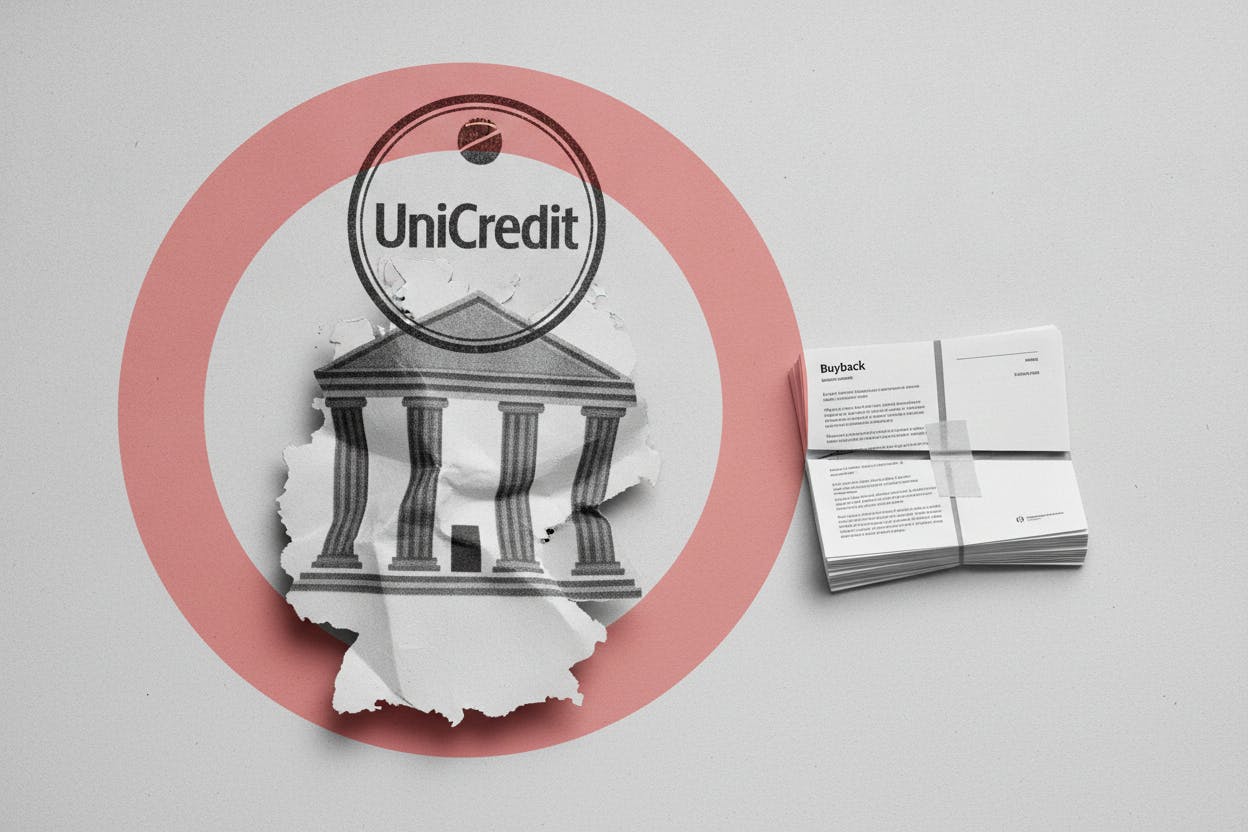
UniCredit, one of Italy’s largest banks, has tightened its grip on German rival Commerzbank by raising its stake to 48% and canceling a planned €4.75 billion share buyback. The move signals a more aggressive posture, but the bank’s CEO, Andrea Orcel, is now calling for dialogue with the German government and worker representatives.
The development marks a significant escalation in what has become a cross-border banking drama. UniCredit began accumulating shares in Commerzbank in 2024, quickly drawing political ire in Berlin. German officials have described the approach as hostile, raising concerns about job security and national control over a key lender. Commerzbank’s own CEO, Bettina Orlopp, has indicated she is open to discussions, but the political climate remains tense.
What UniCredit’s Stake Increase Means
UniCredit’s decision to lift its holding to 48% gives it substantial influence over Commerzbank’s strategic direction. Under German corporate law, a stake above 30% typically triggers a mandatory takeover offer, but UniCredit has not yet made such a bid. Instead, the bank has opted to cancel its buyback program, freeing up capital that could be used for further acquisitions or to strengthen its balance sheet.
Orcel said the bank is “quite open” to discussions now that it has reached a level of influence that could later translate into control. The Italian lender has signaled it wants to engage with Berlin and union representatives to address concerns and explore a potential merger or partnership. This is a shift from earlier, more unilateral moves that angered German stakeholders.
The situation echoes other recent cross-border banking maneuvers, such as Metro Bank’s early talks for a £2 billion Aldermore tie-up, though the scale and political sensitivity here are far greater.
Why This Matters for Investors
For everyday investors, the UniCredit-Commerzbank story is a reminder of how political and regulatory factors can shape bank stocks. A successful combination could create a stronger European banking giant, potentially boosting shareholder value. But the path is fraught with obstacles, including German opposition, union resistance, and regulatory hurdles.
Commerzbank shares have been volatile since UniCredit’s initial stake-building, reflecting uncertainty about the outcome. If talks lead to a friendly deal, the stock could rally. If they collapse into a hostile takeover battle, investors may face prolonged uncertainty and legal costs.
UniCredit’s cancellation of its buyback also sends a signal: the bank is prioritizing strategic flexibility over immediate returns to shareholders. That could disappoint some investors who expected a payout, but it may be necessary to fund a potential acquisition.
Investors should also watch for broader implications. A UniCredit-Commerzbank merger would be one of the largest cross-border bank deals in Europe in years, potentially reshaping the competitive landscape. It could encourage other European banks to pursue similar consolidation, especially as interest rate margins tighten and digital competition grows.
What’s Next
The coming weeks will be critical. Orcel’s call for talks suggests a willingness to compromise, but the German government’s stance remains a wildcard. Berlin holds a significant stake in Commerzbank from its post-financial-crisis bailout and has been wary of foreign control. Union representatives are likely to demand job guarantees and operational independence for Commerzbank’s German operations.
If negotiations fail, UniCredit could still push ahead with a hostile takeover, though that would risk a prolonged legal and political battle. Alternatively, the Italian bank could settle for a minority stake and seek influence without full control.
For now, the story is far from over. Investors in both banks should stay tuned for updates on the talks and any regulatory filings. The outcome will not only affect UniCredit and Commerzbank shareholders but could also set a precedent for future cross-border banking deals in Europe.