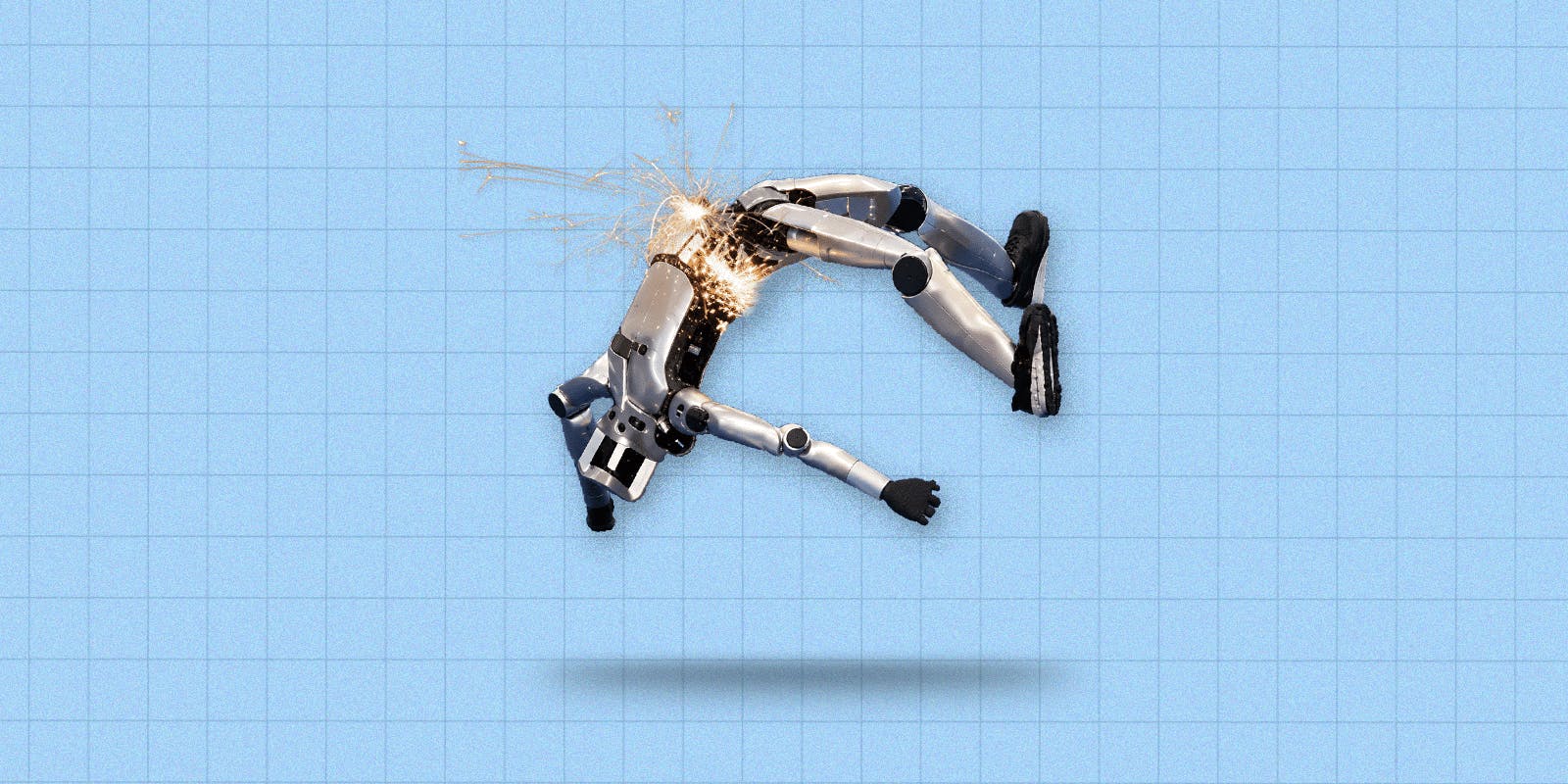
Shares of Chinese humanoid robot maker Unitree have tumbled roughly 50% from their peak, just two weeks after a spectacular debut on Shanghai's STAR Market. The sharp reversal has caught the attention of investors who watched the stock soar 629% on its first day of trading, only to see it give back a significant chunk of those gains.
What happened
Unitree, a company known for its agile humanoid robots, listed on the STAR Market—China's tech-focused board—amid intense retail enthusiasm. The stock's debut surge was one of the most dramatic on the exchange this year, but the subsequent slide has been equally notable. The decline appears unrelated to the viral videos from the World Humanoid Robot Games, where Unitree's robots showcased their abilities, including one that sprinted into a wall. That footage, while entertaining, did not seem to drive the sell-off.
Instead, the drop likely reflects traders sobering up from the initial euphoria. After such a meteoric rise, profit-taking and a reality check on valuations are common. The company's shares are now trading at 118 times sales, a multiple that would make even the most growth-oriented tech stocks look cheap by comparison.
Why the valuation matters
For context, a price-to-sales ratio of 118 means that for every dollar (or yuan) of revenue Unitree generates, investors are paying $118 for a share. That is an extraordinarily high premium, even for a company in a hot sector like robotics. Most established tech firms trade at single-digit or low-double-digit price-to-sales ratios. Even high-growth companies rarely command multiples above 20 or 30.
Such a lofty valuation implies that investors are pricing in years of explosive growth, with the expectation that Unitree will become a dominant player in the humanoid robot market. That may happen, but it also leaves little room for error. If the company's growth slows, or if competition intensifies, the stock could face further downside.
What it means for investors
For everyday investors, the lesson here is about the dangers of chasing hype. When a stock debuts and immediately doubles or triples, it can be tempting to jump in. But the initial surge often reflects speculative demand rather than fundamental value. As the brief notes, the stock's fall has been steeper than its own robot's stumble into a wall—a vivid reminder that momentum can reverse quickly.
Investors should also consider the broader context. The STAR Market is known for its volatility, and many newly listed companies experience wild swings in their first weeks. Unitree's case is not unique, but the scale of the move—both up and down—is striking.
For those holding the stock, the key question is whether the company's fundamentals can justify the still-high valuation. For those watching from the sidelines, the episode underscores the importance of looking beyond the headlines and viral videos to assess a company's actual financial health.
Looking ahead
Unitree's next earnings report will be closely watched for signs of revenue growth and profitability. The company is a leader in the humanoid robot space, a sector that has attracted significant attention and investment. But with a valuation that remains stretched, the stock's future performance will depend on delivering results that match the hype.
In the meantime, the sharp decline serves as a cautionary tale about the risks of speculative trading, especially in emerging technologies. As with any high-flying stock, the potential for big gains comes with the potential for big losses.
For more on how high valuations can be a warning sign, see our piece on Dell's AI rally looking priced in. And for a look at how other companies are navigating volatile markets, check out TTM Technologies' insider buying.