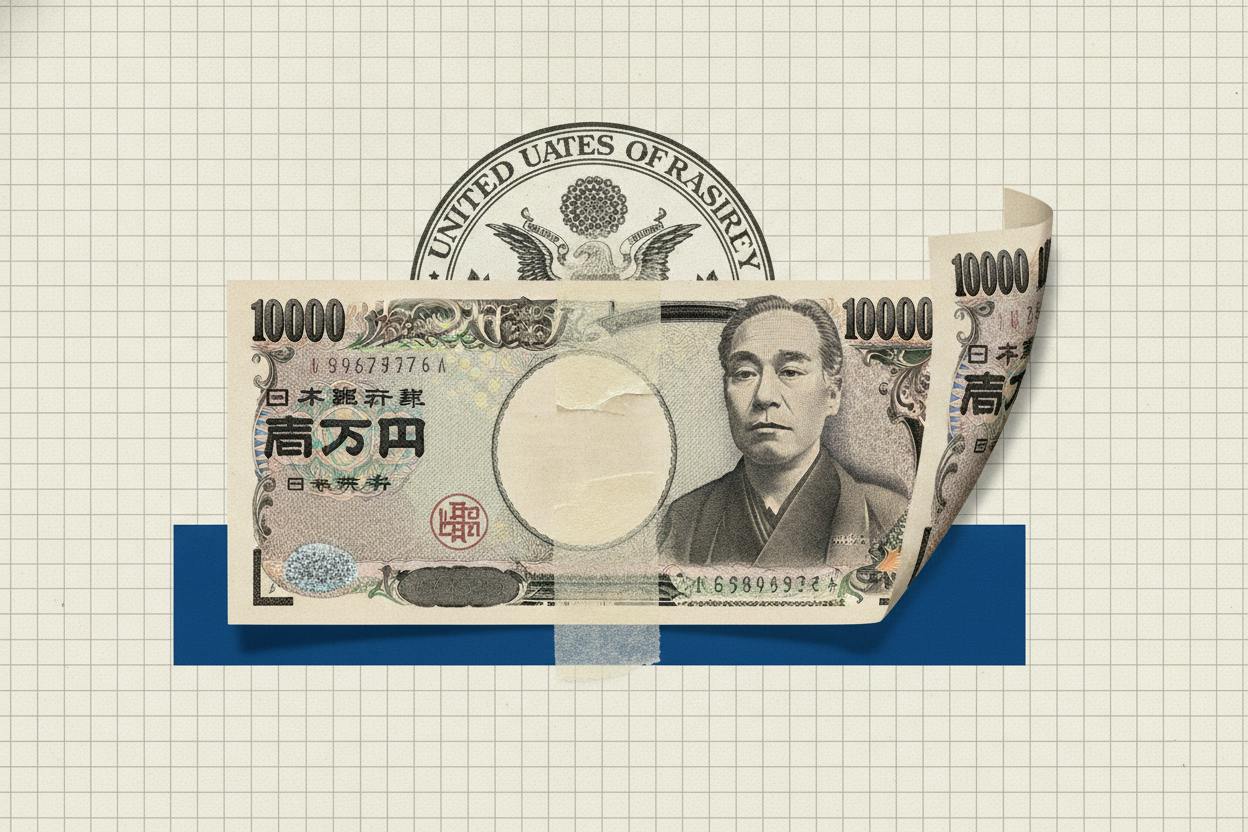
For the first time in more than two decades, the United States stepped into foreign-exchange markets to help prop up the Japanese yen. The New York Fed disclosed that it bought 79.4 billion yen (roughly $497 million) for the US Treasury during the July-to-September quarter, marking Washington's first yen-buying intervention since 1998.
The move, revealed in the Fed's quarterly currency-operations report, came as Japan's Ministry of Finance said it intervened with a much larger 15.4 trillion yen over the same period. Both governments described the yen's slide as "disorderly," a term that signals officials are worried about moves that are too fast and too one-sided.
What exactly happened?
The New York Fed's report makes an important distinction: the Fed didn't act on its own. It carried out the trade as the Treasury's "fiscal agent," meaning the central bank executed the transaction on behalf of the US government. On July 31st, the Treasury bought 79.4 billion yen in the spot market, paying for it by selling euros held in the Exchange Stabilization Fund (ESF), a pool of foreign-currency reserves that the Treasury uses for interventions.
That detail matters. By funding the purchase with existing euro holdings rather than creating new dollars, the US signaled that its backstop is not unlimited. The ESF has a finite balance, so any future intervention would require careful management of those reserves.
The intervention came at a tense moment for the yen. The dollar had climbed to near 164 yen, a level that made Japanese exports cheaper but also pushed up import costs and squeezed households. In the days after the coordinated action, the pair slid toward the mid-150s, a reminder that officials can still draw a line when a currency move looks too fast.
Why did the US get involved?
The US has historically been reluctant to intervene in currency markets, preferring to let markets set exchange rates. But when a major trading partner's currency collapses, it can create global financial stress. A weaker yen can also make US exports less competitive, though that effect is often muted.
This was the first time since 1998 that the US bought yen, a period when the Asian financial crisis was roiling global markets. Back then, the US joined Japan in supporting the yen to prevent a broader regional meltdown. This time, the context is different: the yen's weakness has been driven largely by the gap between US interest rates, which have been high to fight inflation, and Japan's ultra-low rates.
For everyday investors, the key takeaway is that currency intervention is rare and usually signals deep concern. When governments step in, it's often because they fear that unchecked currency moves could destabilize their economies or spill over into other markets.
What it means for investors
For markets, the US purchase was small relative to Japan's massive intervention, but the symbolism is significant. Joint action raises the perceived chance of coordinated, repeat intervention, which can turn what looked like a steady, one-way dollar-strength trend into a market with sudden "snapback" risk.
That risk shows up first in short-dated hedges and options, where traders pay up for protection against abrupt yen rallies. If you're a US investor with exposure to Japanese assets or a currency-hedged international fund, a sudden yen surge could affect your returns.
The fact that the US funded its purchase by selling euros rather than printing money also signals that the backstop isn't unlimited. That makes timing and speed of moves, not just levels, a bigger driver of positioning. Traders will now watch for any signs of another intervention, especially if the yen weakens again toward the 160 level.
For most investors, the practical implication is to be aware that currency risk is real, even in diversified portfolios. A sudden yen rally could hurt US companies that export to Japan or benefit those that import from there. But for the average long-term investor, this event is more of a market-moving headline than a reason to change your strategy.
As always, it's worth keeping an eye on how the yen trades in the coming weeks. If the dollar resumes its climb, officials may be forced to act again. If the yen stabilizes, the intervention may be seen as a one-off success. Either way, the message is clear: when governments decide a currency move is too fast, they can still draw a line.



