Virgin Australia has kept its fiscal 2027 profit guidance unchanged, telling investors that first-half underlying earnings should come in roughly in line with the same period a year earlier. The update, filed with the Australian Securities Exchange, comes as the airline juggles a hefty fuel bill and a deliberate pullback in domestic seat supply.
What's driving the steady outlook
The airline pointed to solid travel demand, tight industry capacity, and the ongoing benefits of its turnaround plan as the main supports for the profit view. A key factor is capacity discipline: Virgin said domestic seat supply fell 1% in the first quarter and is expected to drop another 4% in the second. Fewer seats in the market typically means less discounting, which helps airlines hold firmer fares even when costs are climbing.
On the revenue side, Virgin is also guiding to a 6%–8% rise in revenue per available seat kilometer (RASK), a common industry metric that blends how full planes are with the average fare paid. A higher RASK signals that the airline is getting more revenue for each seat it flies, a sign that pricing power remains intact.
The fuel and hedging wildcard
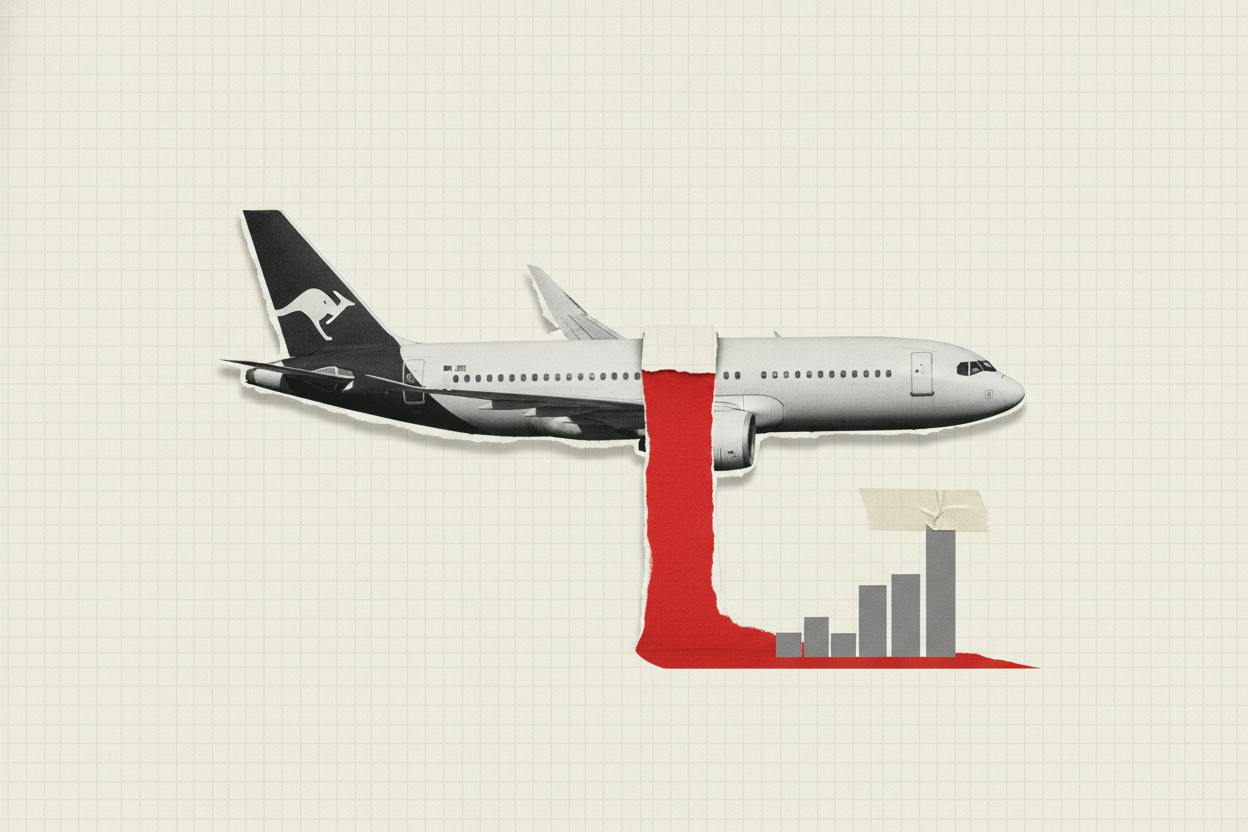
The bigger swing factor for the second half is fuel. Virgin guided to about AU$700 million of fuel expense for the first half, but warned that second-half fuel costs should be higher because it has less hedging in place. Hedging is a way airlines lock in fuel prices in advance, smoothing out the impact of volatile oil markets. With less of that protection, Virgin will be buying more of its jet fuel at whatever the market price is at the time, making its cost base more exposed to swings in global energy prices.
That shift matters for investors because it changes the nature of the risk. In the first half, a large chunk of the fuel bill was effectively pre-priced, so earnings were less sensitive to daily oil moves. In the second half, fuel becomes a more direct bet on where jet-fuel prices go, widening the range of possible outcomes for profit and free cash flow—even if demand and ticket pricing stay healthy.
Capital spending and leverage targets
Virgin also reaffirmed its AU$900 million–AU$1 billion capital spending plan for fiscal 2027, earmarked for fleet expansion and renewal. That is a substantial outlay, and the airline reiterated its target of keeping leverage in the low end of a 1–2 times range. When capital spending is largely locked in, a fuel-driven hit to operating cash doesn't just squeeze margins; it can force tougher trade-offs on debt and balance-sheet flexibility.
For investors, that means the focus may shift to downside fuel scenarios rather than the steady first-half earnings guide. If jet-fuel prices spike, the combination of higher costs and fixed capital spending could pressure free cash flow and push leverage toward the upper end of the target range. Conversely, if fuel prices soften, the airline could see a nice tailwind to earnings and cash generation.
What it means for investors
For everyday investors, the key takeaway is that Virgin's profit outlook is stable but not immune to external shocks. The airline is doing what it can on the levers it controls—capacity, pricing, and cost discipline—but fuel remains a wildcard that can move the needle significantly. The reduced hedging in the second half means the market will be watching oil prices closely, and any sharp move in jet fuel could lead to revisions in profit expectations.
It's also worth noting that the airline's capital spending plans are ambitious, and the balance-sheet targets leave little room for error if fuel costs blow out. Investors should weigh the steady demand picture against the fuel risk and the company's fixed commitments. As with any airline, the margin for error is thin, and the difference between a good and bad year often comes down to factors outside the company's control.
Virgin's update echoes themes seen across the broader airline sector, where capacity discipline and strong travel demand have helped offset cost pressures. But the fuel-hedging issue is a reminder that airlines are never fully insulated from commodity markets. For now, the company is sticking to its story: demand is solid, capacity is tight, and the turnaround plan is working—but the second half could be a different story if fuel prices don't cooperate.