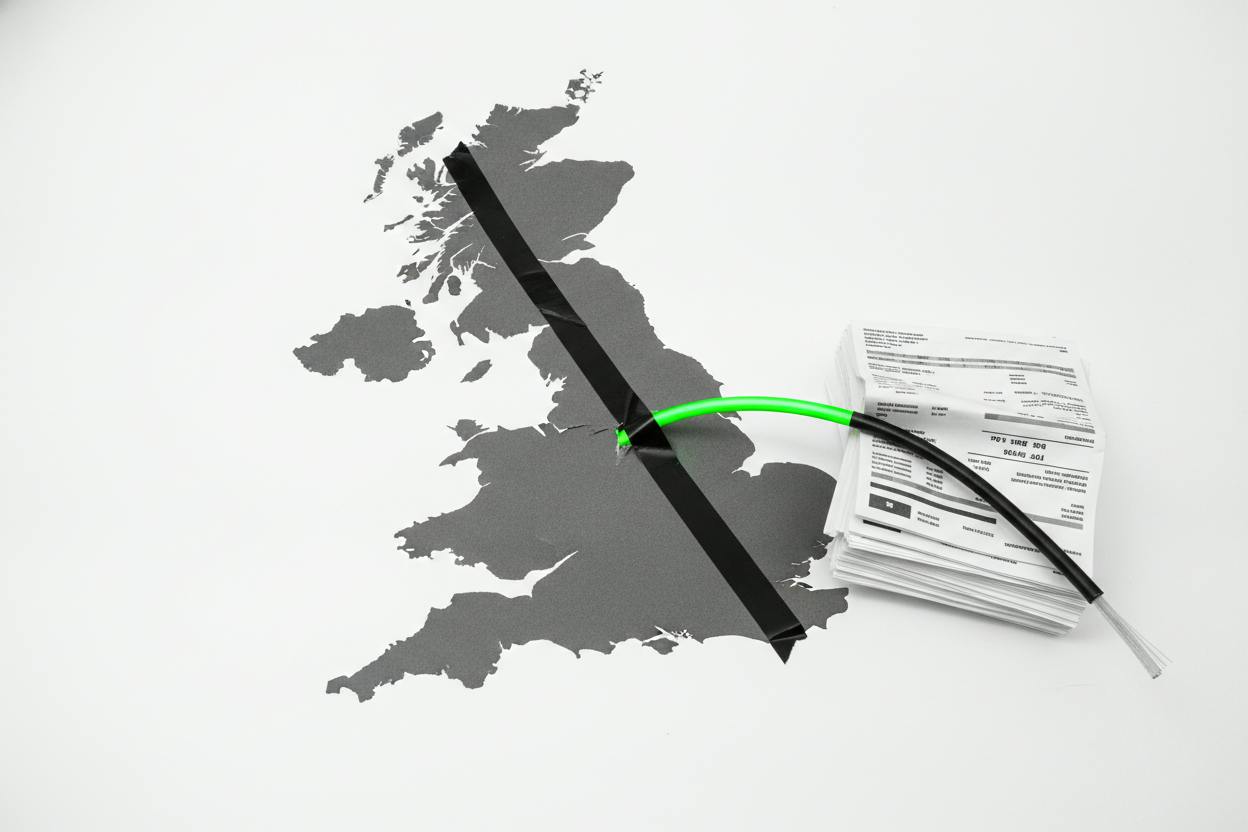
Virgin Media O2, one of the UK's biggest telecom providers, is slashing jobs and hitting the brakes on parts of its fiber-optic rollout as it tries to save £800 million by 2029. The company, jointly owned by Liberty Global and Telefónica, says the broadband market can no longer profitably support what it calls “three overlapping fiber networks.”
The move marks a strategic retreat from the build-it-yourself approach that has defined the UK's broadband boom. Instead of pouring more money into new lines, Virgin Media O2 plans to upgrade its existing cable network to deliver speeds of up to 2 gigabits per second to most customers next year, and to broaden coverage by renting capacity from BT's Openreach network—a route already used by rivals like Sky and Vodafone.
Why the fiber pause?
The UK broadband market has become crowded. BT Group is pushing a nationwide fiber rollout, while smaller “alt-net” providers are undercutting prices to win customers. That competition has squeezed margins and made it harder for any single player to justify the huge cost of laying new fiber.
Virgin Media O2's own numbers show the strain. In the third quarter, it lost 23,300 fixed-line customers and revenue fell 5.7% to £2.4 billion. The company says it will cut about 30% of total people costs, mainly in non-customer-facing roles. That translates into thousands of job losses, though the exact figure hasn't been confirmed.
By pausing parts of its fiber build and leaning on Openreach's wholesale network, Virgin Media O2 can reduce upfront capital spending. The trade-off is that it will pay recurring access fees to BT instead of owning the infrastructure outright. For a company with a stretched balance sheet, that trade-off can be attractive.
The debt picture
Virgin Media O2 carries £22 billion of debt, equal to 5.6 times its annualized third-quarter adjusted core earnings—a profit metric similar to cash operating profit. That's a high leverage ratio, and it makes the fiber pause a credit story as much as a network strategy.
For highly leveraged companies, network strategy is really cash-flow strategy. Reducing capital spending can improve near-term cash flow, which helps with debt repayment. That matters when the company next needs to refinance, because lower leverage can mean better borrowing terms.
Investors and lenders are likely to focus less on headline fiber footprint growth and more on whether the £800 million savings plan actually stabilizes earnings and customer churn enough to put leverage on a clearer downward path. If cash burn falls, the company's ability to service its debt improves, which is a key concern for bondholders.
What it means for investors
For everyday investors, this story is a reminder that telecom companies are capital-intensive businesses. Building networks costs billions, and when competition heats up, those costs can become a burden. Virgin Media O2's decision to pause its fiber build is a recognition that not every pound spent on expansion delivers a good return.
The shift to wholesale access is not new. Sky and Vodafone already use Openreach's network to offer broadband without building their own lines. By following that path, Virgin Media O2 can offer broader coverage without the huge upfront cost. The downside is that it will depend on a competitor's infrastructure, which could limit its control over pricing and service quality.
For the broader market, this could signal a cooling of the UK's fiber investment boom. If one of the biggest players is pulling back, it may suggest that the economics of building multiple overlapping networks don't add up. That could have implications for other telecoms and for the alt-net providers that have been competing aggressively on price.
Investors should watch how the savings plan unfolds. The key metrics will be customer churn, revenue trends, and whether the company can actually hit its £800 million target. If it does, the debt load becomes more manageable. If not, the company could face pressure from lenders when it refinances.
For now, the message from Virgin Media O2 is clear: it's prioritizing financial stability over network expansion. That's a prudent move for a company with this much debt, but it also means the UK's fiber landscape may look different in the years ahead.
For more on how companies are managing their finances, see our coverage of DuPont's raised profit target and Ferrari's margin-driven outlook. And for a look at how other firms are cutting costs, check Sandoz's margin lift.