Whirlpool India, one of the country's largest home appliance makers, reported a sharp 39% drop in net profit for the latest quarter, underscoring how stubborn inflation and a weaker rupee continue to pressure companies even when they raise prices. The company said profit fell to 250.8 million rupees from 413.3 million rupees a year earlier, despite revenue climbing 13.7% to 18.7 billion rupees.
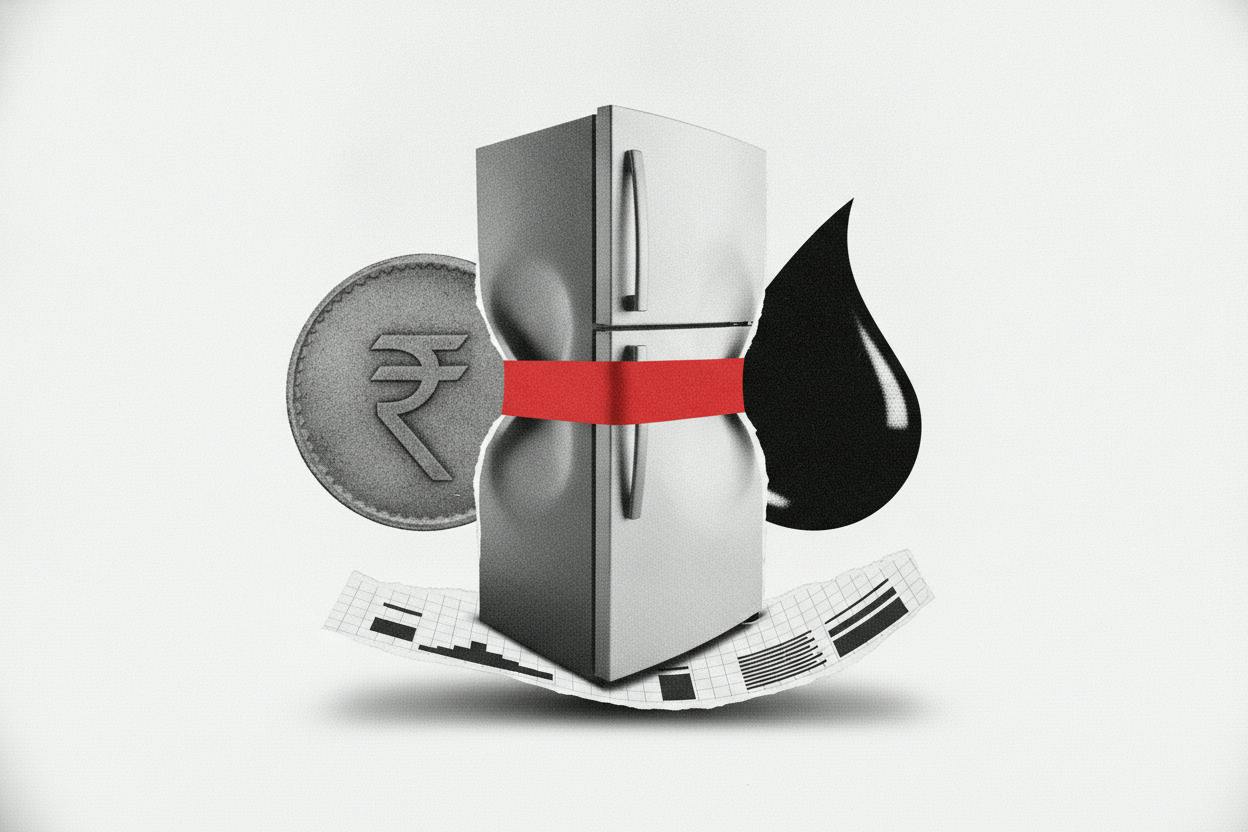
The culprit, according to the company, was a surge in input costs. "Materials and components consumed" jumped 33% year-on-year, driven largely by commodities linked to crude oil and by imported parts that are priced in dollars. With the rupee trading at an average of 93.84 per dollar during the quarter, every imported component became more expensive in local currency terms—before a single refrigerator or air conditioner was sold.
Why margins are shrinking even with a price hike
Whirlpool India introduced a roughly 5% price increase on November 1st, but that wasn't enough to offset the cost pressure. The company's gross margin—the difference between what it charges and what it costs to make a product—was squeezed as input costs rose faster than prices.
This is a familiar story across manufacturing sectors in India and elsewhere. When raw materials are tied to global oil prices and bought in dollars, a depreciating currency acts like a silent markup. Even if a company raises prices, the benefit can be quickly eroded if the rupee keeps sliding or commodity prices stay elevated.
The company also noted that sales fell sharply from the previous quarter as demand for air conditioners and refrigerators cooled after the summer season. That seasonal slowdown, combined with cost inflation, left Whirlpool India leaning on price hikes and cost cuts just to protect margins.
What it means for shoppers
For consumers, the takeaway is that appliance "deals" may stay thin. Even after the November 1st hike, manufacturers often spread additional price increases across new models and pull back on discounting to rebuild margins without suddenly scaring off buyers. That means sticker prices for essentials like air conditioners and refrigerators—which make up about two-thirds of Whirlpool India's sales—could remain under pressure, even as seasonal demand cools.
In other words, don't expect big promotions on these big-ticket items anytime soon. The cost pressures are real, and companies are likely to pass them along gradually rather than absorb them.
What it means for investors
For investors, Whirlpool India's results are a reminder that inflation is not just a consumer issue—it's a corporate earnings issue. When input costs rise faster than a company can raise prices, profit margins shrink, and that shows up in the bottom line. The 39% profit drop is a stark example of how quickly currency moves and commodity inflation can overwhelm even a solid revenue performance.
Investors should watch how Whirlpool India manages pricing and costs in coming quarters. If the rupee stabilizes and commodity prices ease, margins could recover. But if inflation persists, the company may need further price hikes, which could dampen demand.
This dynamic isn't unique to Whirlpool India. Across emerging markets, companies are grappling with the same squeeze. For a broader view, China's October inflation data showed factory costs outpacing consumer prices, a similar pattern of input-cost pressure. And in the US, traders are bracing for key inflation data that could signal how long these pressures last.
The bigger picture
Whirlpool India's results also highlight the fragility of consumer demand in emerging markets. When inflation eats into household budgets, big-ticket purchases like appliances are often postponed. That's why the company's revenue still grew—helped by price hikes—but volumes may have been weaker than expected.
For everyday investors, the lesson is to look beyond headline revenue growth and focus on margins and costs. A company can report higher sales yet still see profits fall, as Whirlpool India just demonstrated. Understanding the difference between revenue and profit is key to evaluating any business.
As the company navigates this environment, it will likely continue to rely on a mix of price increases, cost-cutting, and new product launches to protect its bottom line. Whether that's enough to restore profitability will depend on factors largely outside its control: global commodity prices, the rupee's trajectory, and the strength of consumer spending in India.