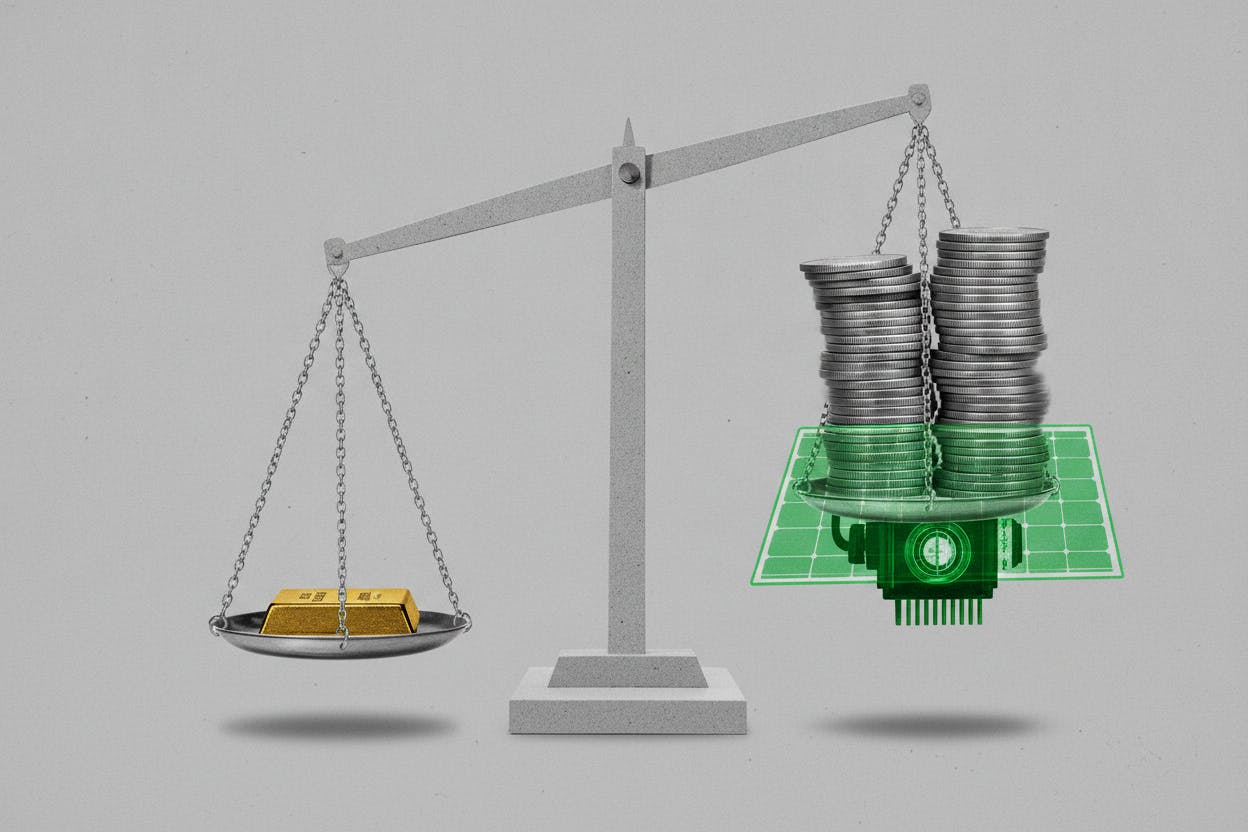
Investors often frame the choice between gold and silver as a contest: pick one metal and back it. But that framing misses the more useful point. Gold and silver respond to some of the same macroeconomic forces, yet they do different jobs inside a portfolio. The smartest portfolios often hold both, not because one is 'better,' but because they complement each other.
Gold: the ballast
Gold's investment case rests largely on scarcity, liquidity, and its long history as a store of value. It has no earnings or dividend, yet private investors and central banks hold it as an asset outside the traditional financial system. When markets get turbulent, gold tends to hold its ground—or even rise—because investors treat it as a safe haven.
Think of gold as ballast. It doesn't generate income, but it can steady a portfolio during storms. Its price is driven more by sentiment, inflation expectations, and real interest rates than by industrial demand. That makes it a reliable hedge against currency debasement and geopolitical uncertainty.
Silver: the dual engine
Silver shares some of gold's defensive traits, but it adds a second engine: industrial demand. Silver is used in electronics, solar panels, medical devices, and other manufacturing. That means its price is influenced not just by investor sentiment but also by the global economic cycle. When industry booms, silver can benefit; when it slows, silver may lag.
This dual nature makes silver more volatile than gold. It can rise sharply during precious-metals rallies, but it can also fall harder when industrial demand weakens. For investors, that volatility is a feature, not a bug—it can provide growth potential that gold alone doesn't offer.
How they work together
Holding both metals can create a broader precious-metals allocation. Gold provides stability and insurance; silver adds industrial exposure and potential upside. Together, they can smooth out the ride compared to holding just one. For example, if industrial demand slumps but inflation fears rise, gold may hold up while silver dips. Conversely, if the economy strengthens, silver may outperform while gold stays flat.
That diversification is why many financial advisors suggest a mix rather than a single metal. It's not about predicting which will win—it's about covering more scenarios. As recent market moves have shown, both metals can rally together when confidence in fiat currencies wavers.
What it means for investors
For everyday investors, the takeaway is simple: don't force a choice between gold and silver. A balanced approach can give you the best of both worlds. But it's important to remember that precious metals are not a guaranteed path to profits. They can lose value, and they don't pay dividends or interest. Their role is diversification, not speculation.
If you're considering adding precious metals to your portfolio, think about your goals. Gold might suit those seeking stability and protection. Silver might appeal to those willing to accept more volatility for potential growth. Holding both can be a middle ground, but it still carries risk.
Also, be aware of the practical differences. Gold is more liquid and easier to buy and sell in small amounts. Silver is cheaper per ounce, which can make it more accessible, but storage and transaction costs can add up. Recent sales data show that even when prices rise, investor demand can fluctuate.
The bottom line
Gold and silver are not rivals; they're teammates. Each brings something different to a portfolio, and together they can provide a more complete hedge against uncertainty. While no allocation can guarantee returns or prevent losses, a thoughtful mix of both metals can help you navigate a range of economic conditions.
As always, do your own research and consider how precious metals fit into your overall financial plan. They're not a one-size-fits-all solution, but for many investors, they're a valuable part of a balanced strategy.



