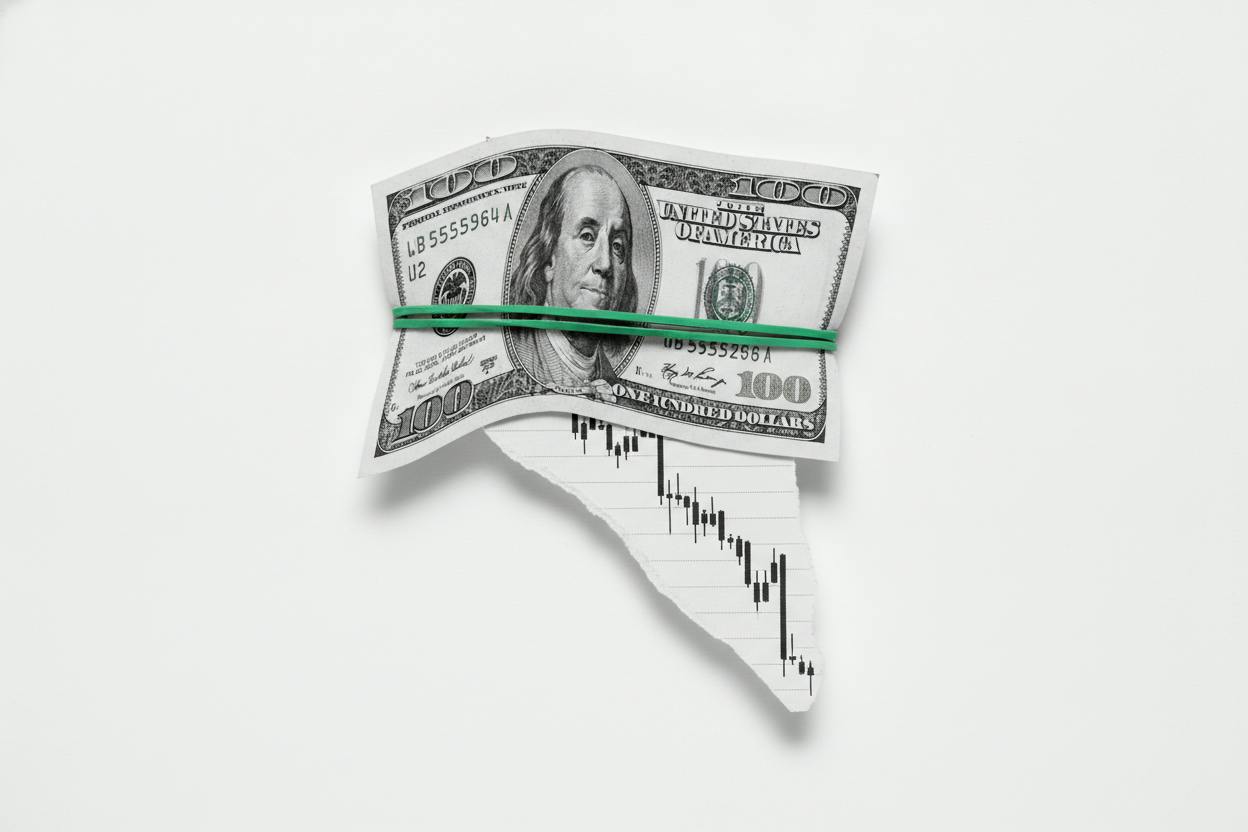
The dollar's rebound after a sharp stock market selloff earlier this week had many analysts scratching their heads. Typically, a drop in US stocks, falling Treasury yields, and slipping oil prices would weigh on the currency. But the greenback firmed anyway. Citi strategists think they've found the missing piece: foreign investors' rule-based currency hedges.
According to Citi, many overseas fund managers who own US stocks try to protect themselves from currency swings by selling dollars in the forward market—a contract to exchange currencies at a future date. When US shares fall sharply, the value of those equity positions shrinks, and the hedge can drift outside preset 'bands.' To bring the hedge back into line, managers must buy dollars in the forward market, creating demand that can overpower the usual macro signals.
What happened in the markets
On Monday, the dollar strengthened even as US Treasury yields fell and oil prices slipped—a combination that often weakens the currency. Citi's strategist Kristjan Kasikov argued that the missing piece was hedging. He pointed to Citi client flows that showed net dollar buying on Friday and Monday after equity losses, then net selling on Tuesday after stocks rebounded.
The trigger appears to be the S&P 500 dipping into correction territory—a drop of 10% or more from a recent peak. That kind of move can push many rule-based hedges outside their tolerance bands, forcing managers to act quickly.
Why this matters for investors
Foreign investors owned about $25 trillion of US equities as of September, according to the St. Louis Fed. Even small shifts in their hedging behavior can have outsized effects on currency markets. If more managers use trigger-based rules instead of predictable month-end rebalancing, dollar moves may cluster around big equity drawdowns.
That could mean faster swings in major currency pairs and more short-dated foreign-exchange volatility driven by equity-linked flows, not just central-bank expectations. For everyday investors, this is a reminder that currency markets are increasingly intertwined with stock market moves—and that a selloff in equities can have knock-on effects in the foreign exchange market.
For those with international investments, this dynamic can affect the value of overseas holdings when converted back to home currency. It also underscores the importance of understanding how hedging and market mechanics can amplify moves beyond what headlines suggest.
As stocks rebound as AI worries ease, the dollar's behavior may continue to be influenced by these hedging flows. Investors should watch for similar patterns if the market experiences another sharp drop.
For those looking to steady their retirement savings, understanding these market dynamics can help in making informed decisions, though it's always wise to consult a financial advisor.
What to watch next
Market participants will be watching whether the dollar's moves continue to align with equity market swings. If the S&P 500 stabilizes, the forced buying may fade. But if volatility persists, expect more currency turbulence.
Central bank policy and economic data, such as jobs data and the Fed's next move, will also play a role. The interplay between equities, currencies, and hedging flows is complex, but understanding it can help investors navigate an increasingly interconnected market.