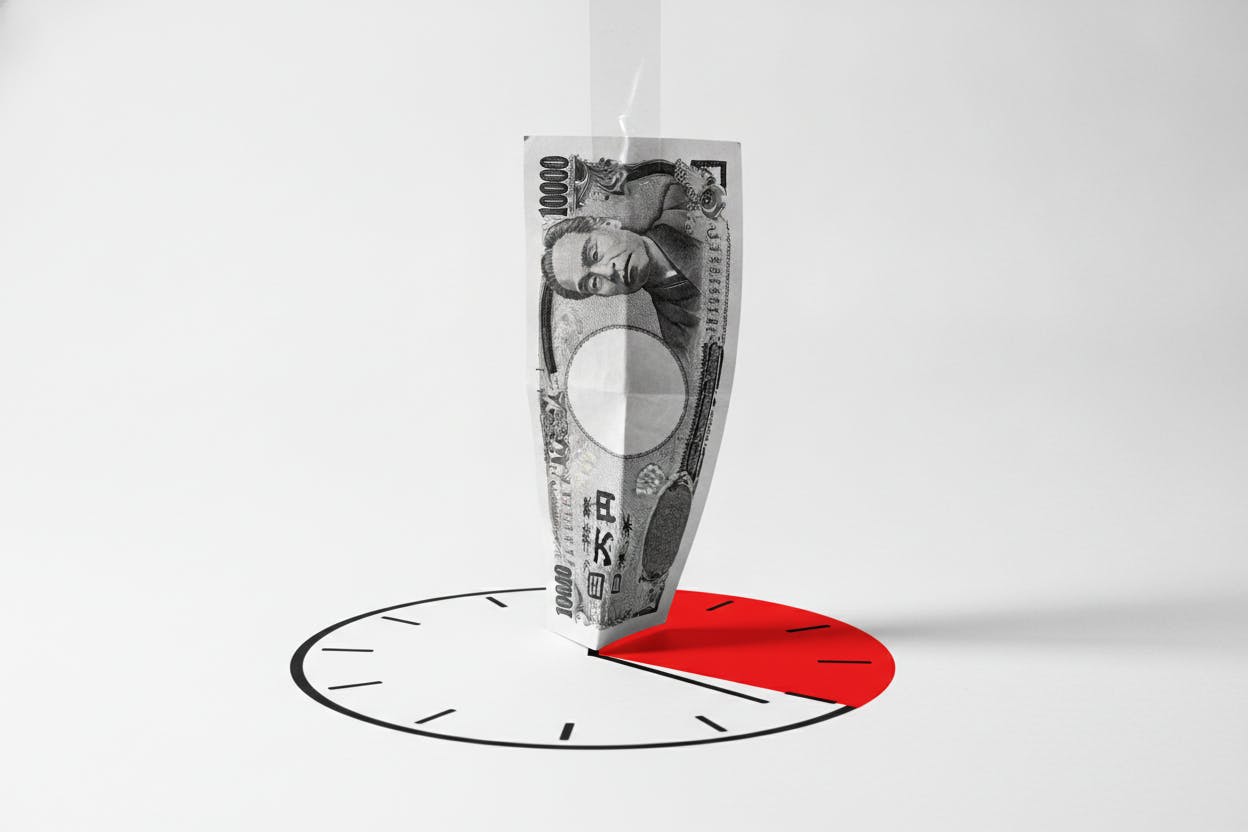
Japan's recent coordinated effort to support the yen has shifted the spotlight from one-off intervention to the Bank of Japan's (BOJ) next policy move. After joint yen-buying with the US and South Korea helped pull the currency off a 40-year low near 164 per dollar, the rebound has faded, with the dollar-yen rate drifting back toward 160. Now, traders are looking to the BOJ's September meeting as the real test of whether the yen can stay firm.
According to Tokyo Tanshi, a money-market broker, markets now price a 76% chance of a BOJ rate hike in September, up sharply from 24% on July 30. Reuters reports that swaps and bond yields already reflect a September move. This shift in expectations underscores how much weight investors are placing on the central bank's next decision.
Why the yen matters
The yen's value is a key driver for Japan's economy and global markets. A weaker yen boosts exporters' profits but raises import costs, especially for energy and food, squeezing households. For everyday investors, a falling yen can also affect returns on Japanese stocks and bonds when converted back to other currencies.
The recent intervention—buying yen in the open market—was aimed at stemming a slide that had pushed the currency to levels not seen in four decades. But such moves are often seen as temporary fixes. Investors know that intervention alone rarely changes the underlying trend; it's interest rates that ultimately determine a currency's direction.
Japan's interest rates have been ultra-low for years, while the US Federal Reserve and other central banks have raised rates to fight inflation. That gap makes the yen less attractive to hold, pressuring its value. The BOJ has begun to tighten policy, but very gradually, and markets are now betting it will act again in September.
What a September hike would mean
If the BOJ raises rates in September, it would narrow the gap between Japanese and US yields, potentially supporting the yen. That could be positive for Japanese assets, as a firmer currency often boosts investor confidence. However, a hike could also hurt Japanese exporters, whose overseas earnings would be worth less when converted back to yen.
For global investors, a stronger yen could have ripple effects. It might reduce the appeal of carry trades, where investors borrow yen at low rates to invest in higher-yielding assets elsewhere. A sudden unwinding of such trades could cause volatility in global markets, as seen in past episodes.
On the other hand, if the BOJ delays, traders warn the yen could slide again, potentially forcing another round of intervention. That would be a sign that the central bank is struggling to control its currency, which could undermine confidence in Japan's economic management.
What to watch next
Investors will be closely watching BOJ communications in the coming weeks for hints about the September decision. Key data, such as inflation figures, will also play a role. Japan's wholesale inflation has remained hot, keeping rate hike expectations alive, as noted in our recent coverage of Japan's wholesale inflation.
The broader context includes the US Federal Reserve's own path. If US inflation cools, as recent data suggests, the Fed may cut rates, which would also help narrow the yield gap and support the yen. Our analysis of cooling US inflation highlights how these dynamics are intertwined.
For everyday investors, the key takeaway is that currency moves can affect your portfolio, whether you own Japanese stocks, hold yen-denominated assets, or invest in global funds. A stronger yen might boost returns for foreign investors in Japan, but it could also signal broader market shifts.
As always, it's important to stay informed but not to overreact to short-term currency fluctuations. The BOJ's decision in September will be a significant event, but it's just one factor in a complex global economy. Keep an eye on the central bank's language and data releases in the weeks ahead.