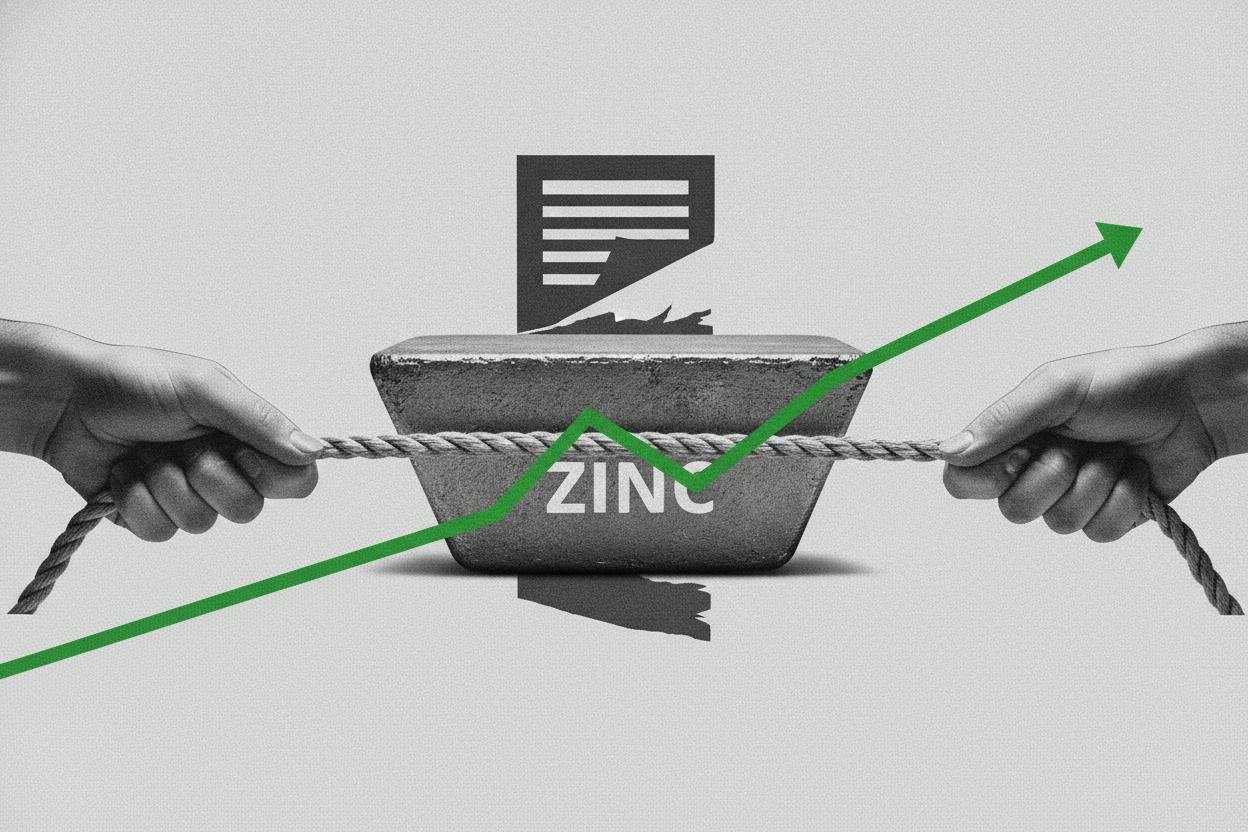
Zinc has become the latest battleground for commodity traders, with the London Metal Exchange (LME) witnessing a record clash between bears and bulls. Speculators have piled into record short positions, while bullish funds are holding near-record long bets. The result: a market that is both deeply divided and unusually volatile, with nearby contracts getting squeezed as traders scramble for metal that is ready to deliver today.
What's driving the standoff?
At the heart of the tug-of-war is a fundamental disagreement about where zinc supply and demand are headed. The International Lead and Zinc Study Group (ILZSG), an industry body that tracks global metal flows, has flipped its outlook. It now expects an 88,000-metric-ton supply shortfall this year, after previously forecasting a large surplus. That swing is driven by falling mine output and soft demand, which together have tightened the market more than many traders anticipated.
But the picture is complicated by China, the world's largest producer and consumer of zinc. The country is churning out more refined zinc, and some of that metal is now being exported—a rare move for a nation that typically hoards its supply. This export wave is helping to prop up prices, as it signals that Chinese producers are willing to sell into a market that is otherwise tightening. Yet it also adds a layer of uncertainty, because it means the headline stock numbers on the LME may not tell the full story.
Headline stock vs. deliverable metal
The standoff becomes clearer once you separate “headline” warehouse stock—the total amount of zinc sitting in LME-registered warehouses—from the metal that is actually available to be delivered to buyers today. A chunk of that headline stock is already earmarked for existing contracts or is tied up in financing deals, so it cannot be used to settle new trades. That leaves the market with a thinner pool of “live” metal, which is why nearby contracts keep getting squeezed.
When deliverable supply is tight, traders who have sold short—betting prices will fall—can be forced to buy back their positions at higher prices to avoid defaulting on delivery. That dynamic, known as a short squeeze, can push prices sharply higher in a short period, even if the broader outlook remains bearish. Conversely, the record long positions suggest that many funds believe the tightness is here to stay, at least for now.
What it means for investors
For everyday investors, the zinc standoff is a reminder that commodity markets can be driven as much by positioning and logistics as by the underlying fundamentals of supply and demand. The record short and long positions mean that any surprise—whether a sudden change in Chinese export policy, a mine outage, or a shift in global demand—could trigger sharp price swings in either direction.
Zinc is used in galvanizing steel to prevent rust, so its price is a bellwether for industrial activity. A sustained rally could feed into higher costs for construction and manufacturing, which might eventually show up in consumer prices. On the other hand, if the bearish view wins out and prices fall, that could signal weaker global demand than many expect.
Investors with exposure to zinc through mining stocks, exchange-traded funds, or industrial supply chains should watch the LME's daily stock reports and the ILZSG's monthly updates. The key metric to track is not just total inventory, but how much of that metal is actually available for delivery. As the recent squeeze shows, the difference can be the difference between a calm market and a chaotic one.
The broader commodity backdrop
Zinc is not the only metal caught in a tug-of-war. Copper has also seen prices edge up on AI optimism and a tightening China import signal, while other industrial metals are reacting to shifting global growth expectations. The standoff in zinc is part of a wider pattern where traders are wrestling with conflicting signals: strong demand from green-energy and tech sectors, but weak traditional manufacturing in key economies like China and Europe.
At the same time, central banks are in focus, with the Federal Reserve expected to hold rates steady as traders eye a December signal. Interest rates influence the cost of carrying inventory, which can affect how much metal traders are willing to hold. Higher rates tend to discourage stockpiling, which can exacerbate tightness in deliverable supply.
What to watch next
The immediate focus for zinc traders will be the LME's weekly stock data and any announcements from China about export quotas or production cuts. The ILZSG's next monthly update will also be closely scrutinized for any revision to its supply-demand balance. If the shortfall forecast holds, the squeeze on nearby contracts could intensify. If the surplus returns, the bears may finally get their way.
For now, the record standoff is a clear sign that the market is at a crossroads. Both sides have placed their bets, and the outcome will depend on which force—tight supply or weak demand—proves stronger. As with any crowded trade, the risk of a violent reversal is high, so investors should brace for volatility.