The Federal Reserve held interest rates steady this week for the seventh consecutive meeting, but the bond market delivered its own verdict — and it wasn't in sync with the central bank.
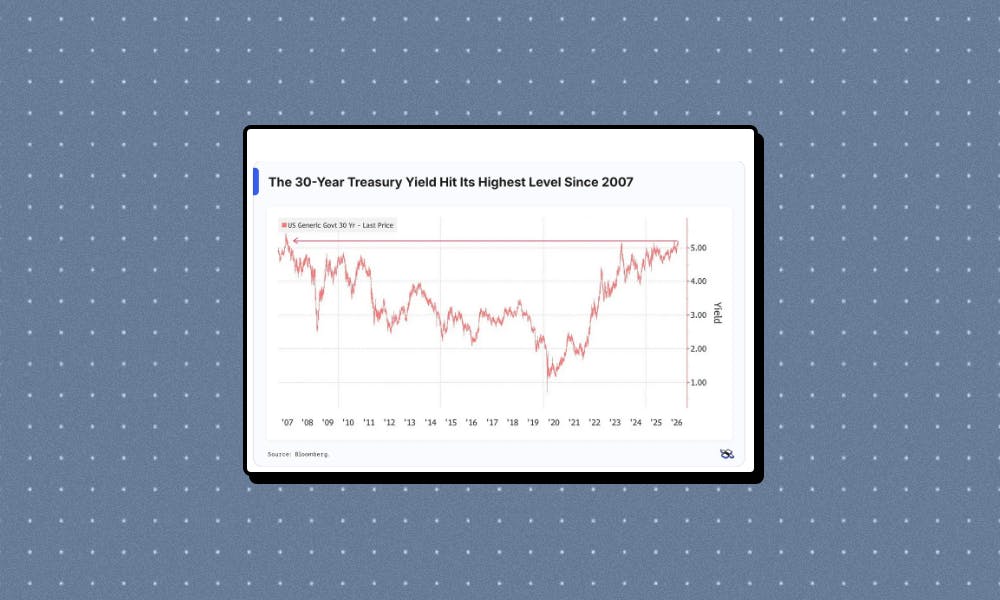
The yield on the 30-year Treasury bond climbed to its highest level since 2007, a stark signal that investors see inflation persisting for longer than the Fed currently expects. Meanwhile, shorter-dated bond yields actually fell, creating one of the biggest post-Fed-decision gaps between short- and long-term borrowing costs in decades.
What happened in the bond market
When the Fed left its benchmark rate unchanged, many traders had already priced in that outcome. What caught markets off guard was the scale of the move in long-dated Treasuries. Yields on 30-year bonds surged, while yields on shorter-term notes like the 2-year Treasury declined. That widening spread — known as a steepening yield curve — is a classic sign that bond investors are demanding higher compensation for the risk of holding longer-term debt.
In plain terms, investors are saying they believe inflation will stay higher for longer, which erodes the purchasing power of fixed-interest payments over time. To compensate, they require higher yields on long-term bonds.
This dynamic has been building for months. The 30-year yield has been trending upward since late 2023, but this week's jump was particularly sharp. The move came despite the Fed's insistence that it remains committed to bringing inflation down to its 2% target.
Why the gap between short and long rates matters
The gap between short- and long-term yields is one of the most closely watched signals in fixed-income markets. A widening spread often indicates that investors expect stronger economic growth or higher inflation ahead — or both. When short-term yields fall while long-term yields rise, it suggests the market believes the Fed may eventually cut rates, but that inflation will keep long-term borrowing costs elevated.
That's a tricky scenario for the central bank. If the Fed cuts rates too soon, it risks reigniting inflation. If it holds rates high for too long, it could slow the economy more than necessary. The bond market's message this week was clear: investors think the Fed's current path may not be enough to tame inflation over the long haul.
Fed Chair Kevin Warsh has maintained a hawkish tone, warning that the central bank will not hesitate to keep rates high if inflation proves stubborn. But the market's reaction suggests many traders are skeptical that the Fed's current stance will be sufficient.
What it means for everyday investors
For ordinary investors, rising long-term bond yields have real consequences. Higher yields on 30-year Treasuries make them more attractive relative to stocks, potentially pulling money out of equities. They also push up borrowing costs for mortgages, corporate loans, and other long-term debt, which can slow economic activity.
If you hold bonds or bond funds, rising yields mean falling prices for existing bonds. That's because older bonds with lower coupon rates become less valuable when new bonds offer higher yields. Investors with long-duration bond funds may see their values decline as yields rise.
On the flip side, higher yields create better entry points for new bond buyers. A 30-year Treasury yielding near 5% offers a much more attractive income stream than it did a few years ago when yields were below 2%.
The broader message for portfolios is one of caution. When the bond market and the Fed are sending conflicting signals, volatility often follows. Investors may want to review their asset allocation to ensure it aligns with their risk tolerance and time horizon.
Broader market context
The bond market's move this week didn't happen in isolation. It comes against a backdrop of mixed economic data, with inflation remaining above the Fed's target even as some parts of the economy show signs of cooling. The central bank's decision to hold rates steady was widely expected, but the market's reaction suggests a growing divergence between official policy and investor expectations.
Other central banks are facing similar challenges. The Bank of England also held rates steady this week, and European stocks edged up as investors digested the news. Meanwhile, emerging markets stumbled as the Fed's firm stance and rising oil prices added pressure on developing economies.
The dollar firmed as the Fed's split decision and geopolitical tensions shifted market focus. A stronger dollar can weigh on commodities and emerging-market assets, adding another layer of complexity for global investors.
What to watch next
Investors will be watching upcoming inflation data closely. If consumer price reports continue to show sticky inflation, long-term yields could rise further. The next Fed meeting will also be critical — any shift in language from Chair Warsh could either calm or roil bond markets.
The 30-year yield's move to a 19-year high is a reminder that the bond market often acts as a check on central bank policy. For now, the message from long-dated Treasuries is that the fight against inflation is far from over.