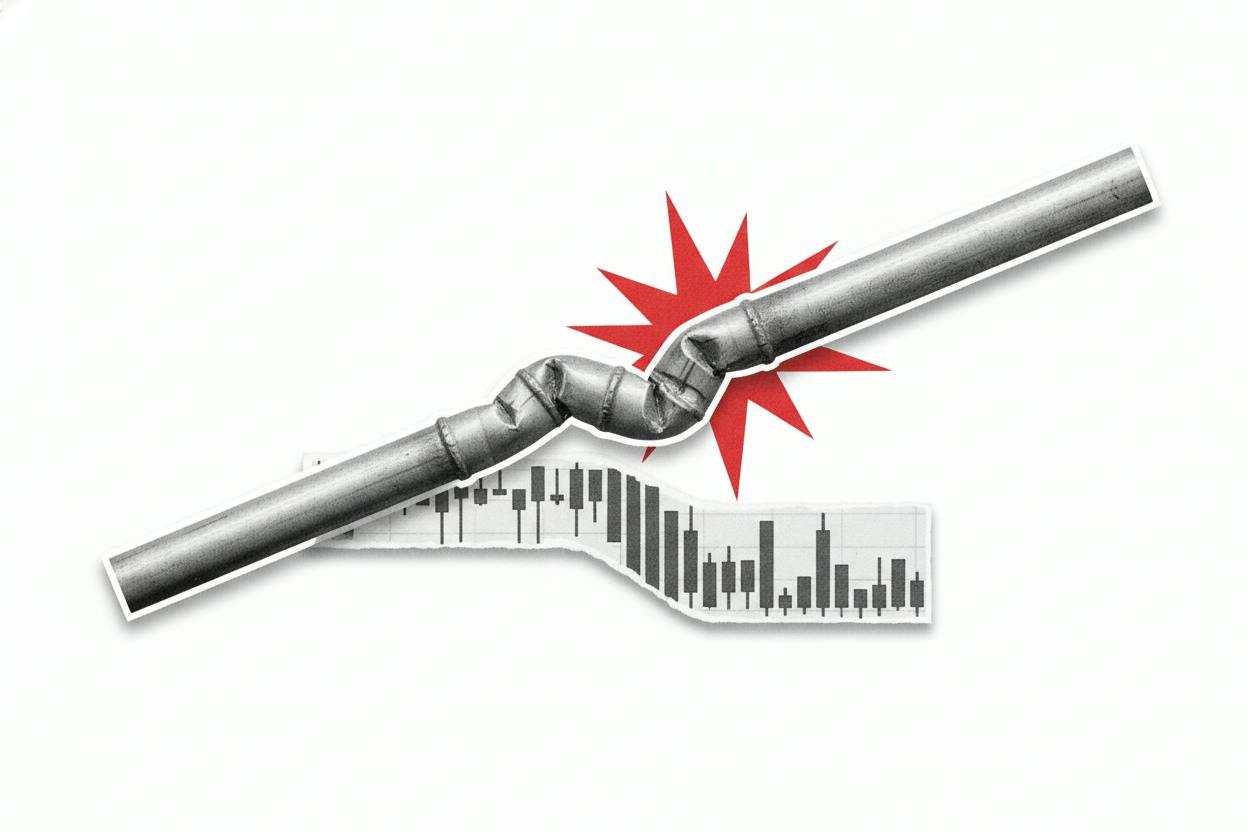
Saudi Arabian stocks slipped in early trading on Sunday, with the Tadawul index falling 1.0% after drone strikes targeted the kingdom's East-West oil pipeline. The attack prompted a precautionary shutdown of the pipeline, which serves as a vital alternative route for Saudi oil exports, allowing them to bypass the Strait of Hormuz.
The East-West pipeline is a critical piece of energy infrastructure, running from the oil-rich Eastern Province to a terminal on the Red Sea coast. It provides a way to move crude without relying on the Strait of Hormuz, a narrow waterway that handles a significant share of the world's oil shipments. Any disruption to this route raises concerns about supply reliability, not just for Saudi Arabia but for global markets.
Why the pipeline matters
The Strait of Hormuz is one of the most important chokepoints in global oil trade. A large portion of the crude exported from the Middle East passes through it, and tensions in the region have repeatedly raised fears about potential closures or disruptions. The East-West pipeline offers a measure of insurance, allowing Saudi Arabia to export oil via the Red Sea instead.
When that pipeline is forced to shut down, even temporarily, it removes a key safety valve. The precautionary shutdown following the drone strikes means that, for now, Saudi Arabia's ability to reroute exports is limited. This is why the market reaction was immediate, with the Tadawul index dropping 1% in early trade.
The drone strikes are part of a broader pattern of regional tensions that have kept oil markets on edge. Similar incidents in the past have led to short-term price spikes and increased volatility in Gulf equities. Investors are watching closely to see how long the shutdown lasts and whether it escalates into a wider disruption.
What it means for investors
For everyday investors, the immediate impact is on Saudi stocks, which fell as the news broke. The Tadawul index's 1% decline reflects concerns about the potential for prolonged disruption and its effect on the kingdom's economy, which is heavily reliant on oil revenues.
But the ripple effects extend beyond Saudi Arabia. Oil prices are likely to react to any perceived threat to supply, and that can influence markets worldwide. Higher oil prices can boost energy stocks but may weigh on sectors that depend on cheap fuel, such as airlines and shipping. They can also feed into inflation, which has been a major concern for central banks and investors alike.
This is not the first time that geopolitical tensions in the Gulf have rattled markets. Earlier this year, oil's 7% weekly surge kept Gulf markets on edge, and similar episodes have led to inflation fears in importing countries like India. The current situation could follow a similar pattern, with oil prices and regional equities moving in tandem.
Investors should also consider the broader context. The shutdown is precautionary, meaning it may be temporary, and Saudi authorities have experience in quickly restoring pipeline operations. However, the fact that the attack occurred at all highlights the persistent security risks in the region.
Looking ahead
The key question for markets is how long the pipeline remains offline and whether the drone strikes signal a new phase of escalation. If the shutdown is brief, the impact on oil supplies and prices could be limited. But if it drags on, or if further attacks occur, the risk premium on oil is likely to rise.
For investors in Saudi stocks, the immediate focus will be on the energy sector, which dominates the Tadawul index. A prolonged disruption could hurt sentiment, but a quick resolution might see the index recover. As always, geopolitical events like this are difficult to predict, and their market impact can be short-lived or long-lasting depending on how they unfold.
In the meantime, global investors will be watching oil prices and any statements from Saudi authorities about the status of the pipeline. The situation is a reminder that energy infrastructure remains a flashpoint in the region, and that even a precautionary shutdown can move markets.