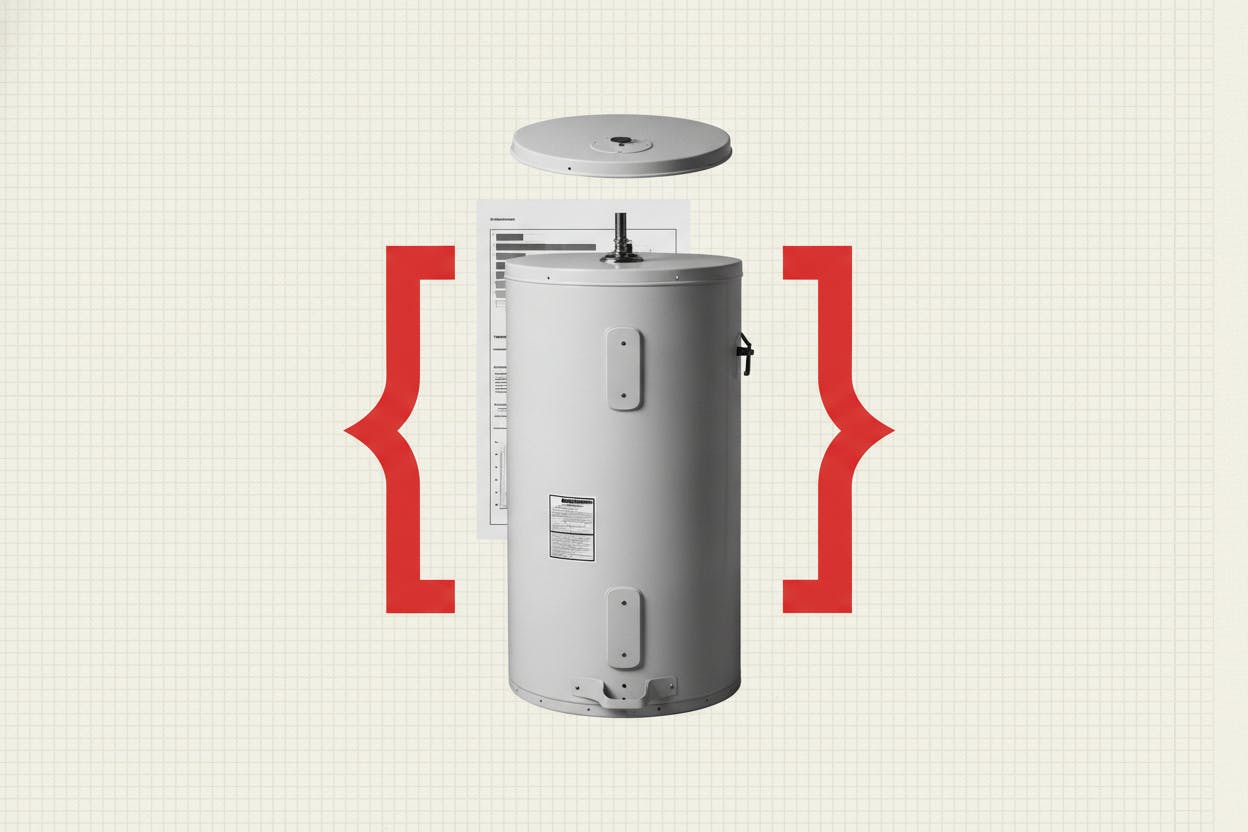
Water-heater maker A. O. Smith has trimmed its 2026 financial outlook after what it described as a soft first half, a move that has drawn attention from Wall Street analysts. The company now expects revenue for the year to come in between $3.90 billion and $3.95 billion, down from its previous range. It also narrowed its adjusted earnings per share (EPS) forecast to $3.70–$3.85.
The revised guidance reflects a more cautious view of demand and market conditions in the months ahead. For everyday investors, the key takeaway is that the company is signaling that the second half of the year may not be as strong as originally hoped.
What the guidance change means
Guidance is a company's own estimate of future performance, and when a company narrows or lowers it, that is often read as a sign that business conditions have softened. In this case, A. O. Smith's new revenue range is tighter and lower than before, and the adjusted EPS range also points to less profit per share than previously expected.
Adjusted EPS is a measure of profitability that strips out one-time items, making it easier to compare performance across periods. The company's revised range suggests that management sees pressure on both the top line (revenue) and the bottom line (profit).
The company did not specify the exact reasons for the weak first half in the brief, but water heaters and other residential and commercial products are closely tied to housing construction, remodeling, and consumer spending. When those areas slow, demand for such products can dip. A. O. Smith also has significant international operations, which can be affected by currency fluctuations and regional economic conditions.
Oppenheimer's view: near-term risk, long-term optimism
Oppenheimer, a U.S. investment bank, has flagged near-term earnings risk for the company. That means the bank sees a chance that A. O. Smith's actual results could come in below expectations in the coming quarters. However, Oppenheimer has kept a bullish rating on the stock and maintained a price target of $75 per share.
A price target is the price at which an analyst believes a stock is fairly valued over a certain period. Keeping a $75 target while acknowledging near-term risk suggests the bank believes the current weakness is temporary and that the company's longer-term prospects remain intact. This is a common stance when analysts think a company is facing a rough patch but still has solid fundamentals.
For investors, this mixed signal—lower guidance but a maintained price target—can be confusing. It highlights the difference between short-term earnings momentum and long-term valuation. The stock may face pressure in the near term as the market digests the weaker outlook, but if the company can execute on its strategy, the shares could still reach the analyst's target.
What it means for investors
For ordinary investors, the main takeaway is that A. O. Smith is experiencing a slowdown, and the company itself is bracing for a softer year. This is not necessarily a reason to panic, but it is a signal to watch how the company performs in the coming quarters.
Companies in cyclical industries—those tied to housing and construction—often see their outlooks change as the economy shifts. When interest rates are high, for example, homebuilding and remodeling tend to cool, which can hurt demand for water heaters. Conversely, when rates fall, the sector often rebounds.
Investors should also note that guidance changes are not uncommon. Many companies adjust their forecasts during the year as they learn more about demand and costs. The fact that A. O. Smith narrowed its range rather than drastically slashing it suggests the company is making a modest adjustment, not a major reset.
Still, Oppenheimer's caution about near-term earnings risk is worth heeding. If the company misses its revised targets, the stock could fall further. On the other hand, if the second half proves stronger than expected, the shares could recover.
For those who own A. O. Smith stock, the key is to monitor upcoming earnings reports and any further guidance updates. For those considering a purchase, the lower guidance might present an entry point, but it also carries risk. As always, it's wise to consider how this stock fits into a diversified portfolio rather than making a decision based on a single piece of news.
In the broader market context, A. O. Smith's move is a reminder that not all companies are benefiting from the same tailwinds. While some sectors, like energy, have seen strong earnings growth, others, such as housing-related businesses, are facing headwinds. Investors should be aware of these divergences when assessing their own holdings.
For more on how different sectors are faring, see our coverage of S&P 500 earnings growth cooling and the contrasting outlook from CNH Industrial, which lifted its profit forecast on construction demand.
Ultimately, A. O. Smith's trimmed outlook is a cautionary tale about the importance of reading beyond the headline. The company is not collapsing, but it is facing a tougher environment. How it navigates the rest of the year will determine whether the current price target is achievable or needs to be revised.