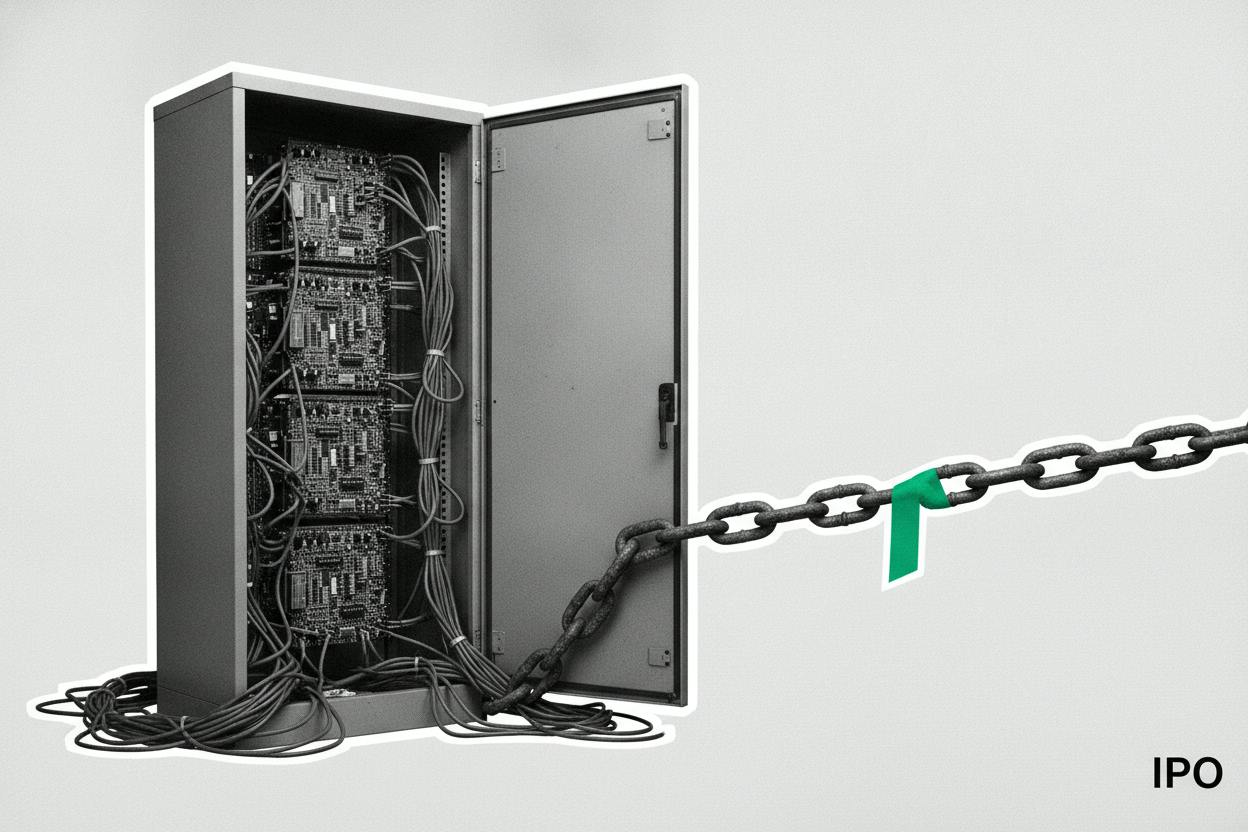
Accelevation, a data center infrastructure company backed by private equity firm Olympus Partners, has filed for an initial public offering on the Nasdaq, according to a prospectus reported by Reuters. The company is seeking a valuation of up to $5.37 billion and aims to raise as much as $720 million by offering 30 million shares priced between $20 and $24 each. The shares are expected to trade under the ticker symbol "ACCV."
The filing lands squarely in the middle of an AI-driven construction boom. As tech giants and cloud providers race to build out the computing capacity needed to train and run artificial intelligence models, demand has surged for the physical infrastructure that keeps those facilities running — power distribution systems, cooling equipment, and modular components. Accelevation designs and installs exactly that kind of hardware, making it a less-visible but essential supplier to the data center buildout.
What Accelevation actually does
Data centers are not just rows of servers. They require massive amounts of electricity, sophisticated cooling to prevent overheating, and modular construction that can be assembled quickly. Accelevation operates in this niche, providing the power and thermal management systems that sit behind the scenes. While chipmakers and cloud companies grab headlines, firms like Accelevation supply the plumbing and electrical backbone that makes AI computing possible.
The company's private equity owner, Olympus Partners, will also be selling shares in the offering, alongside the company itself. That structure is common in IPOs: existing investors use the listing as an opportunity to cash out part of their stake, while the company raises fresh capital. In this case, the prospectus indicates that the bulk of the proceeds will go toward refinancing existing debt rather than funding new projects. That detail matters for investors trying to gauge how much growth capital the company will actually have at its disposal after the IPO.
The AI infrastructure trade
Accelevation is not the only company tapping public markets to ride the AI wave. Recent months have seen a wave of listings and capital raises tied to data center demand. For example, Ligent's Hong Kong IPO surged on AI data center demand, showing that investors are willing to pay up for exposure to the theme. Meanwhile, large institutional players are also moving aggressively into the space. Nippon Life plans a $12.75 billion push into US data center loans, a sign that debt markets are eager to finance the buildout.
But the sector is not without risk. Rising interest rates have made borrowing more expensive, and some recent debt deals for data centers have struggled. Oracle's $18 billion data center loans slipped as banks struggled to sell the debt, highlighting that investor appetite is not unlimited. Accelevation's decision to use IPO proceeds to refinance debt may be a response to those tighter credit conditions, reducing its interest burden and strengthening its balance sheet.
What it means for investors
For everyday investors, the Accelevation IPO offers a way to invest in the AI infrastructure theme without buying a chipmaker or a cloud giant. The company is a picks-and-shovels play: it profits from the construction of data centers regardless of which AI model ultimately wins. That can be appealing, but it also means the stock is tied to the capital spending cycles of a handful of large technology companies. If those firms slow their data center buildouts, demand for Accelevation's products could cool quickly.
The valuation of up to $5.37 billion will be a key focal point. Investors will compare it to the company's revenue and earnings, which are detailed in the prospectus. They will also watch how much of the IPO proceeds go to debt repayment versus growth initiatives. A heavy debt refinancing could signal that the company is prioritizing financial stability over expansion, which may temper growth expectations.
Additionally, the performance of recent AI-related IPOs will set the tone. If Ligent's strong debut is any guide, there is appetite for new issues in this space. But broader market conditions, including interest rate expectations and the health of the tech sector, will ultimately determine whether Accelevation's offering is well received.
Investors should also note that private equity-backed IPOs often come with lock-up periods, meaning Olympus Partners and other insiders may be restricted from selling more shares for a set time after the listing. When those lock-ups expire, additional supply can hit the market and pressure the stock price. That is a standard dynamic, but one worth understanding before buying into any newly public company.
Accelevation's filing is a reminder that the AI boom is creating investment opportunities well beyond the headline-grabbing chip and software names. The infrastructure layer — power, cooling, and modular construction — is attracting serious capital. Whether Accelevation can turn that momentum into a successful public listing will be watched closely as a barometer for the broader AI infrastructure trade.