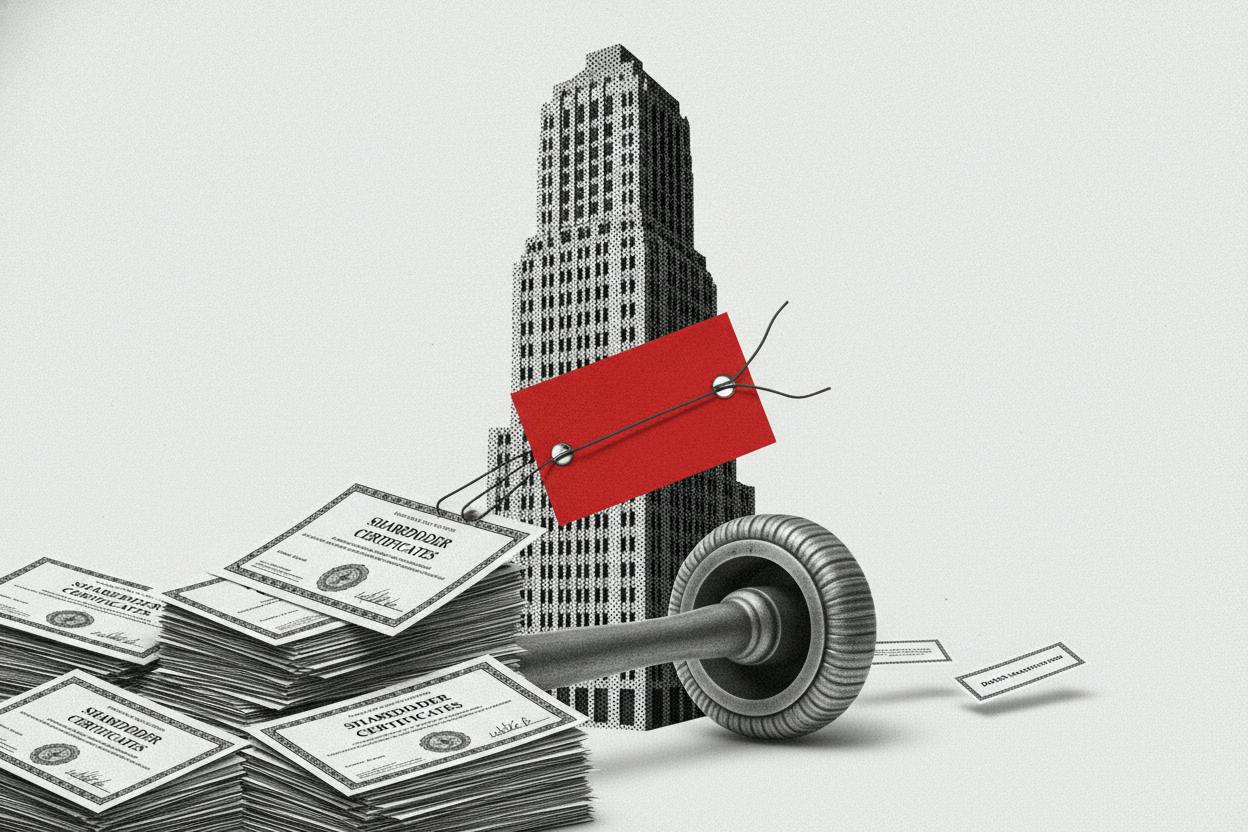
Activist investor Arkhouse is turning up the pressure on Barry Diller's media holding company People, urging it to return cash to shareholders with at least a $750 million buyback, according to Reuters. The proposal includes a Dutch auction tender offer, a possible sale of People's New York headquarters, and the creation of contingent value rights tied to the company's lawsuit against Alphabet.
People, which owns brands like The People, Us Weekly, and InTouch, has been under shareholder scrutiny as its stock has lagged. Arkhouse, known for taking activist positions in real estate and retail, is now targeting a media company with a familiar playbook: unlock value through buybacks and asset sales.
What is a Dutch auction tender offer?
A Dutch auction tender offer is a way for a company to buy back its own shares directly from shareholders. Instead of setting a fixed price, the company names a price range, and shareholders indicate how many shares they are willing to sell at each price. The company then works backward from the lowest price to find the one that lets it buy the desired number of shares. This approach can be more efficient than a traditional fixed-price buyback because it lets the market determine the clearing price.
For investors, a buyback typically signals that management believes the stock is undervalued. It also returns cash to shareholders, which can support the share price. However, the actual benefit depends on the price paid and whether the company is using cash that could be better deployed elsewhere.
The broader context: activist pressure and buybacks
Arkhouse's move comes amid a wave of shareholder activism across industries. In recent months, activists have won board seats at companies like Ethan Allen, and others have pushed for buybacks and cost cuts. Buybacks have become a favored tool for returning capital, especially when companies have limited growth opportunities.
People's situation is unique because of its pending lawsuit against Alphabet, the parent company of Google. The lawsuit, which alleges antitrust violations related to digital advertising, could result in a significant payout if successful. Arkhouse wants shareholders to benefit directly from that potential windfall through contingent value rights (CVRs). A CVR is a financial instrument that gives holders a future payment if a specific event occurs—in this case, a favorable outcome in the Alphabet lawsuit. This would allow investors to capture some of the upside without waiting for the case to conclude.
The proposal also includes selling People's New York headquarters. Real estate sales are a common activist demand, as they can free up cash and reduce overhead. However, such a sale would need to be weighed against the company's operational needs and the current commercial real estate market.
What it means for investors
For everyday investors, this news is a reminder that activist investors can sometimes unlock value in underperforming companies. If Arkhouse succeeds, People's shareholders could see a cash return through the buyback, and potentially a CVR that pays off if the Alphabet lawsuit succeeds. But there are risks: the buyback might be at a price that doesn't reflect long-term value, and the CVR could end up worthless if the lawsuit fails.
Investors should also consider that People's management, led by Barry Diller, may resist these demands. Diller has a history of making his own decisions about capital allocation. The outcome will likely depend on negotiations and whether Arkhouse can rally other shareholders.
For those watching the broader market, this story fits into a larger trend of companies using buybacks to support share prices. As seen with other firms like Tapestry and Deutsche Telekom, buybacks can be a powerful signal. But they are not a cure-all. Investors should look at the underlying business and whether the buyback is being done for the right reasons.
In the coming weeks, all eyes will be on People's board and whether it engages with Arkhouse. If the company agrees to the buyback, it could set a precedent for other media companies facing similar pressure. If it resists, the fight could escalate into a proxy battle, which would be costly and distracting.
For now, the key takeaway is that Arkhouse sees value in People that the market may not be pricing in. Whether that value is realized depends on the board's response and the eventual outcome of the Alphabet lawsuit.