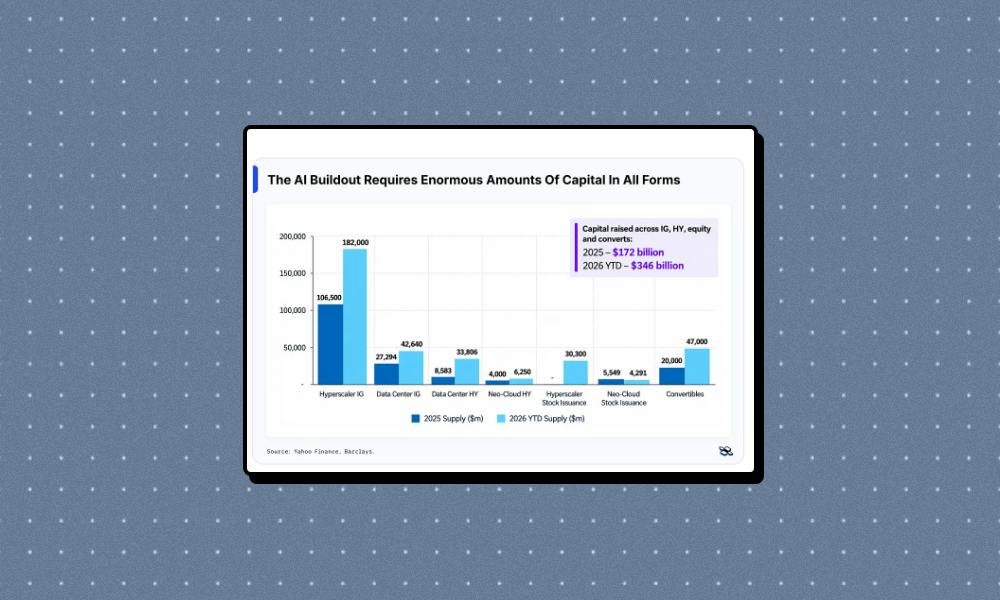
The artificial intelligence buildout is turning into one of the largest capital-raising exercises in corporate history. So far in 2026, hyperscalers, data center operators, and so-called neo-clouds have pulled in a staggering $346 billion through a mix of debt and equity—more than double the $172 billion they raised in all of 2025.
That pace shows no sign of slowing. The money is coming in all shapes and forms: corporate bonds, bank loans, convertible notes, and fresh share sales. But debt is doing plenty of the heavy lifting, and that is raising questions about how much leverage the AI boom can safely carry.
Bond issuance hits the gas
Alphabet, Amazon, Meta, Microsoft, and Oracle—the five biggest spenders on AI infrastructure—have already issued around $159 billion in bonds through early June. That is 47% more than they issued during the entirety of last year, a remarkable acceleration in borrowing.
These companies are not struggling for cash. Most generate enormous profits. But the scale of AI investment—spanning data centers, chips, power supplies, and networking gear—has outpaced even their massive free cash flows. So they are turning to the bond market to fill the gap, often at attractive rates given their top-tier credit ratings.
The trend is not limited to the giants. Smaller players, including specialized data center REITs and private cloud providers, are also tapping debt markets. Some are using riskier structures, such as project-level financing backed by future lease payments, which can be more vulnerable if demand softens.
Why the borrowing binge matters
For everyday investors, this debt surge cuts both ways. On one hand, it signals confidence: companies are willing to borrow heavily because they expect AI demand to keep growing for years. That optimism has helped lift stock prices across the tech sector.
On the other hand, rising debt loads add a new layer of risk. If AI revenue growth disappoints, or if interest rates stay higher for longer, the cost of servicing that debt could squeeze profits. Companies with strong balance sheets, like Microsoft and Alphabet, can absorb the strain. But smaller, highly leveraged players could face real trouble.
Investors should also watch how much of this borrowing is fixed-rate versus floating-rate. Floating-rate debt becomes more expensive as central banks keep rates elevated, eating into margins. Fixed-rate bonds, by contrast, lock in costs but can become a burden if rates fall and refinancing becomes cheaper elsewhere.
What to watch next
The key question is whether this capital-raising pace is sustainable. If AI infrastructure continues to generate strong returns, the debt will be manageable. If not, we could see a wave of distressed refinancing or even defaults among the most aggressive borrowers.
Another signal to monitor is the mix of debt versus equity. So far, companies have leaned heavily on debt, which is cheaper than selling shares and diluting existing holders. But if borrowing costs rise or credit markets tighten, we may see more equity issuance—which could pressure stock prices.
For now, the AI buildout remains a powerful driver of economic activity, from construction to chip manufacturing. As we've noted, AI's physical buildout is reshaping global trade and markets. But the financing side is becoming just as important as the technology itself.
Investors should keep an eye on corporate bond spreads, earnings reports from the big tech firms, and any signs that lenders are getting cautious. The shift toward debt and share sales is a trend that will define the next phase of the AI cycle.
In the meantime, the borrowing binge is a reminder that even the most exciting technological revolutions need to be paid for. How that bill gets settled will determine who wins and who loses in the AI era.