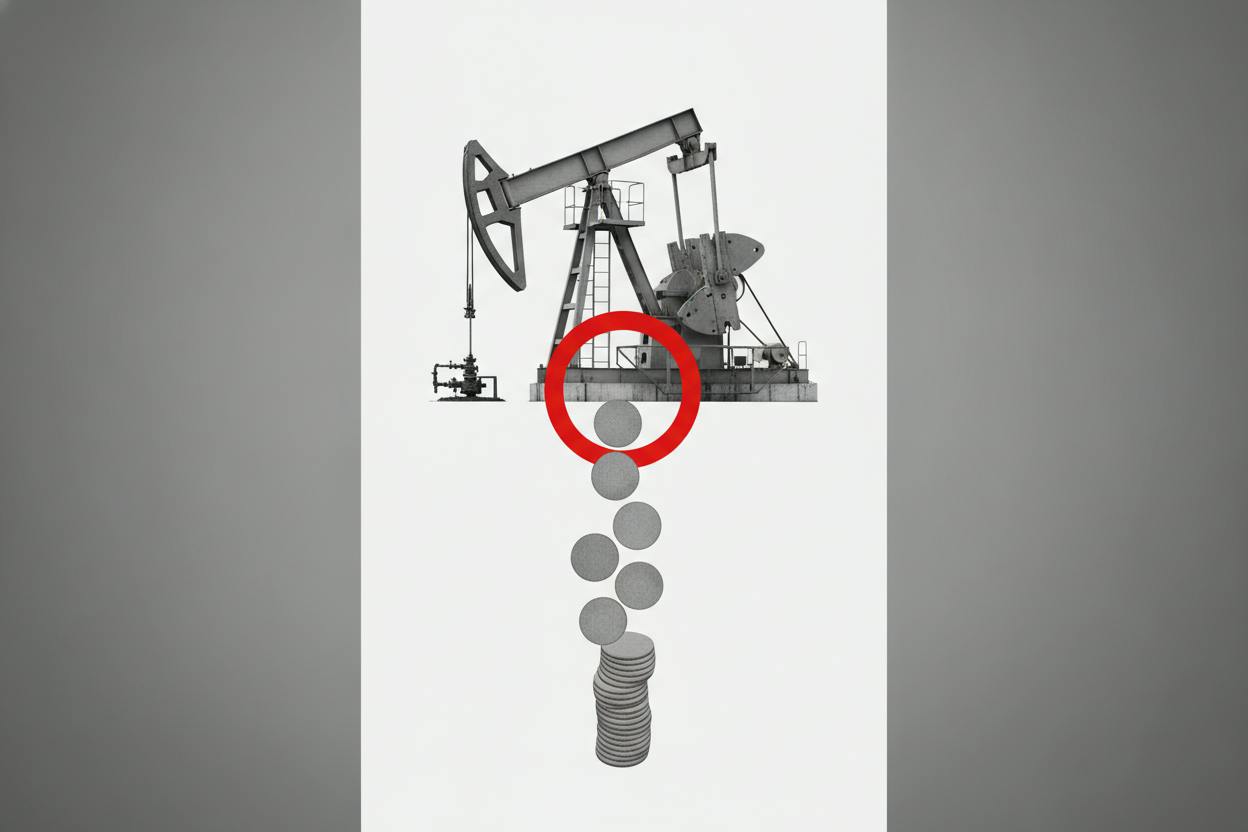
ConocoPhillips, one of the largest independent oil and gas producers in the United States, may need to step up its share buyback program in the coming months to stay on track with the shareholder-return promise it made to investors. That's the view of analysts at UBS, who estimate the company returned about 40% of its operating cash flow to shareholders in the first half of the year—short of the roughly 45% full-year target the company has set.
To close that gap, UBS believes ConocoPhillips will need to push its payout rate closer to 50% of operating cash flow in the second half. The most flexible tool for doing that is share repurchases, since buyback volumes can be adjusted quarter to quarter without altering drilling plans or the dividend.
Why buybacks are the go-to lever
For an oil major, returning cash to shareholders typically comes in two forms: dividends and share buybacks. Dividends are sticky—investors expect them to be maintained or raised, and cutting them is seen as a sign of trouble. Buybacks, by contrast, are far more discretionary. A company can slow them down when cash is tight or accelerate them when it has extra money, all without changing its underlying operations.
That flexibility is why UBS expects ConocoPhillips to lean on repurchases to meet its target. The bank is penciling in $2.5 billion of buybacks in the third quarter and $2.75 billion in the fourth. It also expects the company's new chief executive to stick with the firm's disciplined-spending message on the first earnings call under new leadership.
Buybacks matter for more than just optics. When a company repurchases its own shares, it reduces the number of shares outstanding. That means future earnings are divided among fewer shares, which can lift earnings per share (EPS) even if total profits stay flat. It's a mechanical boost that investors often watch closely.
What it means for earnings estimates
UBS's third-quarter adjusted EPS estimate for ConocoPhillips stands at $3.10, notably above the broader analyst consensus of $2.96. The gap reflects, in part, the expected boost from accelerated buybacks. As analysts update their models to reflect the faster pace of repurchases, that gap is likely to narrow.
For everyday investors, this highlights an important point: a company's reported earnings per share can be influenced by capital-return decisions, not just by how much oil it pumps or what prices it fetches. A company that buys back a lot of stock can show stronger per-share growth than a rival that doesn't, even if their underlying businesses perform similarly.
But there's a catch. The math only works if cash generation holds up through the end of the year. If operating cash flow softens—say, because oil prices drop or production comes in lower than expected—the company would face a choice: slow down buybacks and risk missing its payout target, or keep buying and accept that per-share targets become harder to hit.
Broader context for oil investors
ConocoPhillips is not alone in using buybacks to reward shareholders. Many large energy companies have made shareholder returns a central part of their investor pitches, especially as they face pressure to limit capital spending and return more cash rather than chase growth. The approach has become a hallmark of the post-2020 oil industry, where discipline is prized over expansion.
That said, the effectiveness of buybacks depends on the price the company pays for its own stock. Buying back shares at low valuations can be a smart use of cash, but doing so at high prices can destroy value. Investors will be watching not just the pace of repurchases, but also the price ConocoPhillips pays for them.
UBS's view also comes amid a broader backdrop of energy companies navigating volatile commodity prices and shifting investor sentiment. Some analysts have noted that record refining margins have boosted other oil majors, but ConocoPhillips's fortunes are more tied to upstream production and oil prices.
For those following the company, the upcoming earnings call will be a key moment. Investors will want to hear whether the new CEO reaffirms the payout target and how confident management is in cash generation for the rest of the year. The tone could set expectations for the fourth quarter and beyond.
What investors should watch
For ordinary investors, the takeaway is straightforward: ConocoPhillips's per-share results in the second half could get a lift from buybacks, but that support is conditional on cash flow staying strong. If oil prices cooperate, the company may comfortably hit its target. If they don't, the buyback pace could slow, and the per-share numbers might come in softer than some expect.
It's also worth remembering that buybacks are just one piece of the puzzle. The company's actual production, costs, and commodity prices will still drive the bulk of its financial performance. But for a company that has made shareholder returns a priority, the pace of repurchases is a signal worth watching.
As always, this is not a recommendation to buy or sell ConocoPhillips stock. It's simply a look at what analysts are expecting and why it matters. For more on how buybacks are shaping the energy sector, see our recent piece on Suncor's buyback boost and UBS's take on Chord Energy.