When an AI tool capable of finding and patching software vulnerabilities on its own wiped $15 billion off the cybersecurity sector in a matter of days back in March, many investors concluded the party was over. The logic seemed straightforward: if machines can secure code without human help, why pay for expensive security software?
But a month later, the Finimize Portfolio is keeping its cybersecurity basket exactly as it was. The recent market action, the portfolio's managers say, has only strengthened the case for owning the big security platforms.
The panic was aimed at the wrong thing
The March sell-off was a classic case of a new technology triggering fear that an entire industry would be automated away. It's a pattern that has played out before—think of how early e-commerce was supposed to kill brick-and-mortar retail, or how streaming was supposed to end television. Sometimes the threat is real; often it's overstated.
In this case, the AI tool in question is genuinely impressive. It can scan code, identify weaknesses, and even patch them without waiting for a human developer. That sounds like a direct threat to companies that sell vulnerability scanning and patch management.
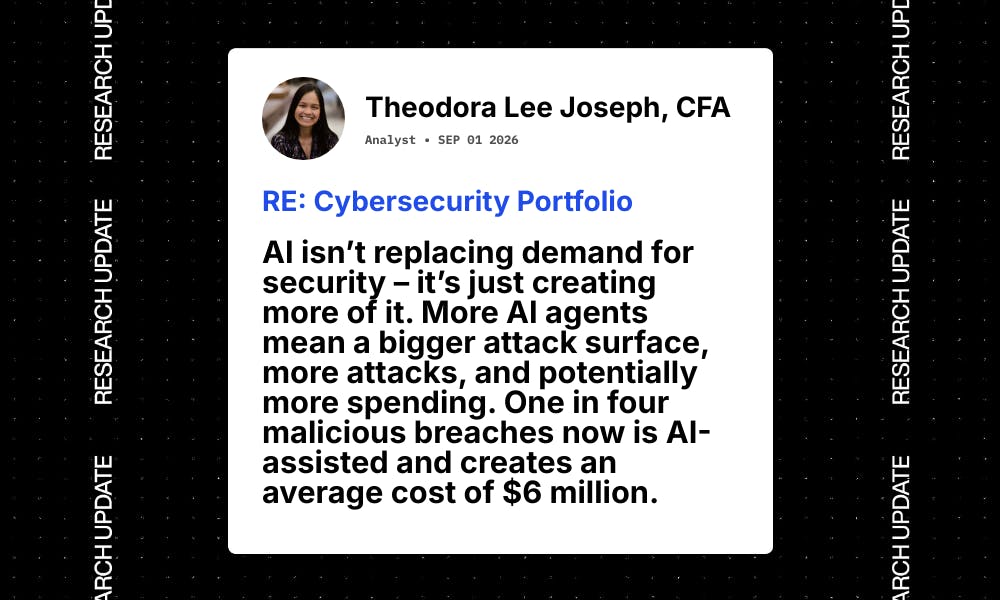
But cybersecurity is not just about finding bugs. It's about defending against adversaries who are also using AI to break in. The same technology that helps defenders also helps attackers—and attackers are getting faster and more sophisticated. That means the demand for robust, layered security is not shrinking; it's growing.
Why the big platforms are better positioned
The portfolio's decision to stick with the major cybersecurity platforms reflects a belief that scale and integration matter more than ever. Large platforms offer a broad suite of tools—firewalls, endpoint protection, identity management, threat intelligence—that work together. When an AI-powered attack hits, a fragmented set of point products is less effective than a unified defense.
Moreover, the big players have the resources to incorporate AI into their own products. They can use machine learning to spot anomalies, automate responses, and stay ahead of new threats. In other words, AI is becoming a feature, not a fatal flaw, for these companies.
Smaller, niche security firms might be more vulnerable to automation, but the platforms are adapting. That's a key reason the portfolio is not rebalancing.
What it means for investors
For everyday investors, the lesson is not to overreact to a single headline or a short-term market swing. The March sell-off was a reminder that markets can move sharply on fear, but fundamentals often reassert themselves.
Cybersecurity remains a growth area, driven by the relentless increase in digital threats, regulatory pressure, and the shift to cloud computing. Even if AI changes how security is delivered, the underlying need for protection is unlikely to disappear.
That said, it's worth watching how the big platforms integrate AI and whether they can maintain pricing power. If AI makes security cheaper and more automated, margins could come under pressure. But so far, the evidence suggests that the big players are turning AI into an advantage, not a liability.
The broader market backdrop
The cybersecurity sector is also operating against a wider market that has been jittery about technology valuations and interest rates. As rate-hike bets rise, growth stocks—including many tech names—tend to feel the pinch. But cybersecurity has historically been seen as a defensive tech play, because demand is less tied to the economic cycle.
Investors have also been watching oil prices and rising yields as they weigh the outlook for inflation and central bank policy. Those macro forces can affect all stocks, but they don't change the fundamental case for cybersecurity.
The bottom line
The Finimize Portfolio's decision to hold its cybersecurity basket steady is a vote of confidence in the sector's long-term prospects. It's also a reminder that not every technological disruption is an existential threat. Sometimes, it's just the next chapter.
For investors, the takeaway is to focus on the underlying drivers—demand for security, the strength of the platforms, and their ability to adapt—rather than getting caught up in short-term panic. The AI scare may have been overblown, but the need for cybersecurity is not.