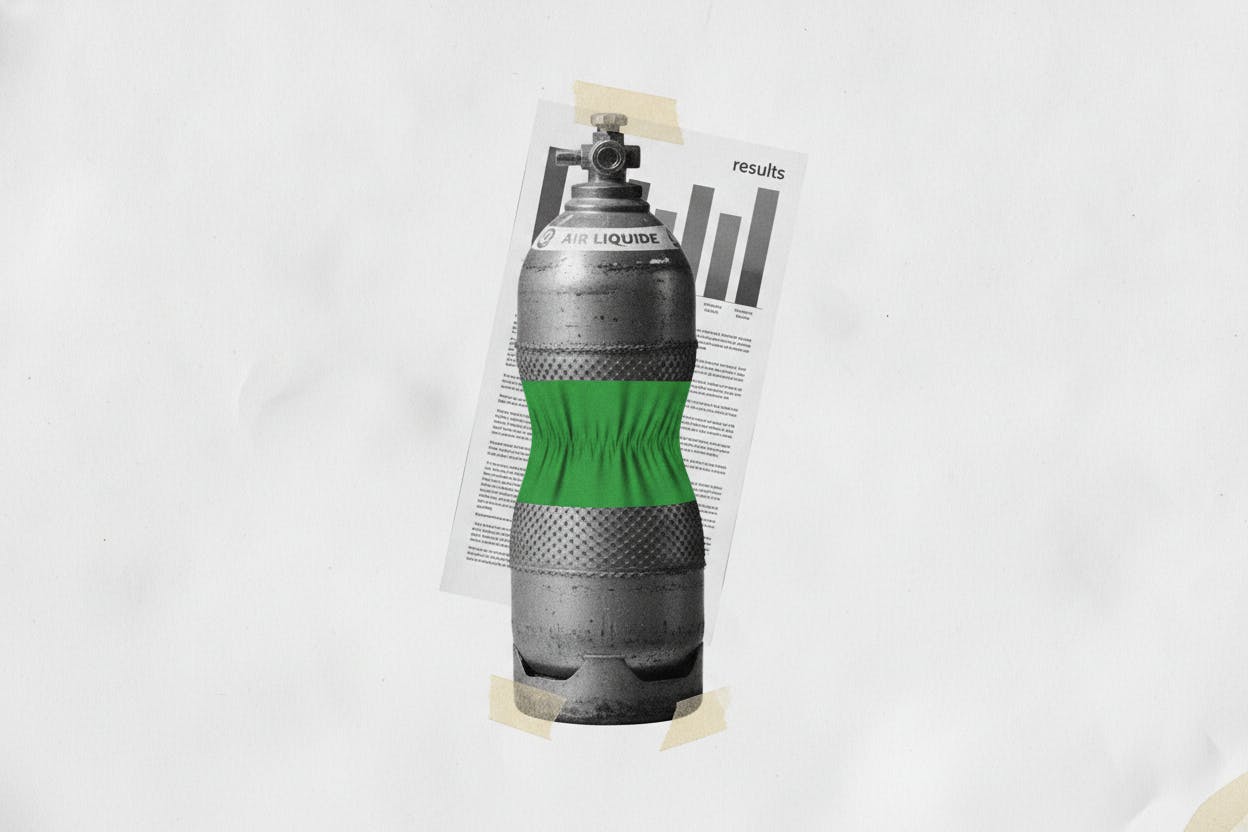
French industrial gas supplier Air Liquide reported first-half recurring operating profit of 2.89 billion euros on Thursday, up from 2.74 billion euros a year earlier, and reaffirmed its target to keep improving operating margins through 2026 and 2027. The company, which supplies oxygen, nitrogen, and hydrogen to factories and hospitals, said demand from electronics and industrial gas customers helped offset weaker conditions in other areas.
The result came in just below the average analyst estimate of 2.91 billion euros, according to a Vara Research poll. Still, the company's core Gas & Services unit, which accounts for about 97% of revenue, continued to perform well, supporting the margin outlook.
What's driving the numbers
Air Liquide's performance reflects a mixed global industrial backdrop. The electronics sector, which uses specialty gases for semiconductor manufacturing, remained a bright spot. Industrial gas demand from healthcare and manufacturing also held up. However, some other end markets, such as chemicals and metals, faced softer conditions, partly due to slower economic growth in Europe and China.
The company's ability to maintain pricing power and manage costs has been a key factor in its margin trajectory. Like many industrial firms, Air Liquide has been navigating higher energy and raw material costs, but it has offset some of that through efficiency programs and long-term contracts with price adjustment clauses.
For context, Air Liquide's margin targets are part of a multi-year strategy to gradually expand profitability. The company has been investing in growth areas like hydrogen and carbon capture, while also returning cash to shareholders through dividends and buybacks. Its focus on margin improvement is similar to other industrial firms that are prioritizing profitability over sheer volume growth in a slower-demand environment.
What it means for investors
For everyday investors, Air Liquide's results offer a window into the health of the global industrial economy. The company's diverse customer base—from chipmakers to hospitals—makes it a bellwether for industrial activity. A slight miss on profit expectations is not necessarily alarming, especially when the company reaffirms its medium-term targets.
Investors should watch how Air Liquide manages its exposure to cyclical sectors. If the global economy weakens further, demand for industrial gases could soften, putting pressure on margins. On the other hand, the company's strong position in electronics and healthcare provides some insulation. The China weakness that has affected other industrial firms is also a factor to monitor, as it could weigh on Air Liquide's Asian operations.
Another key point is the company's capital allocation. Air Liquide has a history of steady dividend growth and share buybacks, which can appeal to income-focused investors. However, its heavy investment in hydrogen and energy transition projects means it will need to balance shareholder returns with spending on new growth initiatives.
Overall, the reaffirmed margin targets suggest management is confident in the company's ability to navigate near-term headwinds. But with the profit slightly below estimates, investors may want to keep an eye on upcoming quarterly reports for signs of whether demand trends are improving or deteriorating.
Broader market context
Air Liquide's update comes at a time when many industrial companies are reporting mixed results. Some, like Safran, have raised profit forecasts on strong aftermarket demand, while others, like Hindustan Unilever, have seen profits dip due to commodity costs and geopolitical tensions. The divergence highlights the uneven nature of the global recovery.
For Air Liquide, the key will be whether it can sustain its margin improvement in the face of potential economic headwinds. The company's long-term contracts and pricing power are advantages, but they are not immune to a sharp downturn. Investors will likely focus on the company's next earnings report for more clues on demand trends and cost pressures.